
Events

Get a good impression of what your study programme will look like.
In Electrical and Electronic Engineering, you learn how sensors, circuits, processors and embedded software (software that runs inside a device) work together in one system. You mainly learn by doing: you use the theory from your classes straight away in your project. These are the subject areas you need:
You design circuits with sensors, amplifiers and power supplies. You use them to measure a heartbeat or amplify sound, for example.
You write software in C that runs directly on the processor inside a device. It processes sensor measurements and controls a motor or display, for example.
You learn how digital circuits process information and perform calculations, just like the building blocks inside a computer or smartphone processor. You design, build and test your own digital circuits on a programmable chip (FPGA).
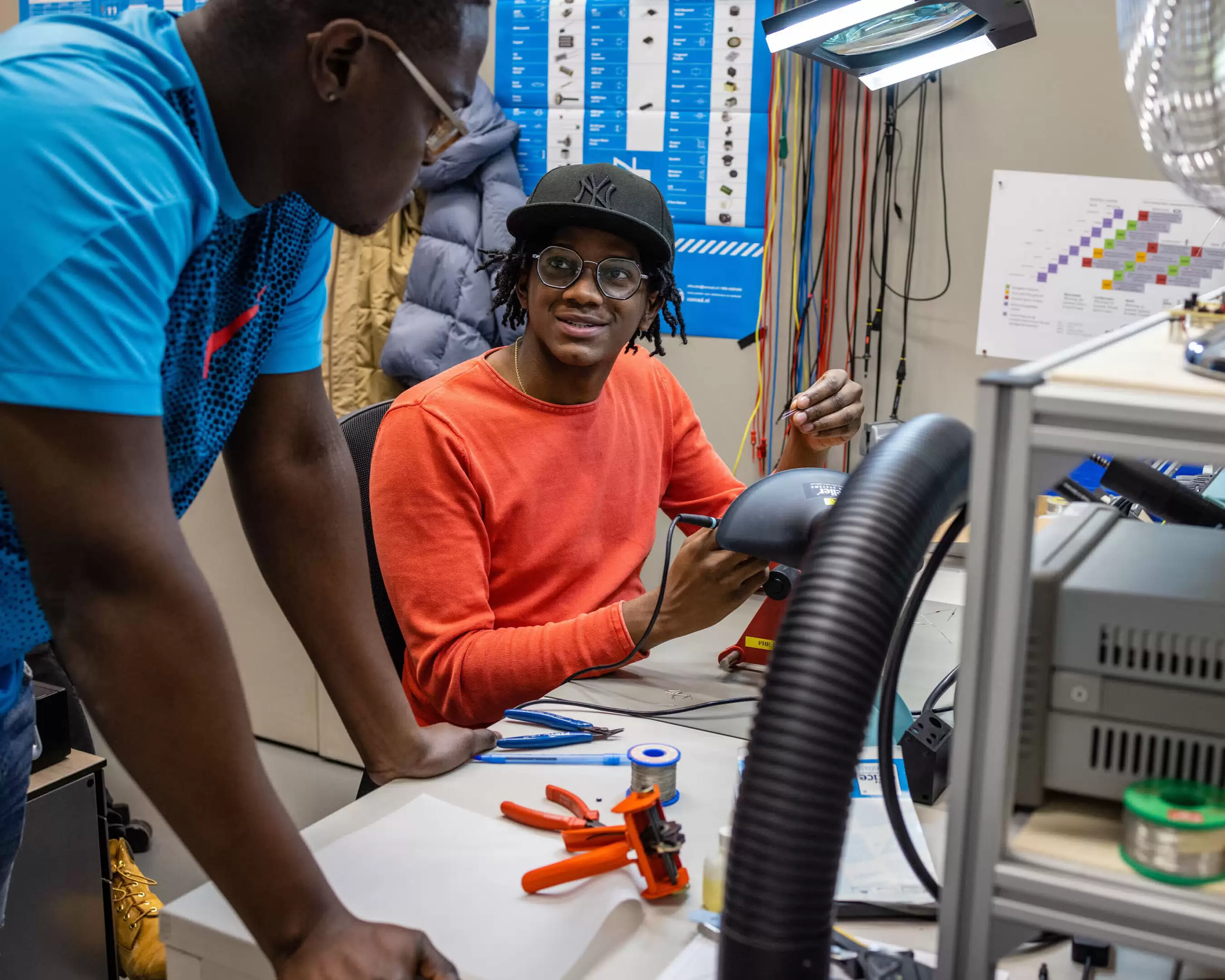
You draw a circuit board on the computer, have it milled and solder the components yourself.
You use a multimeter or oscilloscope to measure signals. If a circuit doesn’t work properly, you find out why and improve the design.
You attend classes and lab sessions and also work on projects with other students. This way, you put theory into practice straight away. During projects, your teachers guide you regularly. In the first year, you get a lot of structure. After that, the projects become more complex and you take more and more responsibility for planning, technical choices and teamwork.
You often work together in a project team, but you also show individually what you have learned and which technical skills you master. You do this through tests and your portfolio, in which you collect designs, measurement results, code and feedback. A study coach helps you make choices about your studies and your development. A design coach helps you make technical decisions in your project.
In your first year, you lay the foundations: maths, analogue electronics and programming in C. We refresh key topics from maths and physics and you use them straight away in your assignments. You design your first circuit board and solder it yourself. In a recent project, students built a smart baby seat. It measures the crying and heartbeat of a baby doll and adjusts its rocking motion to match.

In your second year, you build on year 1. In maths, you learn to filter and process signals. In power electronics, you discover how to convert and control electrical power, as in a charging station. Control engineering, embedded software and digital hardware are also part of the programme. The projects get bigger: you might build a model car that avoids obstacles on its own or a system that sends messages through your own antenna.

During your internship, you apply your knowledge at a company. This gives you a clear picture of what it’s like to work as an electrical engineer. Students have done internships at Signify (formerly Philips Lighting), Sioux and Royal NLR, the Netherlands Aerospace Centre. You can also do your internship at the Fontys research group Distributed Sensor Systems.
Your minor lets you give your studies a personal twist: you broaden your knowledge, gain international experience or specialise further. In the minor Be Creative, you work with students from other programmes on creative technology, such as an interactive artwork for GLOW, Eindhoven’s light festival. Or you choose the minor Applied Technologies in Semiconductors and dive into the chip technology the region is known for.
At the start of your fourth year, you choose a specialisation:
You take courses that match your specialisation and work in a project group on an assignment from a company or research group. Students designed a decoder for a new image sensor at Adimec, for example, or a portable device that records an ECG at MetisMed. In your project group, you work together with Dutch and international students.
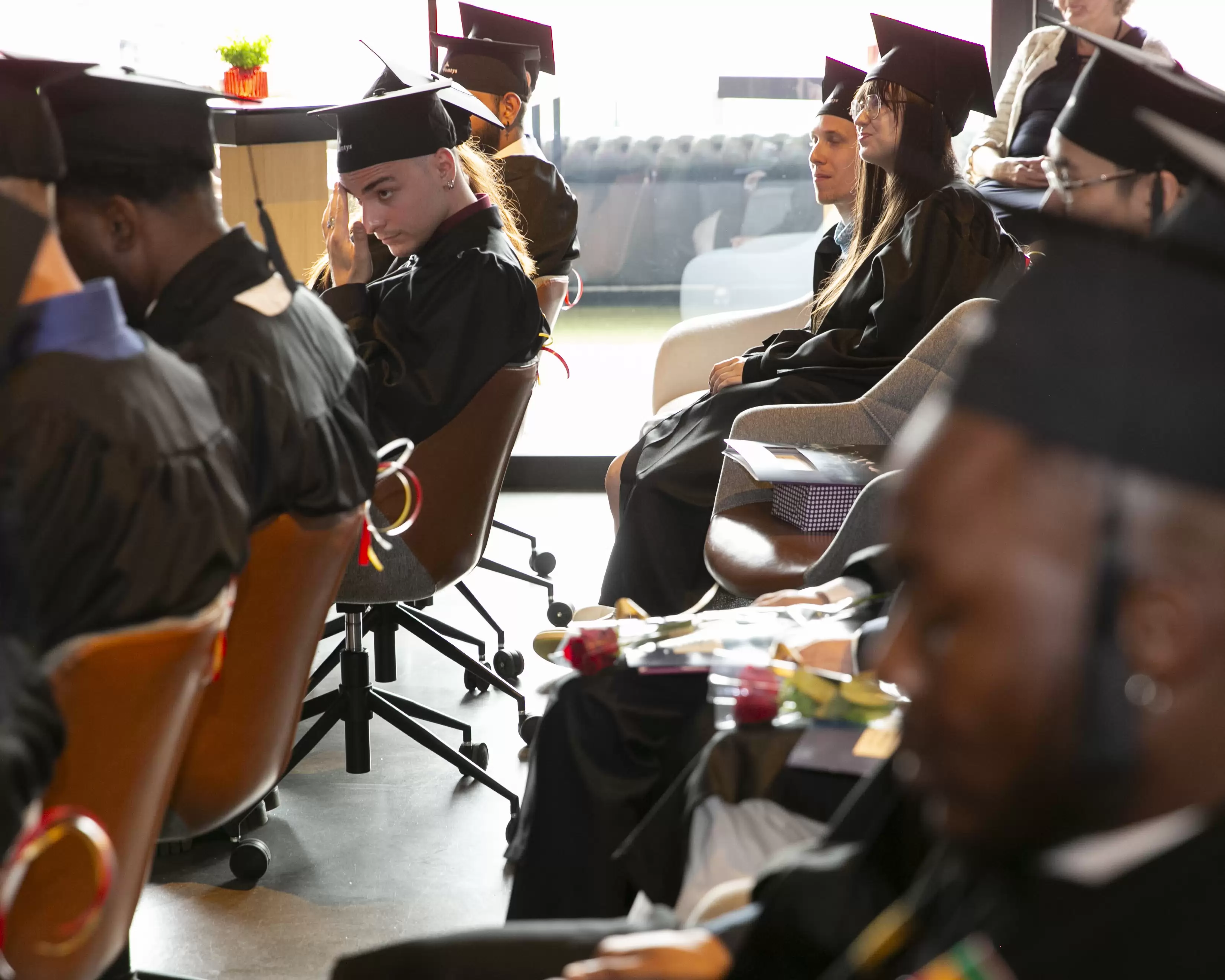
In the final phase of your studies, you work on a graduation assignment at a company in the Netherlands or abroad. In recent years, students graduated at companies such as ASML, NXP and Pixel Farming Robotics: from chip machine to farming robot.
In Electrical and Electronic Engineering, you can contribute to research by the Distributed Sensor Systems research group. Researchers there develop sensor systems with companies and healthcare organisations: from battery management for e-bikes to sensors for nuclear fusion research and a system for hand rehabilitation. You can do your internship or graduation project there or work on it in a project group.

Wondering what's to come after applying for this programme? Go over the entire admission process.
Please note! If you wish to apply for housing through Fontys, the application deadline is June 15 (start September) or December 8 (start February).