
Programmes
Events
Get a good impression of what your study programme will look like.
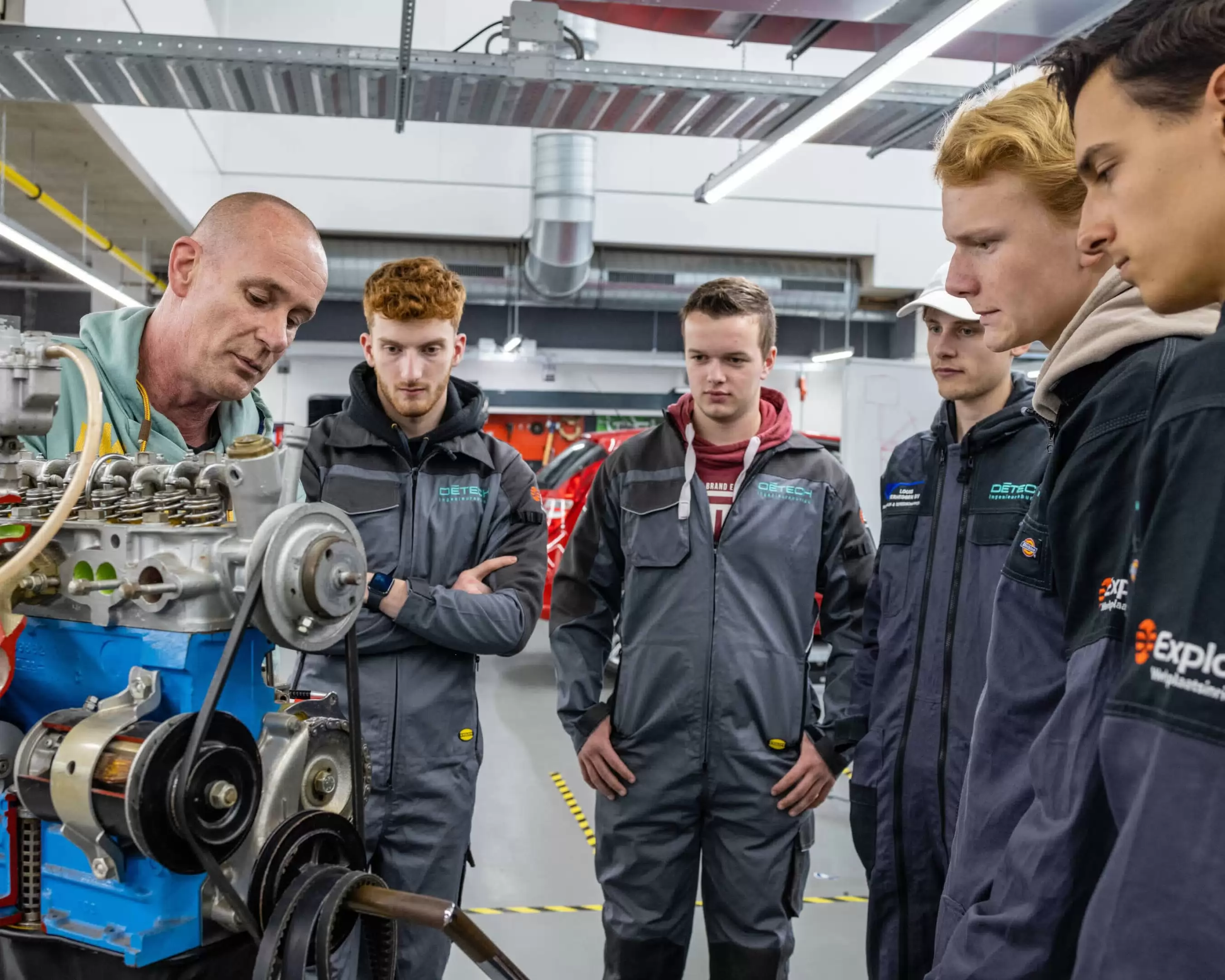
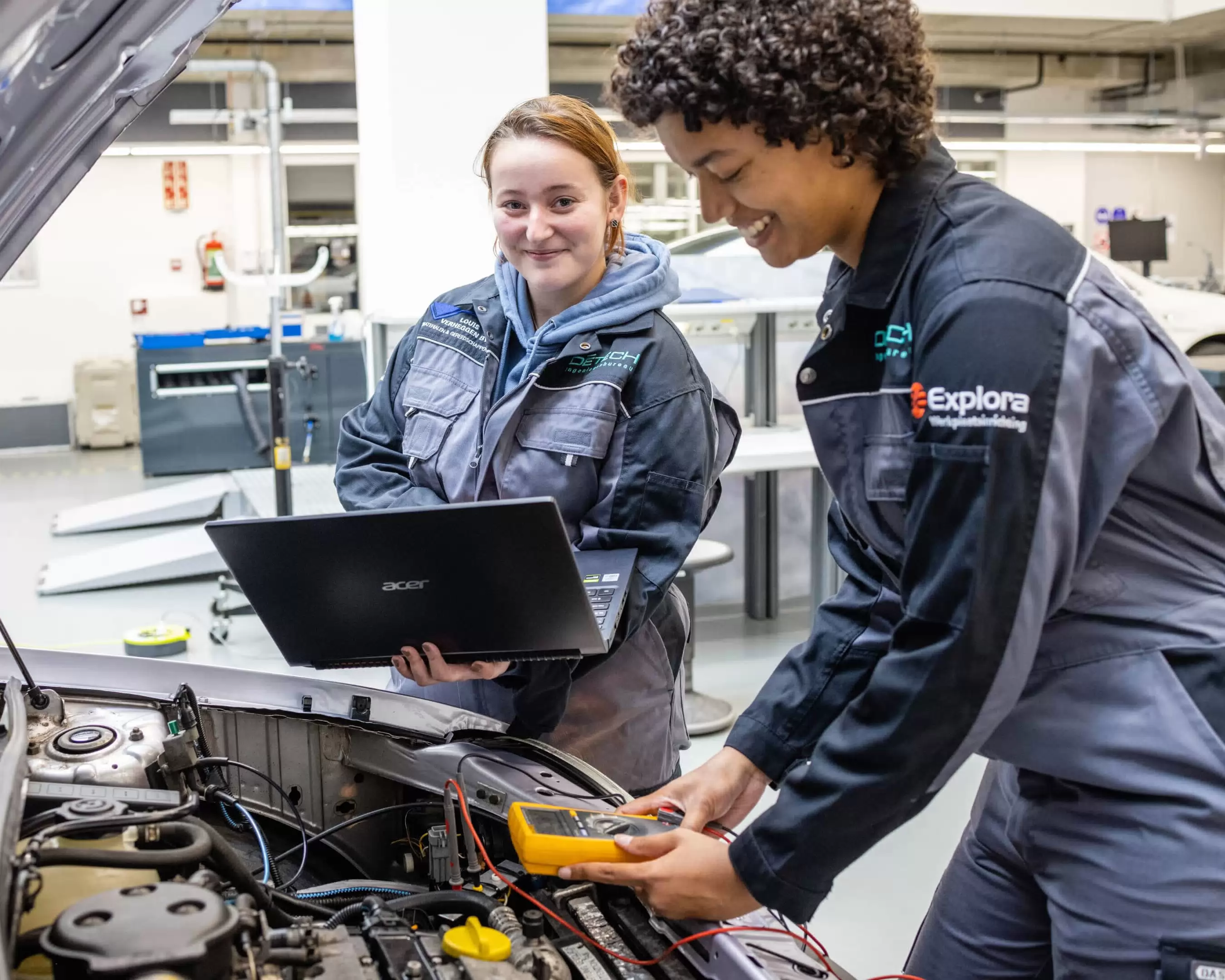
You start straight away. In week one you are already in the workshop, and in the lab and in projects you learn how mechanics, electronics and software come together in a vehicle. Every term you work on a question: you find out what is needed, design a solution and test whether it works. Step by step, you learn to work the way an automotive engineer does.
Automotive Lab, production lab, electronics lab and materials lab.
In year 1 that is also your project tutor, so they see you work every week.
3D design in NX, calculations in MATLAB, simulation in Amesim, code in Python.
You spend years 1 and 2 in Eindhoven, in terms of ten weeks. You begin with plenty of guidance and the basics, and work increasingly independently on more complex vehicle systems. About 60% of your time is theory, 40% practical work and projects. In year 3 you go on placement and choose a minor. In year 4 you work at the Automotive Campus in Helmond and graduate at a company.
From your very first day you have a student coach, who in year 1 is also your project tutor. Would you rather study in Dutch? Automotive is the same programme, taught in Dutch.
Study load
You build a Fischertechnik vehicle that completes a course on its own, ending in a competition between all the classes. After that you design a truck with a loading crane. You learn the basics of vehicle technology: mechanics, electrical engineering, materials, drivetrains, thermodynamics and maths. You work in the workshop and the lab, measure real systems and take those measurements back to class.
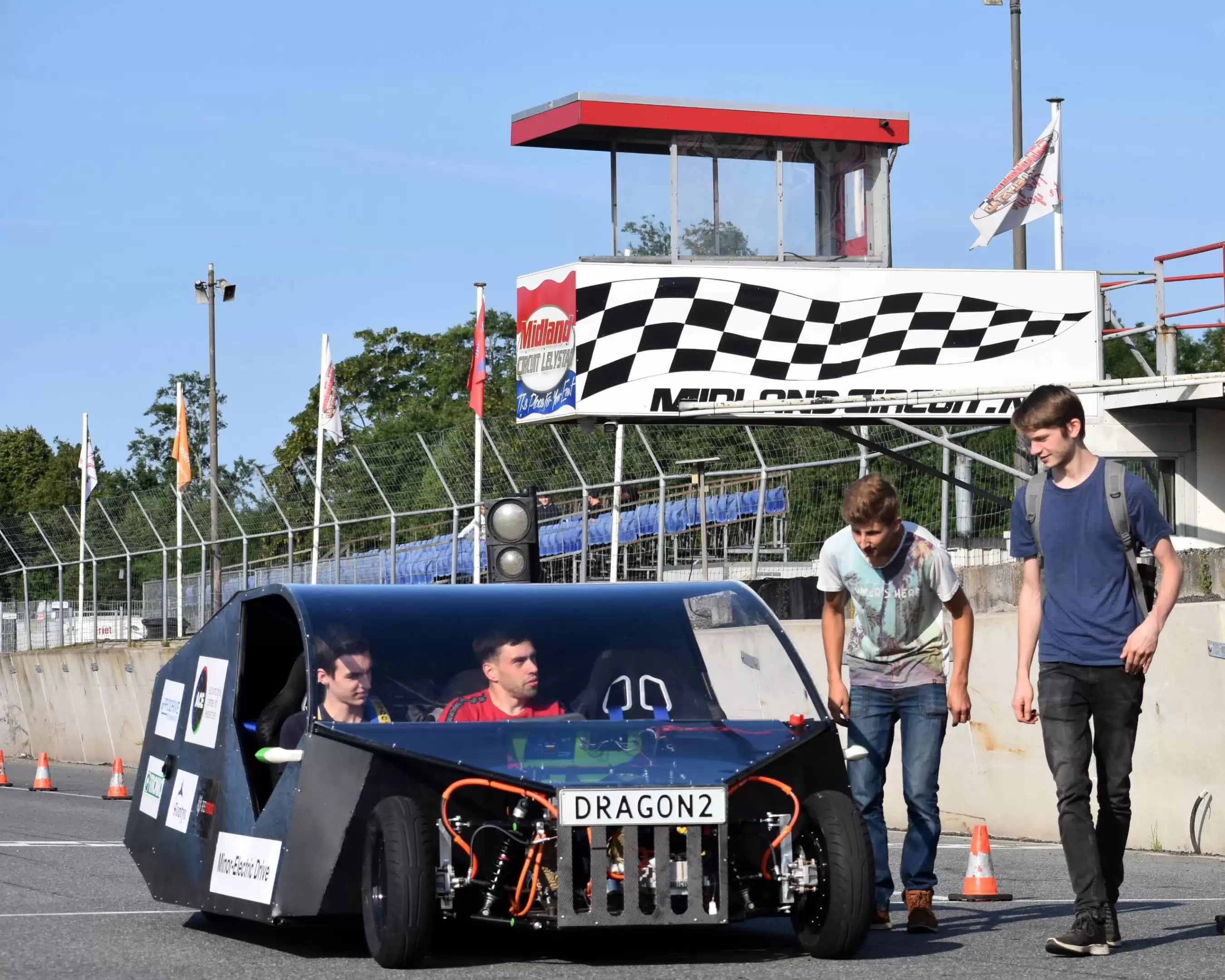
You go a step further. You design more complex vehicle systems and look not only at the technology, but also at requirements, safety, quality and production. You use calculations, measurements and simulations to back up your choices. At the end it all comes together: with your team you build an energy-efficient EcoMarathon vehicle and race it on a circuit.
For twenty weeks you work at a company, in the Netherlands or abroad. You find your own place, but not alone: there are networking events, vacancies through Fontys and lecturers with contacts in the industry. Studying in Brainport Eindhoven helps; this region is the centre of Dutch high tech, and the automotive industry is on your doorstep.
You then choose a minor of twenty weeks. Go deeper with an automotive minor such as Electric Drive or Motorsport Engineering, or pick something completely different to broaden your view: you can choose from the full Fontys range or outside. Everything is taught twice a year, so you can adjust your route.
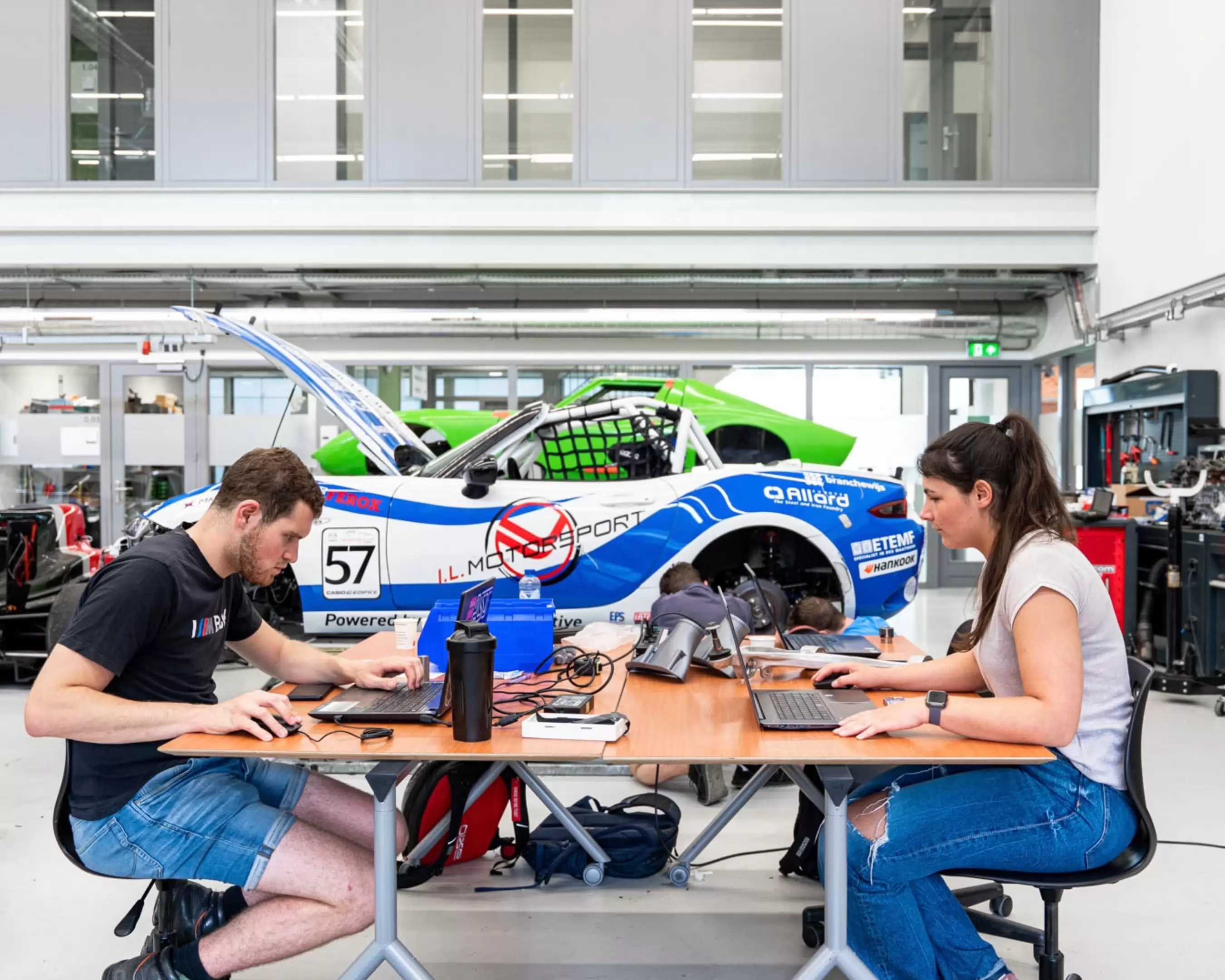
You move to the Automotive Campus in Helmond: ten minutes by car from Nexus, forty by bike or public transport. It has a wind tunnel and test facilities for batteries and fuel consumption. You work in a multidisciplinary project for a client and choose modules such as Battery Technologies or Alternative Fuels.You do this alongside lecturer-researchers from the Automotive & Energy Innovation research group, on questions the industry is asking right now. Earlier teams used a real plug-in hybrid to investigate how its safety systems respond to a fault in the vehicle. Another team built a test rig that shows how much life is left in a used EV battery and whether it can have a second life. And there are regular motorsport projects: a Mazda MX-5 was developed for the Supercar Challenge, with the drivetrain, cooling, electronics and vehicle systems all having to work together. That last one is exactly what this programme is about: not making one part perfect, but making sure everything works as a whole.
In your final six months you work at a company on a single assignment. You show that you can analyse a problem, design a solution and demonstrate that it works. You are not assessed through exams, but on what you deliver: your design, your research and your report. Graduation often leads straight to a job.

Wondering what's to come after applying for this programme? Go over the entire admission process.
Please note! If you wish to apply for housing through Fontys, the application deadline is June 15 (start September) or December 8 (start February).