
Sprint naar content

Associate degree ICT

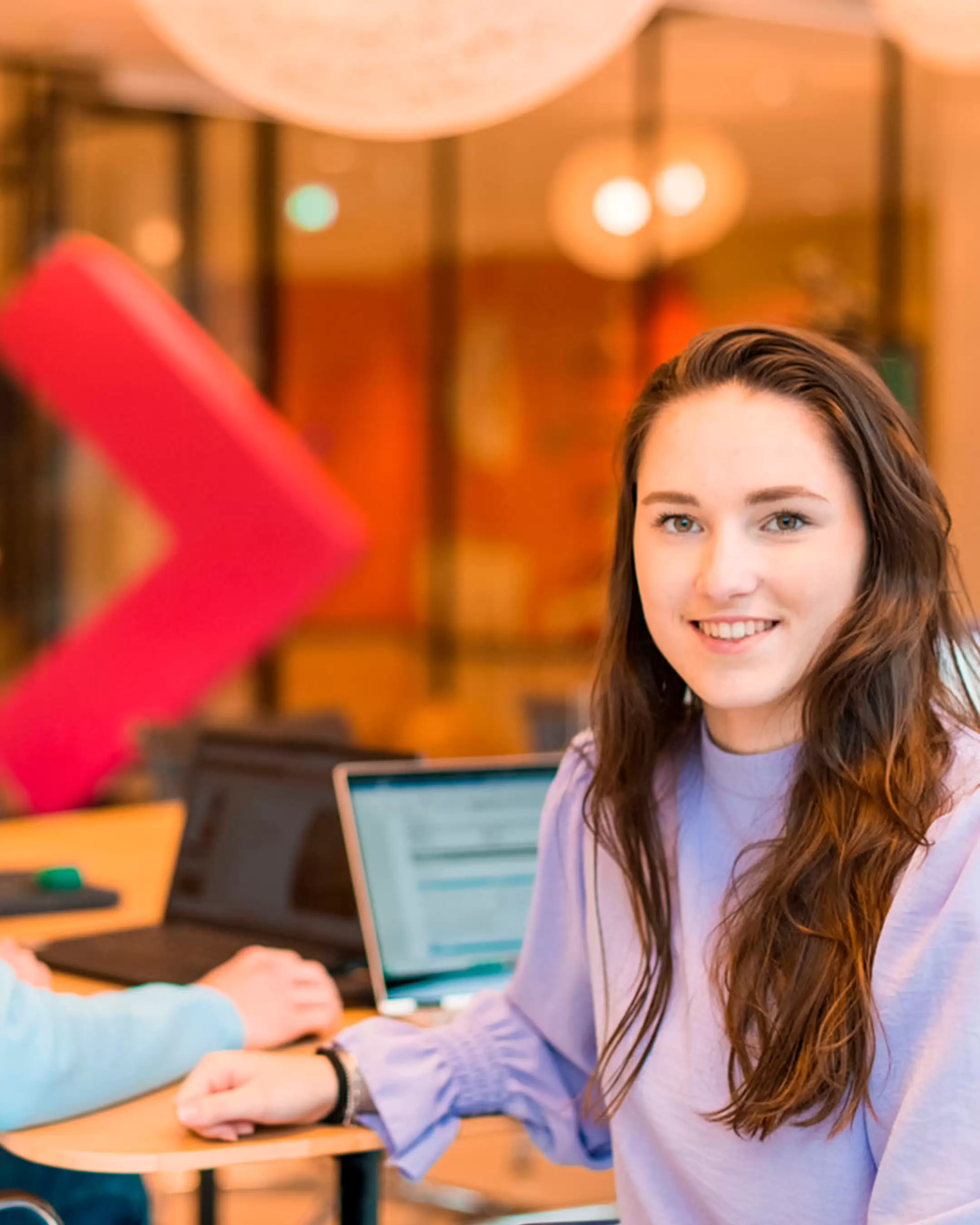
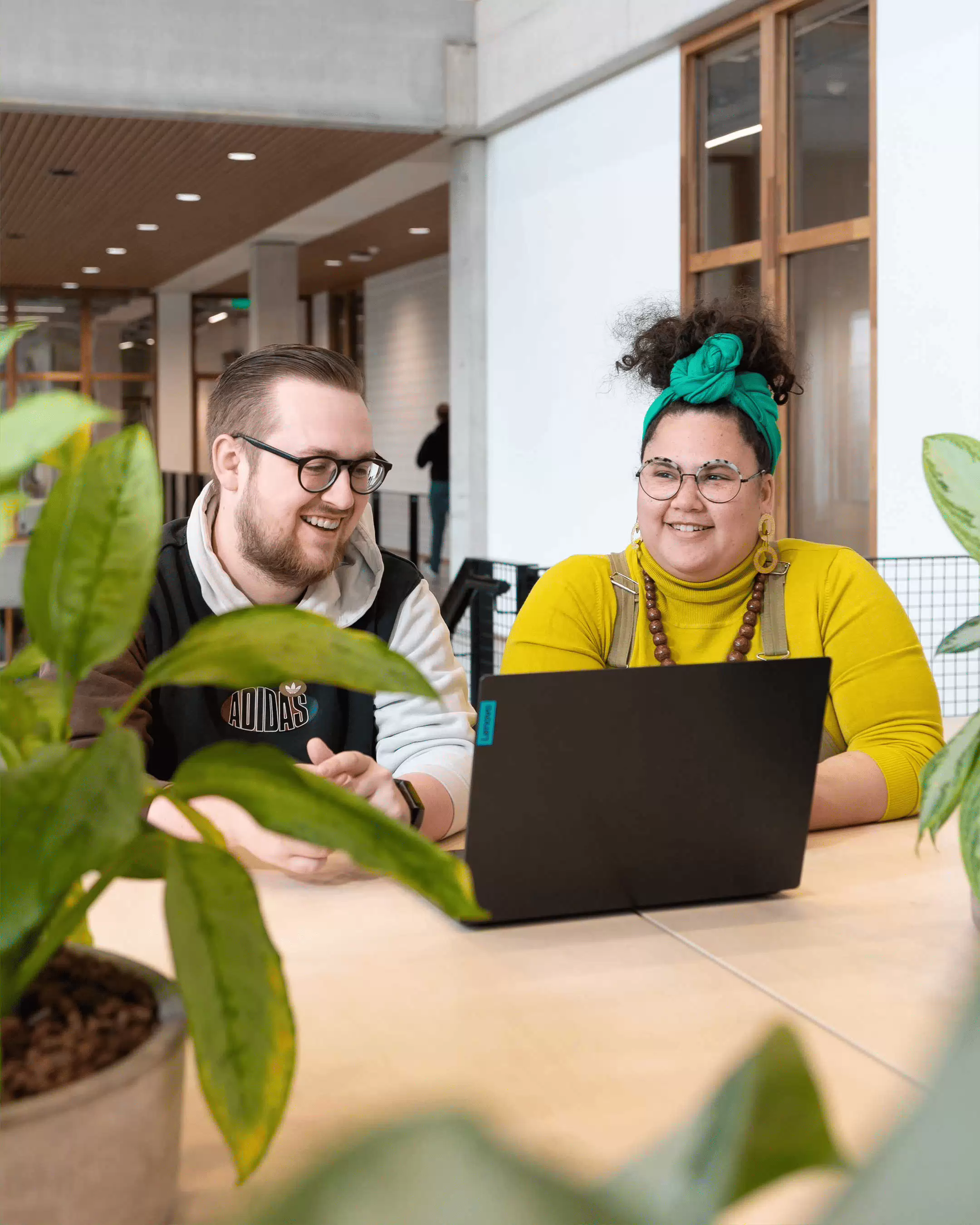
Two students Associate degree ICT work together behind a laptop.

Associate degree ICT

2 year(s)
Associate degree
Full-time
Starts February and September
English
Eindhoven

From cyber security to network design, from web and media design to generative AI and Smart Industry. Choose an ICT specialism that suits you and start working on smart solutions in practice.

Admission timeline

Check all deadlines

Meet us

Open days and more

ICT offers endless possibilities.

The Associate Degree in ICT is a shorter, higher professional education programme. In two years, you will prepare yourself for a specific ICT position. After that, you will be ready to enter the workforce.

Is the Associate degree ICT programme right for you?

  • You want to get started quickly in the ICT field.

    You choose a professional profile and earn your diploma after two years.

  • You learn by doing.

    You develop your knowledge and skills in a specific ICT profession.

  • You enjoy working with others.

    You work with other students on real assignments for companies.
Check out these programmes

Gain practical experience.

Skip

Student Associate degree ICT

What I like about the programme is that you get to work directly for real companies. You work on different cases and other projects, gaining experience. The atmosphere is good and people are positive. So I was able to make an impact right from the start of my studies.

On discovery within your studies.

Pleun

Student Associate degree ICT

What I love about my studies at Fontys is that I can learn something from all parts of the ICT field. That way I can find out what suits me best. We often work in multidisciplinary groups so we can learn a lot from each other. You gain experience together and can help each other where necessary. The lecturers are easy to reach and helpful. So you are never alone.

Expand your knowledge in two years.

Bashar

Alumnus Associate degree ICT

I wanted to expand my knowledge in ICT because I didn't feel I was ready to start working. Fontys works in a different way; you apply everything you learn directly in practice. We don't get tests, but work during a period on building a portfolio. Based on that, you are assessed.

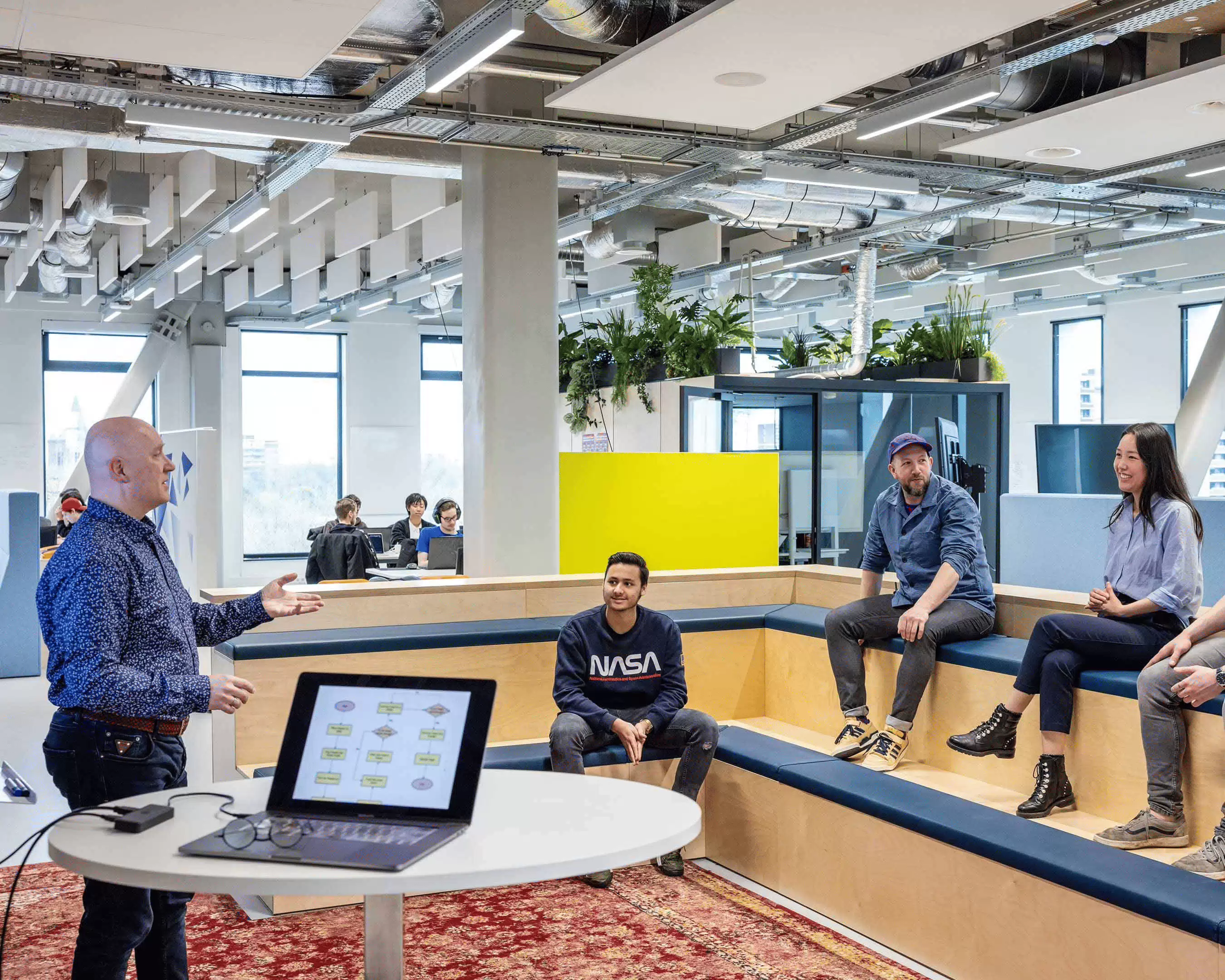
Lecturer Associate degree ICT teaches a group of students.
Your programme

Choose the professional profile that suits you.

During the programme, you will work daily with your project group or individually at one of our locations and labs. Choose a profession in which you want to grow, learn everything about technology and apply it in real projects. Together, you will build the latest ICT applications such as smart systems, racing robots, healthcare applications, web shops or AR apps. You will do all this for real companies.

Your programme

What will you learn?

  • You will be introduced to the entire field of ICT.

    You will learn the basics of topics such as AI, big data and low-code.

  • You choose a profession that you like.

    Building websites, developing software, writing strategies or creating animations – the choice is yours!

  • You will work on your soft skills.

    You will learn to ask questions, brainstorm, collaborate and present.

Which specialisation will you choose?

Specialisations

Software Prompt Engineer

Develop software by making smart use of the latest AI tools and effectively allocating prompts.

Software Prompt Engineer

As a Software Prompt Engineer, you will build applications with AI tools, validate generated code and integrate smart solutions. You will learn to develop software reliably and efficiently in real projects.

  • AI & software development

    Get started with AI tools for code generation and software architecture design.

  • Prompt design

    Research contexts. Then write smart prompts, check the AI output and improve quality.

  • Contact

    Consult with stakeholders and users to optimally tailor your designs to their wishes.

  • Agile

    Work flexibly in multidisciplinary teams according to Agile methods.

Specialisations

AI Context Engineer

Learn to control AI and design optimal prompts for smart applications.

AI Context Engineer

Get started with designing and testing effective AI prompts. Analyse model output and translate data and user needs into smart AI solutions.

  • AI & data processing

    You will learn to evaluate AI models, detect errors and analyse data for better predictions.

  • Context design

    You will develop and optimise prompts that enable AI to respond effectively to various scenarios.

  • AI applications

    You will apply AI in projects such as image analysis, recommendation systems and generative models.

  • Collaboration

    You will work in teams, communicate with stakeholders and implement AI solutions according to the project plan.

Specialisations

Junior Embedded Software Developer

Build intelligence into devices, where software and hardware work together quickly, securely and reliably.

Junior Embedded Software Developer

Get started with programming and testing software for intelligent systems, from smart vehicles to household appliances and from medical applications to aerospace.

  • Software design

    Develop and test software for real-time applications with object-oriented design.

  • Analyse

    Investigate situations and needs so that your solutions precisely match the actual issues.

  • IoT & intelligent systems

    Build intelligent and robust IoT devices and develop scalable applications for everyday use.

  • Collaborate

    Work in multidisciplinary Agile teams and apply professional development tools. Contribute ideas about system design..

Specialisations

Junior Application manager

Learn how to improve business processes and convert data into valuable insights.

Junior Application manager

Ensure applications run smoothly, monitor performance and support change processes. Get started with data analysis, process optimisation and IT solutions.

  • Analyse

    Collect, manage and analyse data to generate valuable insights for decision-making.

  • Automate

    Implement IT solutions that make processes more efficient. Provide insights with dashboards.

  • Collaborate

    Work together, communicate and present your results as a team.

  • Project-based working

    You will work on various projects that combine business, data analysis and professional skills.

Specialisations

Junior Cloud Engineer

Develop and secure cloud systems for modern businesses.

Junior Cloud Engineer

Would you like to learn how to create smart cloud solutions for businesses? In this profile, you will work on systems at the workplace, server and infrastructure levels. You will resolve malfunctions, perform tests and ensure that everything continues to function properly. You will also maintain contact with colleagues and users.

  • Testing

    You will check whether systems meet the company's requirements. This way, you can be sure that everything is working properly before it goes live.

  • Networking

    You will learn how networks are designed, maintained and secured. This includes setting up routers and protecting against hackers..

  • Cloud platforms

    You will discover various cloud platforms such as Microsoft Azure or AWS. You will learn how these solutions help companies work smarter.

  • Management

    You will practise managing devices, operating systems and security. This ensures that everything remains secure and stable.

Specialisations

Assistant Service Delivery Manager

Manage IT services in consultation with customers and management.

Assistant Service Delivery Manager

Would you like to work in a team responsible for providing high-quality IT services? In this profile, you will ensure that IT meets the needs of customers and the organisation. You will be the first point of contact and will monitor whether everything is working properly. You will also report on the quality of IT services.

  • Design

    You will discover how to use network and cloud automation. You will learn to design automated solutions so that systems work faster and smarter.

  • Automate

    You will gain knowledge of coordinating computer systems. You will also learn how to properly arrange security and monitoring.

  • Security

    You will learn how to recognise and deal with threats. This will enable you to ensure that systems remain secure.

  • Research

    You will analyse business processes. This will give you a clear understanding of how IT facilities fit in with a company's needs.

Specialisations

Junior App Developer

Design and develop apps for all smartphones.

Junior App Developer

Want to create your own apps for iOS and Android? You will combine programming, design thinking and user experience to create apps that people love to use. You will learn how to turn an idea into a working app and how to ensure that your app is user-friendly and intuitive.

  • Combining

    You will combine technical insight with creative design. This will enable you to create apps that not only work well, but are also attractive and useful.

  • Collaborating in Agile workflows

    You will work in a team using Agile methods, such as sprints and retrospectives. Together, you will build apps step by step and continuously improve them.

  • Programming in Swift and Kotlin

    You will learn to program with Swift (for iOS) and Kotlin (for Android). These are the most important languages for mobile app development.

  • Presenting and giving feedback

    You will show your app during product demos and receive feedback to make it even better.

Specialisations

Junior Data & BI Analist

Analyse data and help companies grow with your insights.

Junior Data & BI Analist

You will work with databases and smart software to convert data into insights. Think of dashboards for sales figures or AI models that predict which products will become popular.

  • Analysing

    You investigate how organisations work, examine large amounts of data and check whether AI solutions are working properly.

  • Creating models

    You create models that convert data into clear information. To do this, you use smart techniques such as machine learning and artificial intelligence (AI).

  • Reviewing business processes

    You examine how a company works and identify areas for improvement. For example, where time is wasted, where tasks are duplicated or inefficient.

  • Working with good data

    You ensure that data is accurate and reliable. Everything is correct and cleaned up so that you can work with it properly and safely.

Specialisations

Digital Media Operator

Create digital video productions in film, marketing and visualisation using the most advanced tools.

Digital Media Operator

You will work with a team of various experts in a virtual production studio. Think of camera operators, actors, filmmakers and IT specialists. For example, you will help record a scene for a film in a virtual environment. You will ensure that the digital background perfectly matches the actors' performances.

  • Video production

    You will work in a virtual production studio with a huge 10 x 3.5 metre LED wall. This allows you to create realistic backgrounds for films, games or VR projects

  • 3D

    You will learn to create impressive 3D worlds and bring your ideas to life. Think of building a virtual city where visitors walk around wearing VR glasses.

  • Collaboration

    You will learn to collaborate with creative designers, technical experts and storytellers. Together, you will come up with and create ideas that really come to life. For example, you will work on an interactive game in which the story and design come together perfectly.

  • Future

    You will be ready for a rapidly growing sector where enthusiastic and creative people are in high demand. Think of jobs in virtual production, gaming or VR development – companies are already looking for talent who have mastered these techniques.

Specialisations

Smart Industry Engineer

Use data and smart technology to improve the industry of tomorrow. Developed by Summa and Fontys as part of the Digital Industry Boost.

Smart Industry Engineer

You will learn how ICT, data and technology come together in smart, safe and sustainable factories. You will ensure that machines, systems and people work well together. Think of robots in a warehouse or sensors that quickly detect malfunctions.

  • Learning by doing

    Work with sensors, data and smart technology to make systems smarter.

  • Connecting ICT & technology

    Discover how software and machines work well together in industry.

  • Using smart data

    Learn how to use data and AI to make systems more sustainable and smarter.

  • Safety in industry

    Protect systems against hackers and ensure data security.

Specialisations

Junior Ethical Hacker

Protect companies against cyber threats and work on digital security.

Junior Ethical Hacker

You protect companies against hackers, viruses and online fraud. Think of a web shop that is hacked: customer data is exposed. You learn how to prevent such attacks with knowledge of privacy, legislation and security testing.

  • Pentesting

    Perform security tests with real companies and try to break in digitally.

  • ICT security

    Learn about risk analysis and how to keep networks, websites and systems secure.

  • Risks

    You will identify vulnerabilities in companies, products or systems.

  • User awareness

    Help users deal safely with digital technology, such as passwords and phishing.

Specialisations

Junior Front End Developer

Design interfaces and unique user experiences with AI and smart tools.

Junior Front End Developer

You will learn how to design websites and apps. You will work on user experiences, user interfaces and web development. In doing so, you will immerse yourself in people, new techniques and design.

  • Experiment

    Discover what you can do with the latest digital techniques in your own playground.

  • User experiences

    Learn how people think and act, what they want and how to respond to that in a sensible way.

  • Problem solving

    Create smart ICT solutions for real questions from people and companies.

  • Design

    Develop your creativity with design. Be inspired by examples and learn how to design.

Your programme

What will the next two years look like?

At Associate degree ICT, you develop yourself without exams! Every six months, you complete a portfolio of your work, which is then assessed. Within your chosen professional profile, you take courses that match your interests. You do what you really enjoy!

Associate degree ICT student laughs with other students.
Your future

Ready for the real work!

Graduated? Great! You can start right away in an ICT position, such as ethical hacker, app developer, programmer, media designer or data analyst. Prefer to continue studying? Add two years of bachelor's study and earn your bachelor's diploma in ICT.

Admission & application

Admission requirements

  • You must have a diploma of higher secondary education that is equivalent to Dutch standards.

    Make sure to check all admission requirements.

  • A minimum level of proficiency in the English language is required.

Our campus

Studying at Fontys means learning, making friends and a fun student life

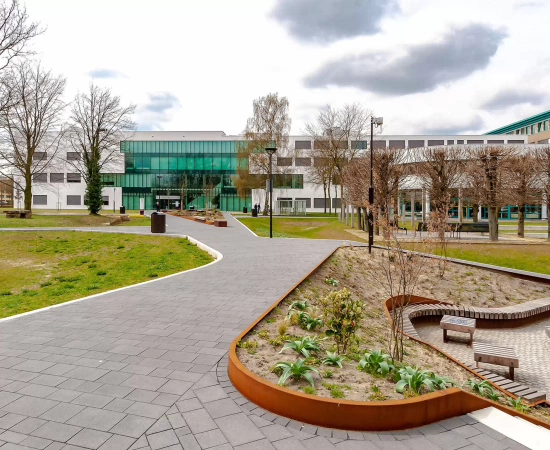
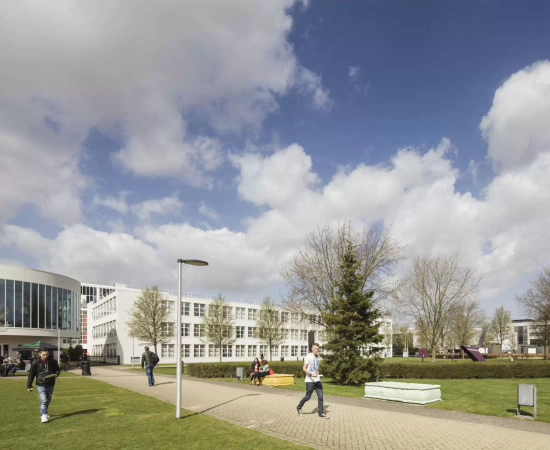
Discover our campuses: beautiful and well-equipped study areas, hip coffee corners and fine campus plazas. Everything for growth and conviviality!

Costs

Curious about the costs of this study programme? 

Easily calculate your tuition fees with the tuition fees indicator. Besides tuition fees, you will also need to budget for study materials, a laptop, the introduction programme, and more. Find details about monthly living costs on our Finance page.

All about finances

Students posing

Looking for a place to live near the Fontys campuses?

Starting your studies in another country is exciting. Find out how Fontys can help you with arranging accommodation and finding a suitable place to stay.

Associate degree ICT

Start

September, February

Language

English

Duration

2 year(s)

Degree

Associate degree

Study load

Full-time

Location

Eindhoven

Specs

Associate degree ICT

Start

September, February

Language

English

Duration

2 year(s)

Degree

Associate degree

Study load

Full-time

Location

Eindhoven

Check all deadlines

Admission timeline

Wondering what's to come after applying for this programme? Go over the entire admission process.

Please note! If you wish to apply for housing through Fontys, the application deadline is June 15 (start September) or December 8 (start February).

Associate degree ICT

Admission timeline

Wondering what's to come after applying for this programme? Check out the entire admission process.

  • Start your orientation

    Have you attended a study orientation event already?

    Take a look at our orientation events
  • Application deadline

    International students: 1 June. Dutch students: 1 May.

    Check application process
    Make sure to start the application process as soon as possible.
  • Submit required files

    Submission and assessment of grade lists, diploma and proof of language. For non EEA-students: additional steps can be required.

  • Complete your payment

    The tuition fees indicator helps you to determine the tuition rate for your situation.

    Everything about finances
  • Arrange student housing

    Fontys can offer housing for a limited number of international students. Fill in the housing application form before the deadline (June 15).

    More info about housing
  • End of August

    Get to know Fontys and your fellow students during Purple Introduction week.

    Take a look at your introduction programme
  • 31 August 2026

    Start study programme

  • Start your orientation

    Have you attended a study orientation event already?

    Take a look at our orientation events
  • Application deadline to start in February

    International students: 15 November. Dutch students: 31 January.

    Check application process
    Make sure to start the application process as soon as possible.
  • Submit required files

    Submission and assessment of grade lists, diploma and proof of language. For non EEA-students: additional steps can be required.

  • Complete your payment

    The tuition fees indicator helps you to determine the tuition rate for your situation.

    Everything about finances
  • Arrange student housing

    Fontys can offer housing for a limited number of international students. Fill in the housing application form before the deadline (December 8).

    More info about housing
  • 9 February 2026

    Start study programme

Study choice events

You can sign up for online and live events throughout the academic year.

Open Day

Wondering if this programme is right for you? Visit our Open Day and find out! Meet students and teachers, learn more about the programme through presentations and take a walk around the campus. Check the full programme and register today!

Keep me informed: Open day 21 March 2026

21 March 2026

Information session

Take part in an online information session. Ask your questions and get useful information. Click for more info and sign up.

Full-time

For students by students

Tuesday 10 February
17:00 - 18:00 CET
Online
Full-time

A guide to making the right study choice

Monday 23 February
17:00 - 18:00 CET
Online
Full-time

Study Tech in NL

Monday 02 March
17:00 - 18:00 CET
Online
Full-time

Information session Associate degree ICT

Thursday 05 March
19:00 - 20:00 CET
Online
Full-time

Studying in the Netherlands

Monday 09 March
17:00 - 18:00 CET
Online

Do you have a question?

We are happy to help.

Ask your question to the programme in Eindhoven

Frequently asked questions

The Associate degree ICT programme quickly prepares you for the job market and takes two years to complete. After that, you can move on to the Bachelor's programme in ICT. This programme offers you in-depth theoretical and practical knowledge of ICT, including research methods. If you want to continue studying after that, you can make advancement to a master's degree programme in ICT, such as the Master's in Applied IT. This takes 1 to 1.5 years, depending on your study pace.

No, you do not need any prior knowledge. However, it is useful.

At the start of the study programme, any laptop will suffice. It is possible that a more powerful laptop will be needed during the course of the study programme. This depends on the choices you make from the second academic year onwards. We will advise you on this.

The ICT and Information Technology study programmes are similar. ICT is broader and offers different fields of study or themes to choose from. Computer Science is more focused on software engineering, such as building software and systems. Both programmes teach you about programming, networks, security and databases. Compare the content of both study programmes and choose the one that best suits you and your preferences.

The situation for new entrants to the IT labour market with a higher professional education diploma is still very good. A recent ICT graduate earns roughly between €3,200 and €4,100 gross per month, depending on the company, region, job and market supply. With a few years of experience, this salary can rise to between £55,000 and £75,000 per year. As a senior with more than seven years of experience, this can even be between £75,000 and £100,000 per year. Specialist jobs such as Ethical Hacker or Cloud Architect often command even higher salaries.