Programmes
Events
Check all deadlines
Open days and more
This master's programme is a joint degree offered by four Dutch universities of applied sciences. Together, they cover the full spectrum of applied quantum technology.
Each university brings its own area of expertise:
You choose one of these as your home university, where your personal coach and project workspace are based. You travel to the other campuses one to two times per week for courses and lab sessions. The diploma is issued by all four partners with Amsterdam University of Applied Sciences as the lead institution.
You enjoy learning from people with different backgrounds; physicists, engineers, software developers. And you thrive in a multidisciplinary environment.
A solid foundation in mathematics, physics, or programming is required.
The two-year programme is built around four phases. You start with building a shared foundation, continue collaborating in the quantum core, then choose your specialisation; Quantum Software, Quantum Electronics, or Quantum Photonics. And complete the programme with a graduation project at a company or research institute.
Study load: 40 hours per week, including 12 contact hours. The rest is project work, lab preparation, and self-directed study.
You work on real engineering challenges from industry partners, using the full R&D cycle from design to delivery.
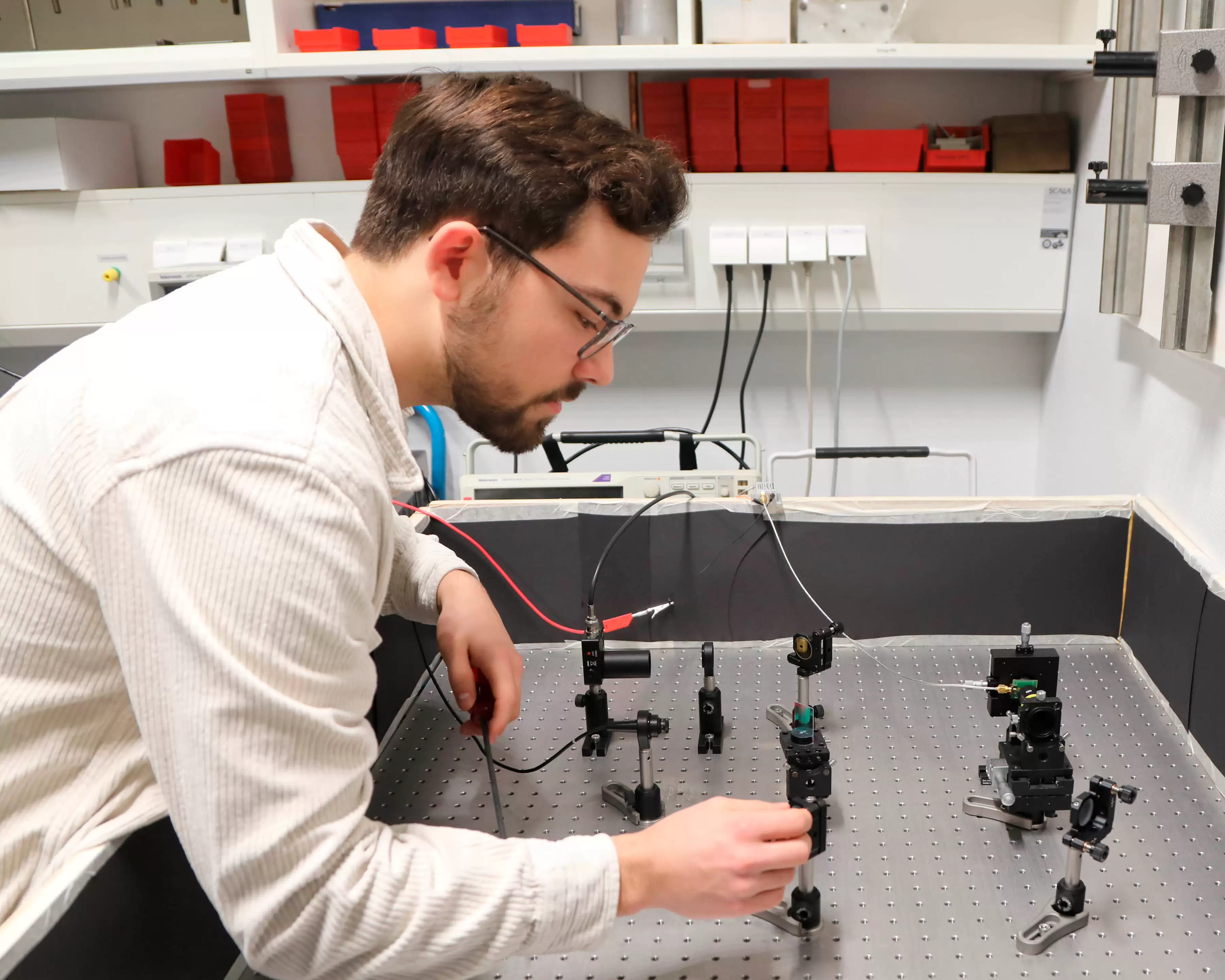
Whether you specialise in hardware or software, you get hands-on experience across the full range: from simulations on classical computers and cryogenic lab setups with real qubits, to running programmes on actual quantum computers via platforms such as SURF and IBM Quantum.
Study at four quantum hubs: Eindhoven, Amsterdam, Enschede, and Delft/The Hague. Each has its own industry networks and research communities.
Your lecturers are active researchers and professionals in quantum technology. At Fontys, they are connected to the lectorate in Photonics and Quantum Technologies.
Quantum technology is one of the fastest-growing sectors in global tech. And the demand for engineers who can actually build and apply it far exceeds the supply. Graduates of Applied Quantum Technology step straight into this world: in R&D roles at high-tech companies, in quantum startups, or in research. The Eindhoven region alone offers connections to ASML, Philips, and VDL, as well as a growing ecosystem of quantum companies built around the TU/e campus. In some cases, a PhD trajectory is also possible after completing this master’s.
Check the full admission requirements to see which qualifications allow you to enrol.
The exact requirements vary per programme—click the link to check the specific criteria.
The Master AQT is accredited and recognised at EQF level 7, the same level as a wo-master, with the same international standing. The difference is in how you learn. A wo-master is built around academic research. This master is built around doing: you work on real company challenges from your first week. That is not a lesser version of a master's degree. It is a different one, and for many people, the more useful one. Coming from a university? You are welcome here, especially if you want to put your knowledge to work straight away.
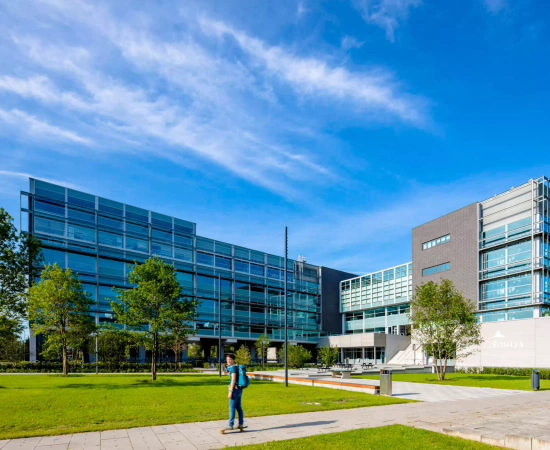
More informationFontys Eindhoven has a green campus in the heart of Eindhoven. Designed to meet and work together across disciplines. You study in well-equipped spaces, find a coffee corner when you need a break, and step outside onto campus squares where students from all over the world come together.
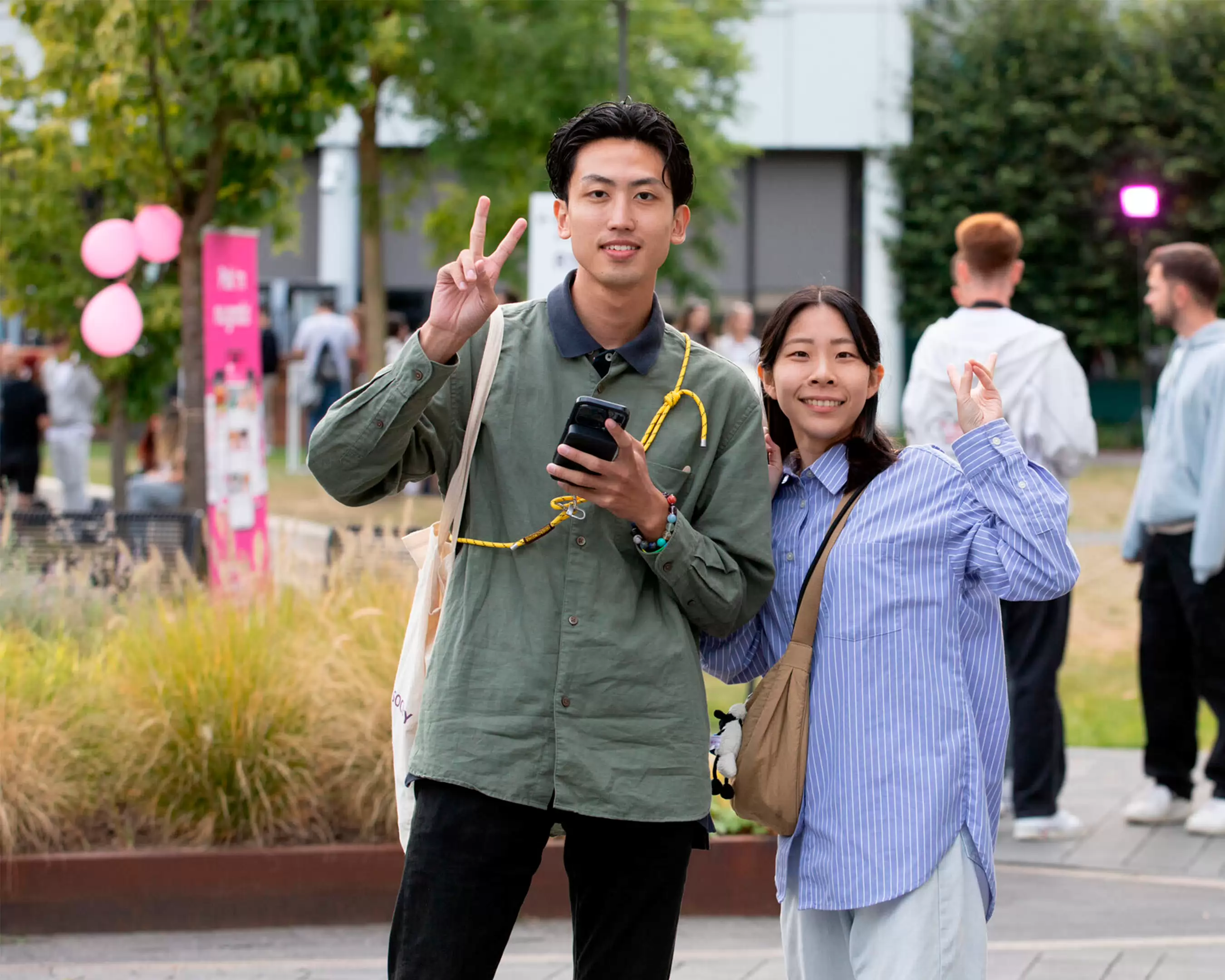
Beyond the classroom, Eindhoven offers a full student life. As a Fontys student, you have access to the Student Sports Center Eindhoven (SSC) with over 70 sports, fitness programmes, and 36 student associations. Eindhoven itself is compact, international, and lively: home to Dutch Design Week, a vibrant city centre, and one of Europe's top tech and innovation ecosystems.
As an AQT student in Eindhoven, you can get involved in Qubion; a student team working on quantum applications. And Eduquation; a student team focused on quantum education and awareness. These teams give you the chance to go beyond the curriculum and connect with the broader quantum community.
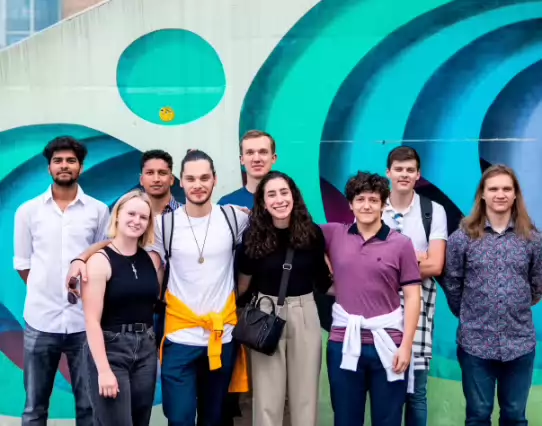
It’s exciting to study in a different country. Fontys can support you in finding housing.
English
September
Master
Full-time
2 year(s)
Eindhoven

Wondering what's to come after applying for this programme? Go over the entire admission process.
There are a lot of job opportunities after this master. You can work at a R&D department at a high-tech company or bank, or in a small start-up working on the forefront of these high-tech technologies. You can work as a technician on complex systems, or take a more consulting role on possible quantum solutions.
The curriculum covers a broad range of topics, including:
Studying part-time is not possible. While some classes will be available online, it is not possible to complete the entire programme remotely.
You apply through the Amsterdam University of Applied Sciences (the lead institution) via Studielink. Non-EU students: deadline 1 April. EU/Dutch students: deadline 1 June. You choose Fontys as your home location during the application process.
No. Applied is the keyword. From early in the programme, you work in the lab[LS4.1], build experiments, and contribute to real engineering projects. The curriculum is structured around doing: the Quantum Challenge project in block 1, working on engineering design questions from block 2 onwards, and graduating within a company or research institute.
Very. This is a master’s-level engineering programme. You will work with quantum mechanics, advanced mathematics, lab equipment, and software tools used in the quantum industry. At the same time, the focus is always on application: you learn what you need in order to build and solve things, not theory for its own sake. The programme is challenging, but it is designed for students who enjoy tackling difficult problems in a hands-on environment.
Not necessarily. Students come from Applied Physics, Electrical Engineering, Computer Science, Applied Mathematics, and other technical backgrounds. What matters is a solid foundation in at least one of these areas: mathematics, physics, or programming. The Common Ground phase at the start of the programme is specifically designed to bring students from different backgrounds to the same level before the quantum core begins. Your motivation and willingness to learn count for as much as your prior specialisation.
We are happy to help.