
Sprint naar content

Applied Quantum Technology

Applied Quantum Technology

Your study programme

Get a good impression of what your study programme will look like.

What will you learn?

In this programme, you build things. From week one, you work hands-on with quantum hardware, tackle real engineering questions, and write software that runs on actual quantum systems. The programme prepares you to work at the interface between quantum science and the engineering that makes it usable. For companies. For society. Right now. You choose one of three specialisations and develop the professional skills: project management, interdisciplinary collaboration, ethics, and communication. That makes you effective in the industry from day one.
  • Quantum Software

    You develop software for quantum computers and learn to apply quantum algorithms to real-world problems in logistics, finance, chemistry, and machine learning. You work with platforms such as IBM Quantum and SURF.

  • Quantum Photonics

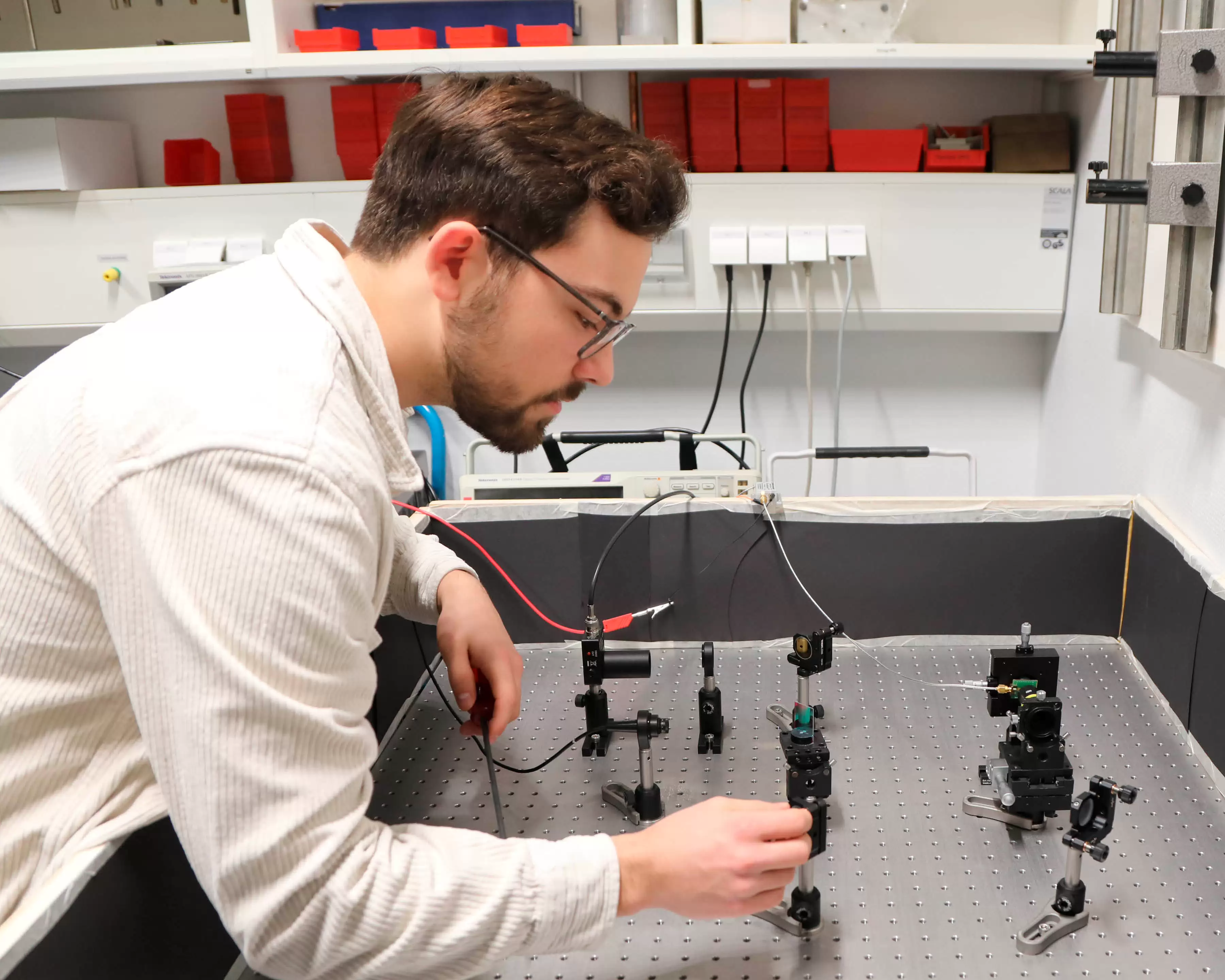
    You work with light-based quantum technologies: photonic integrated circuits, optical quantum communication, and nanofabrication. Much of your lab work takes place at Fontys in Eindhoven, in the middle of Europe’s photonics ecosystem.

  • Quantum Electronics

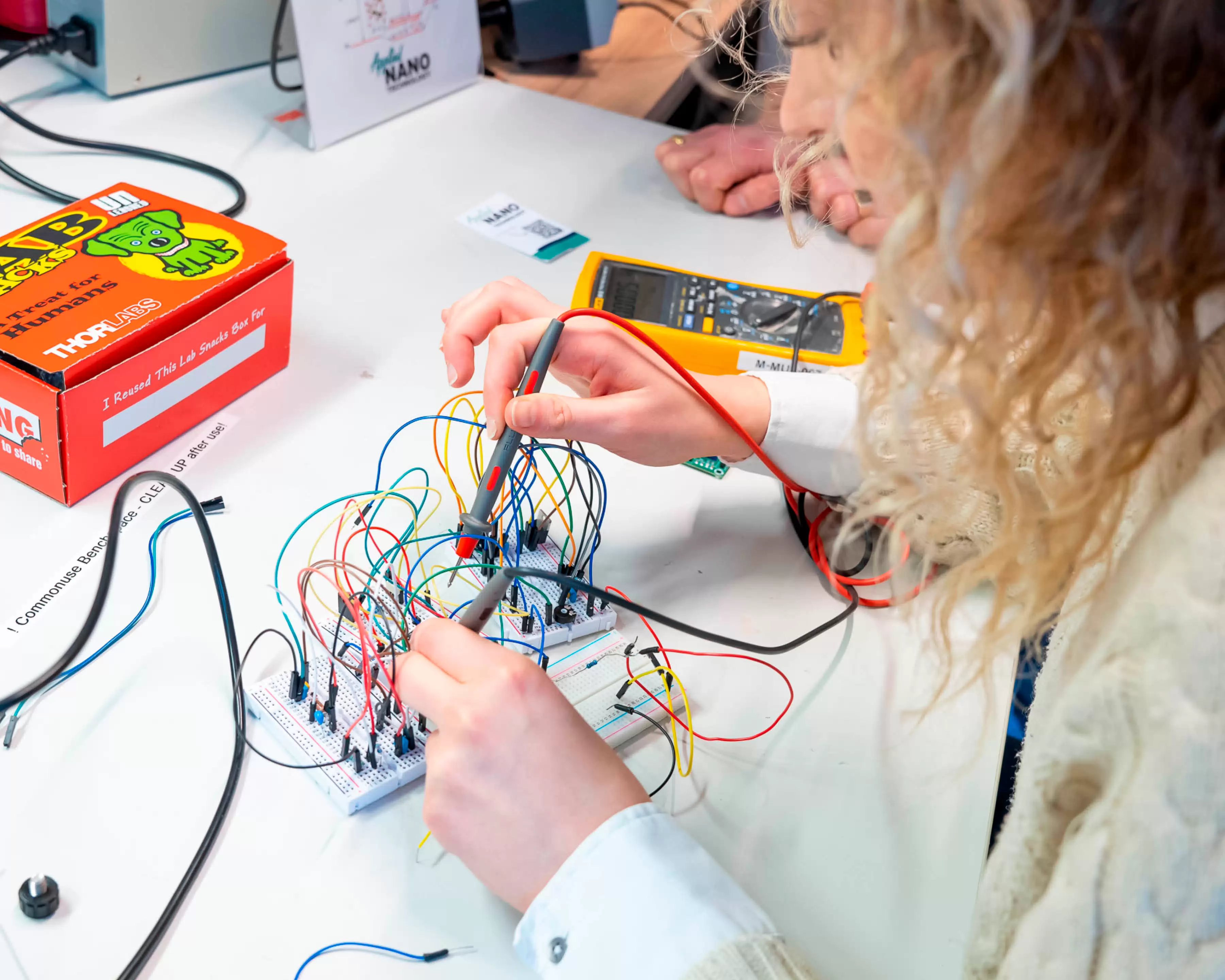
    You develop and characterise the electronic hardware that makes quantum computers and sensors work: from cryogenic control circuits to qubit characterisation and CMOS integration.

What will the next 2 years look like?

Expect a study load of 40 hours per week, including 12 contact hours. The rest involves self-study through projects, research, and assignments. You will study across four universities of applied sciences, choosing one as your home institution. A lecturer from your home location will guide your projects. Most weeks involve one or two visits to partner universities, typically requiring 1.5 to 2.5 hours of travel each way.
Year 1 - Q1

Common Ground

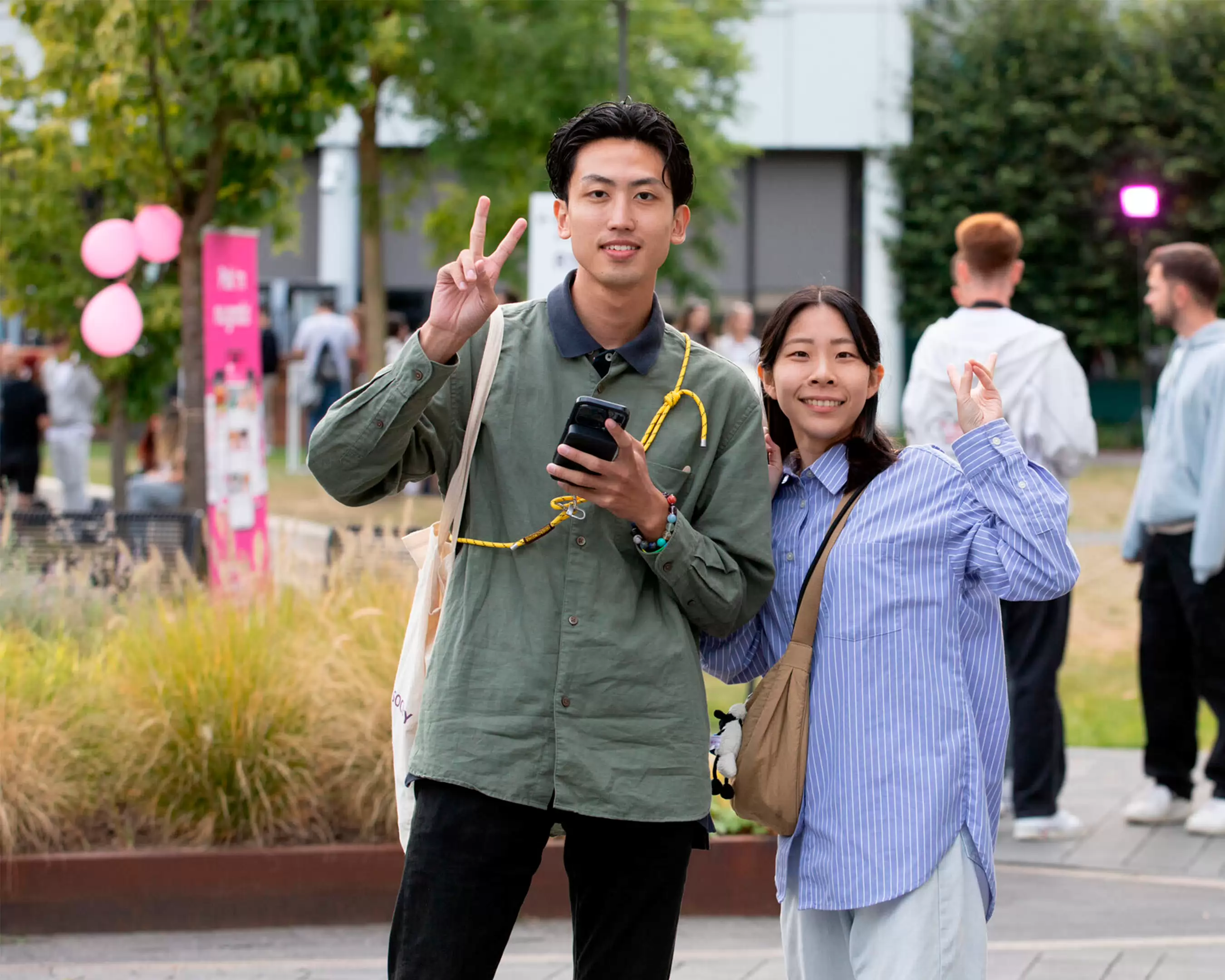
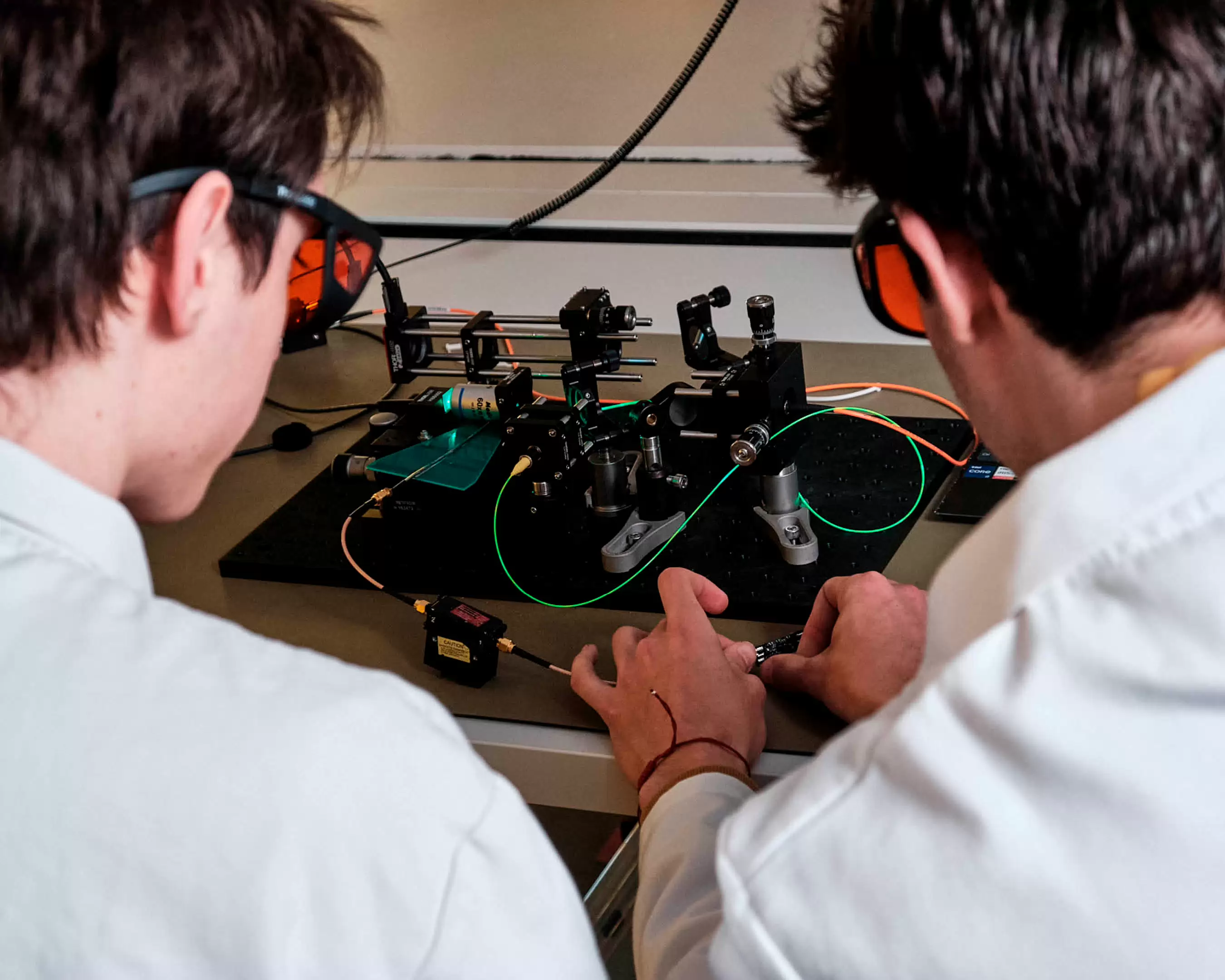
The programme starts with two weeks of introductory activities across all four campuses: you visit every location, meet your fellow students, and get to know the Dutch quantum landscape. Depending on your background, you complete two out of three foundation courses in mathematics, physics, or programming. The phase closes with the Quantum Challenge project: in interdisciplinary small groups, you design and build a project around a quantum application and study the underlying quantum effect in the lab.
Year 1 - Q2, Q3

Quantum Core

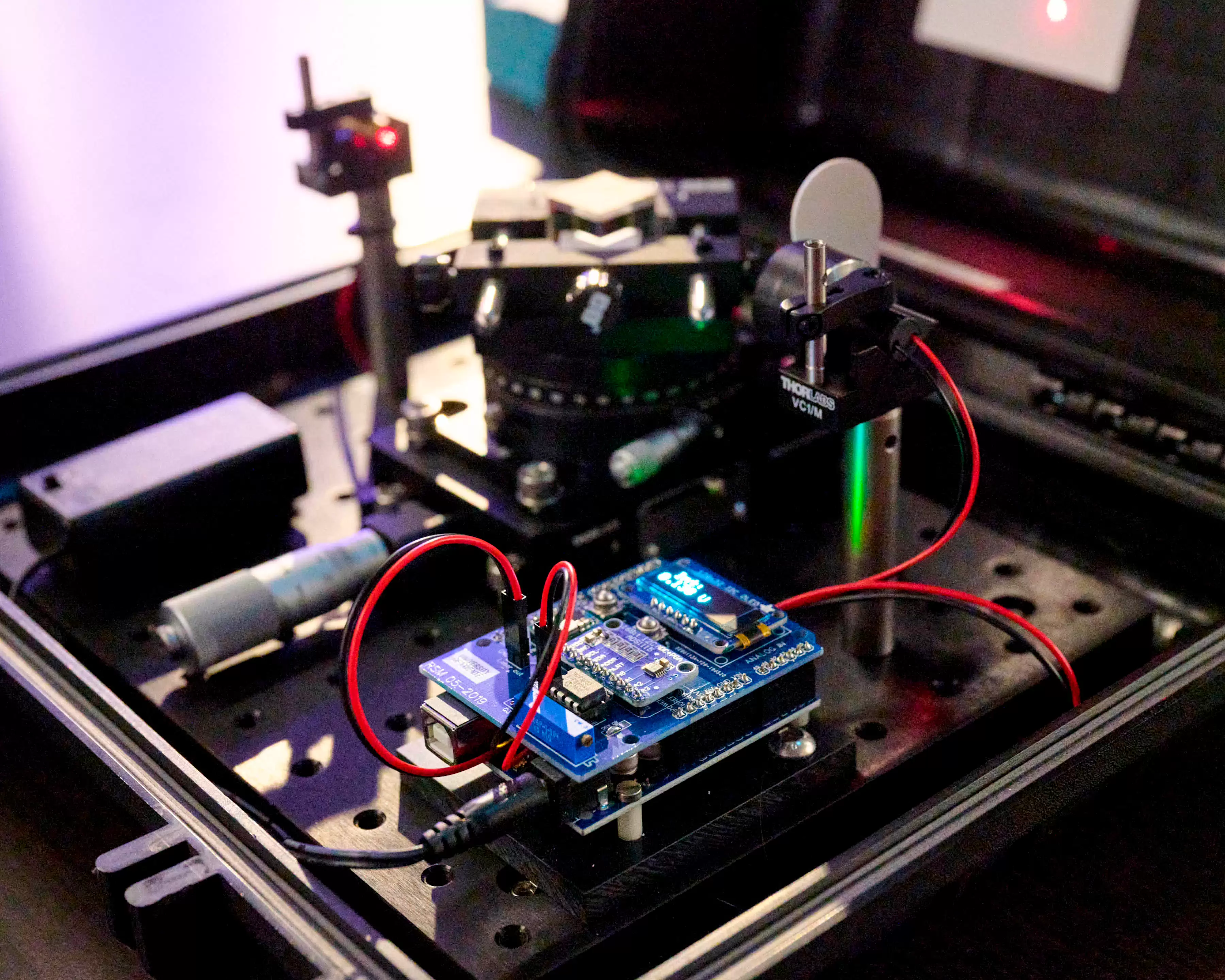
All students follow the same quantum core, which forms the foundation for your specialisation. You study the physics and software of quantum systems in three parallel courses: Quantum Hardware, Quantum Information and Algorithms, and the Quantum Design Project. In the Quantum Design Project, based at your home university, you tackle a real engineering question from a company or research group and follow the design cycle from project plan to presentation. The quantum core runs across Eindhoven, Amsterdam, and Delft.
Year 1 – Q4 & Year 2 - Q1

Specialisation

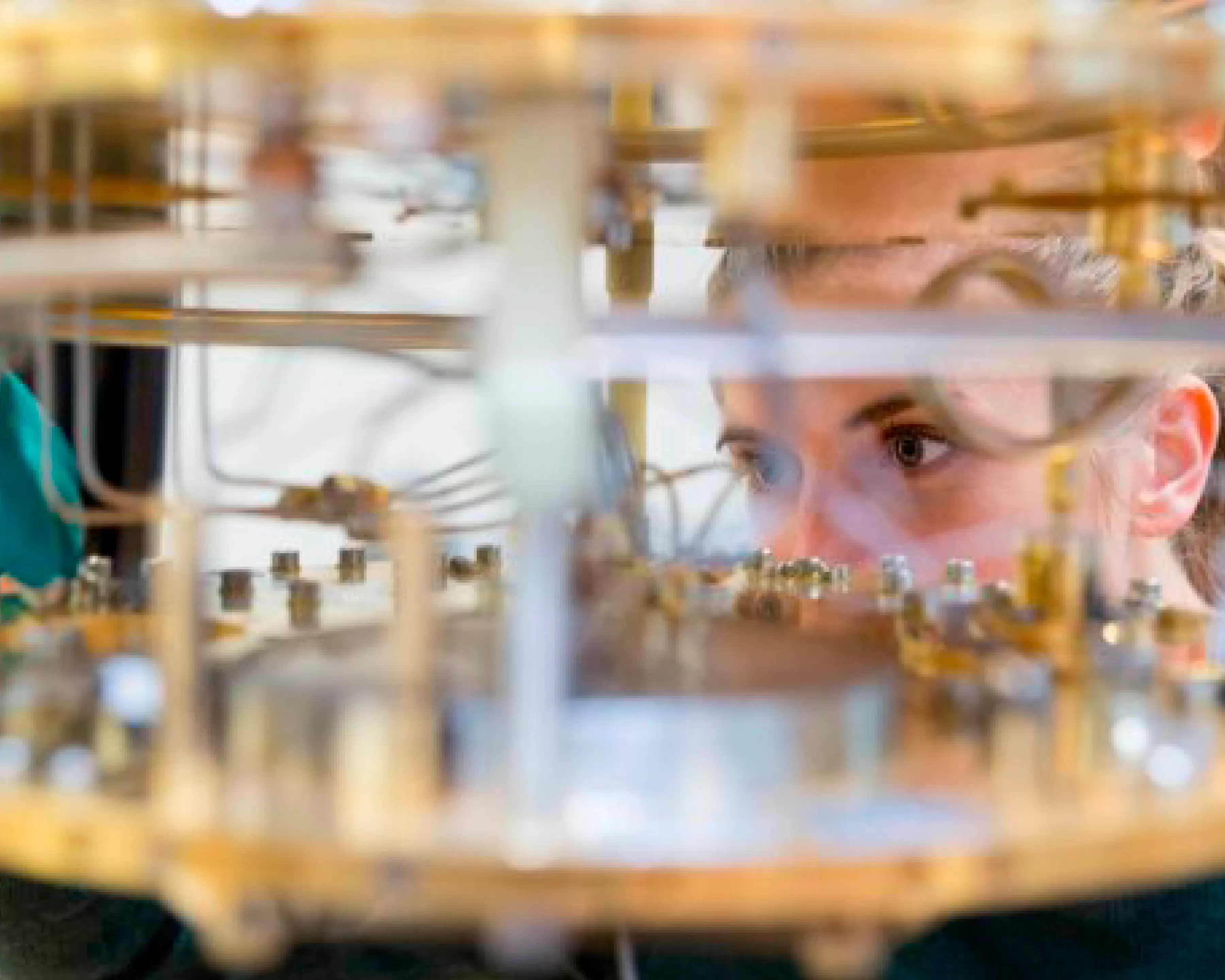
After the core, you dive deeper into your chosen specialisation: Quantum Software, Quantum Photonics, or Quantum Electronics. Each consists of five courses combining theory, lab sessions, and projects. The courses are distributed across the four partner universities, each contributing their specific expertise. You build advanced knowledge in your specialisation while continuing to collaborate with students from other tracks.
Year 2 - Q2, Q3, Q4

Graduation project

You complete the programme with a graduation project at a company or research institute. You apply your knowledge and engineering skills to a real-world quantum challenge, following the full R&D cycle through to delivery. Your graduation supervisor is a lecturer from your home university.

For a detailed breakdown of each phase, see the bottom of this page.

Student experiences

Demetra

Student Electrical and Electronic Engineering

I would like to combine my knowledge of electronics and electrical engineering with knowledge of quantum. What I would really like to do is to contribute to the production of chips for quantum computers.

Tjeerd

Senior lecturer/researcher and co-developer of the master AQT

You will design software based on quantum computing at Amsterdam University of Applied Sciences (HvA) and at Fontys and Saxion, you will learn all about photonic integrated circuits (PICs). The Delft region is known for developing quantum computers based on superconductivity and all electronics related to it.

Haruki

Student Master Applied Quantum Technology

"I did a bachelor's in Applied Physics. When I learned more about quantum technology, this new master's was just being developed. It felt like a logical next step for me. I find it convenient that English is the language of instruction, since quantum technology is an international field. In the first two weeks, quite a few quantum companies had already introduced themselves, giving me a good picture of the Dutch quantum job market. What appeals to me most about this master's? The practice-oriented projects with companies. We work on real problems such as quantum encryption, hardware optimisation, and sustainable chip design."

Check all deadlines

Admission timeline

Wondering what's to come after applying for this programme? Go over the entire admission process.

Applied Quantum Technology

Admission timeline

Wondering what's to come after applying for this programme? Check out the entire admission process.

Start in September

  • Start your orientation

    Have you attended a study orientation event already?

    Take a look at our orientation events
  • See if you meet the requirements

    Check all information regarding admission on amsterdamuas.com.

    Go to admission info
  • Application deadline

    Non-EEA students: 1 April. Dutch and EEA-students: 1 June

    Apply through Studielink
    Make sure to start the application process as soon as possible.
  • Join admission procedure

    Applied through Studielink? Check the selection procedure through amsterdamuas.com.

    Take part in the admission procedure
  • Complete your payment

    The level of your tuition fees depends on your nationality and degree level. More info: amsterdamuas.com

    Everything about finances
  • Arrange student housing

    Fontys can offer housing for a limited number of international students. Fill in the housing application form before the deadline (15 June).

    More info about housing
  • 1 September 2026

    Start study programme

Dive deeper into the curriculum

Each phase has its own character, from building your foundation to specialising in cutting-edge quantum technology. Below you find a detailed breakdown of every phase, including course content, locations, and what to expect.

Depending on your background, you complete two out of three foundation courses:

  • Calculus, linear algebra, Fourier analysis.
  • Core quantum concepts and formalism.
  • Python, software design, Agile/Scrum.

  • Taught at Fontys (Eindhoven) and THUAS (Delft). You study the physics of qubits, quantum computers, quantum communication, and quantum sensing. Lab sessions run every week: you observe, measure, and analyse quantum phenomena with your own hands. You choose 4 out of 17 experiments and write individual reports on each.
  • Taught at Amsterdam. You extend your knowledge of quantum computing and build a two-qubit simulator in Python. The foundations you build here continue into the software specialisation track, where you apply them to real-world cases in finance, chemistry, and machine learning.
  • Based at your home university. In small groups, you tackle a real engineering question sourced from a company or research group, an example: designing a Photonic Integrated Circuit within given constraints. You follow the design cycle from project plan and requirements to design and presentation to the client. Your coach meets your group regularly.

Quantum Software

  • Quantum Circuit Simulations Quantum hardware architectures, IBM Qiskit, NISQ error correction (Amsterdam)
  • Quantum Communications, Sensing and Cryptography Quantum networks, post-quantum encryption, software simulations (Fontys, Eindhoven)
  • Quantum Machine Learning and Optimisation Quantum computing in logistics, finance, and machine learning (Amsterdam)
  • Professional Quantum Software Engineering Quantum software design cycle, high-performance computing, integration with classical systems (Amsterdam)
  • Quantum Computing for Chemistry and Material Design Molecular simulation, Hamiltonians, quantum algorithms for chemical and material problems (Amsterdam)

Quantum Photonics

  • Solid State Physics and Technologies Semiconductors, cryogenics, superconductivity, photonics (Fontys, Eindhoven)
  • Micro and Nanofabrication Photolithography, thin film deposition, cleanroom work, wire bonding (Saxion, Enschede)
  • Enabling Optical Technologies Design and build optical setups from scratch; 6 of 8 lab days at Fontys, Eindhoven (Fontys + Saxion + THUAS)
  • Applied Quantum Photonics Quantum communication networks, photon qubits, photonic integrated circuits, quantum internet (THUAS, Delft)
  • Characterisation and Control Electrical and microwave characterisation of fabricated devices; quantum measurement and control (Saxion, Enschede)

Quantum Electronics

  • Solid State Physics and Technologies Semiconductors, cryogenics, superconductivity, electronic properties of materials (Fontys, Eindhoven)
  • Micro and Nanofabrication Photolithography, thin film deposition, cleanroom work, wire bonding (Saxion, Enschede)
  • Enabling Electronic Technologies Electronic control of qubit setups, DAC/ADC, analog and RF circuits, noise mitigation (Saxion, Enschede)
  • Applied Quantum Electronics From spin qubit hardware to CMOS integration and scalable quantum chip design (THUAS, Delft)
  • Characterisation and Control Electrical and microwave characterisation of fabricated devices; quantum measurement and control (Saxion, Enschede)

Note: If you choose Fontys as your home location and specialise in Photonics or Software, much of your lab work is likely to take place in Eindhoven. The exact distribution depends on the number of students enrolled per location each year.

Choosing Fontys as your home location, you are well-placed to graduate at a high-tech company in the Brainport region, such as ASML, Smart Photonics, or one of the quantum startups built around the TU/e campus. In some cases, it is also possible to work with the Fontys Photonics & Quantum Technology lectorate on a research-oriented graduation project. Either way, you work on engineering challenges where quantum technology is already being built, not just studied.

Alongside the technical content, a dedicated learning line runs through the full two years: Professional Skills. Through workshops, guest lectures, peer sessions, and excursions, you develop:

  • Planning, scope, risk, stakeholder communication.
  • ELSA framework.
  • Intellectual property and the quantum industry landscape.
  • Interdisciplinary collaboration and giving/receiving feedback.

Excursions include visits to quantum companies and research institutes. Previous excursions have included SURF (one of the Netherlands’ new quantum computing platforms), TNO in Delft, Smart Photonics and V-TEC, and guest sessions from quantum industry partners including companies from the Photon Delta network.

Every student has a personal study advisor. A fixed point of contact throughout the full two years. You meet for at least half an hour per block (around one hour per semester) to discuss study progress, your choice of elective, and your internship. If you need more support at any point, more frequent contact is always possible.

For your projects and graduation, you are assigned a project coach: a lecturer at your home university who supervises your group directly. During the project phase, contact with your coach is more frequent and intensive.

Throughout the programme, peer learning is structural. Groups are deliberately mixed across disciplines and backgrounds, so you learn as much from your fellow students as from your lecturers. Feedback, from peers and teachers, is a continuous part of the process.

The teaching approach evolves as you progress: early on, lecturers take a more instructional role to build your knowledge base; later in the programme, they shift to coaching and guide you in solving complex problems independently.