
Programmes
Events

Check all deadlines
Open days and more
Behind every smart machine, autonomous vehicle, or medical device is a designer who oversees the whole picture. In two years, you grow from engineering bachelor into a system designer who connects mechanics, electronics, software, and AI into one working solution. You learn by doing, on real design challenges from companies in the Brainport region, the European heart of high-tech industry.
Direct entry for engineering bachelor graduates. Earn your MSc, fast-track your career.
Every project is a real design challenge. From a high-tech company or one of our research groups.
Build broad systems knowledge and develop depth in the field that fits your ambition.
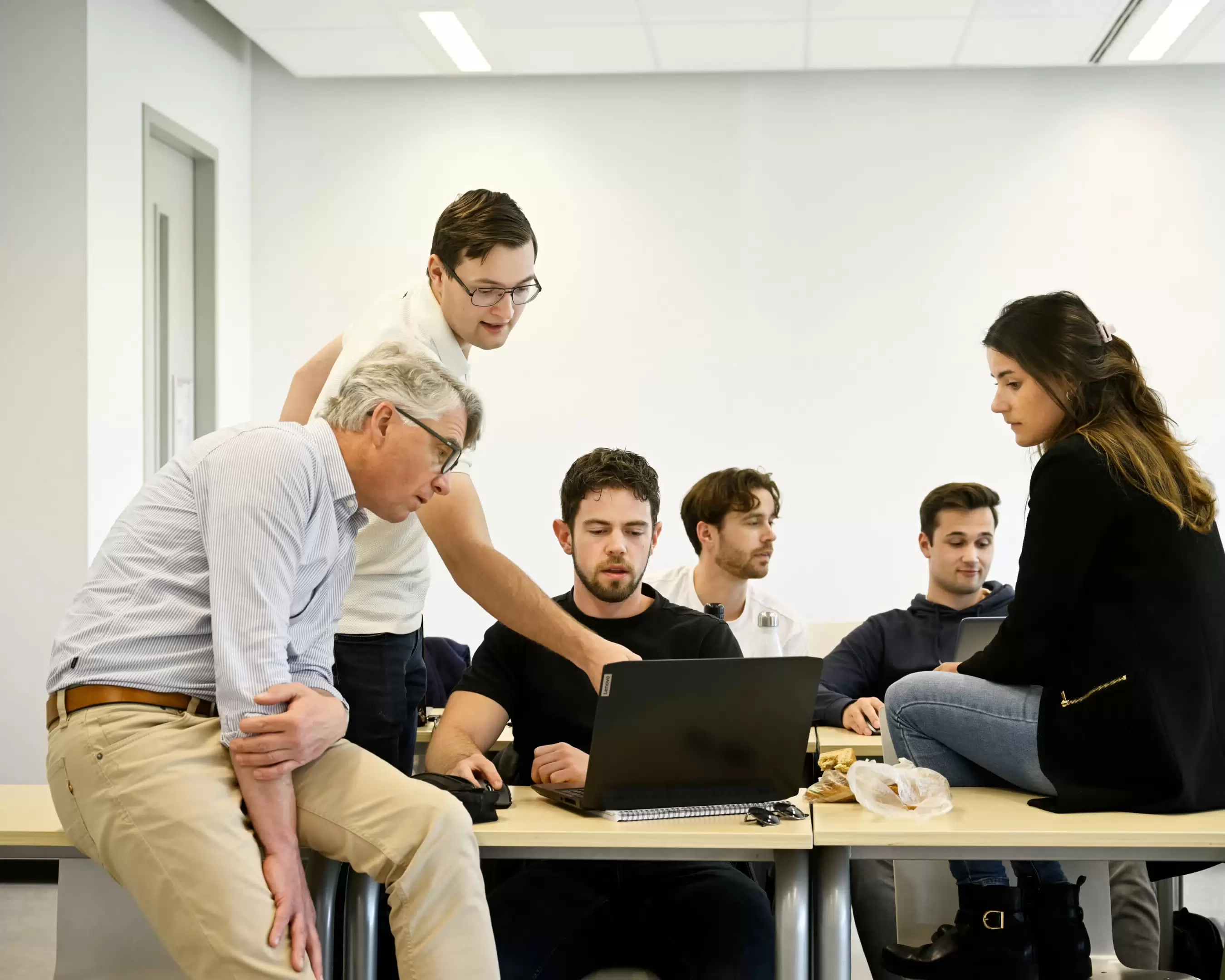
Across two years, you build the technical and leadership skills to lead complex design projects. You go broad, understanding how mechanics, electronics, software, and AI come together. And deep, by specialising in one of three tracks: System Engineering, Precision Engineering, or Automotive Systems. Personal coaching helps you sharpen your professional identity along the way.
Move from solving given problems to defining your own. Combine system thinking with hands-on design, using a structured approach inspired by the Diamond Model.
Every project is a real design challenge for an OEM, a medium-sized supplier, or a smaller high-tech firm in the region.
Use modelling, simulation, and digital twins to test 90% of your design virtually before you build the prototype.
In year one, you work through four core modules on system design, mechanics, electronics, and AI. All applied to a year-long project. In year two, you complete your graduation project at a company of your choice, supported by an academic supervisor and a company supervisor.
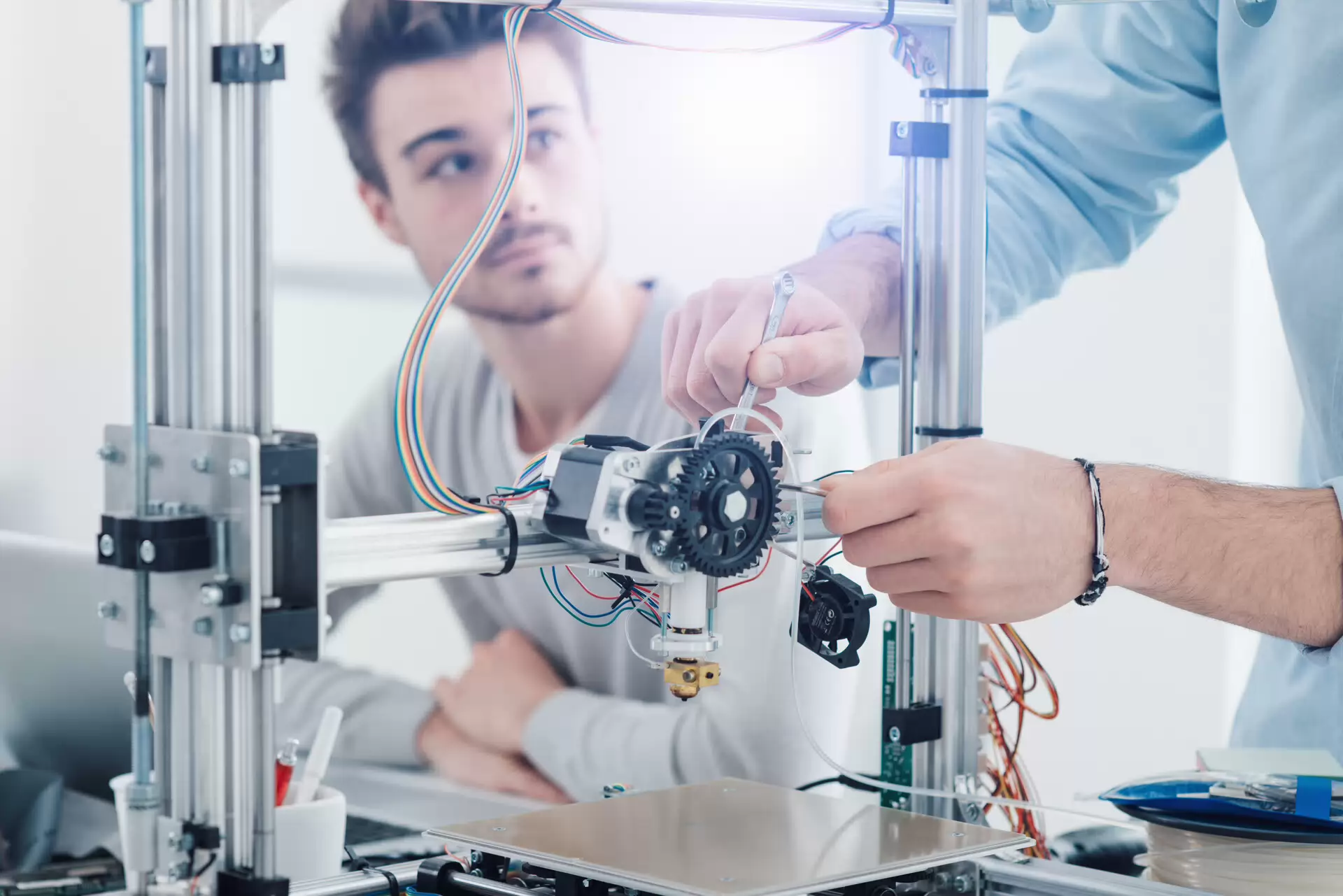
Graduates go on to design advanced systems at companies like ASML, Philips, VDL, and KMWE, as system architects, R&D engineers, product developers, or innovation managers. Wherever you end up, you'll bring the rare ability to see both the technical detail and the bigger picture.
Check the full admission requirements to see which qualifications allow you to enrol.
The exact requirements vary per programme—click the link to check the specific criteria.
The Master System Design is accredited and recognised at NLQF 7 (equivalent to EQF 7). The same European level as a research master, with the same international standing. The difference is in how you learn. A research master (WO) is built around scientific research. This applied master (HBO) is built around doing: you work on real company challenges from your first week, training as a designer who uses existing technology to push the limits of what it can do. That is not a lesser version of a master's degree. It is a different one, and for many people, the more useful one. Coming from a research university? You are welcome here, especially if you want to put your knowledge to work straight away.
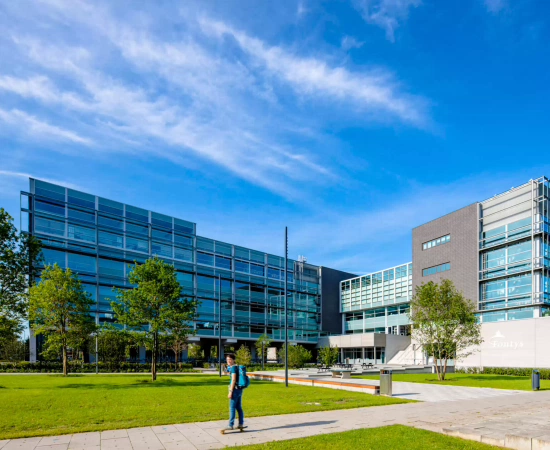
More informationDiscover our campus: beautiful and well-equipped study spaces, trendy coffee corners, and pleasant campus squares. Everything for your growth and enjoyment!
Use our tuition fees indicator and understand the monthly living expenses for international students in the Netherlands, ranging from EUR 900 to EUR 1,100.
Calculate tuition fees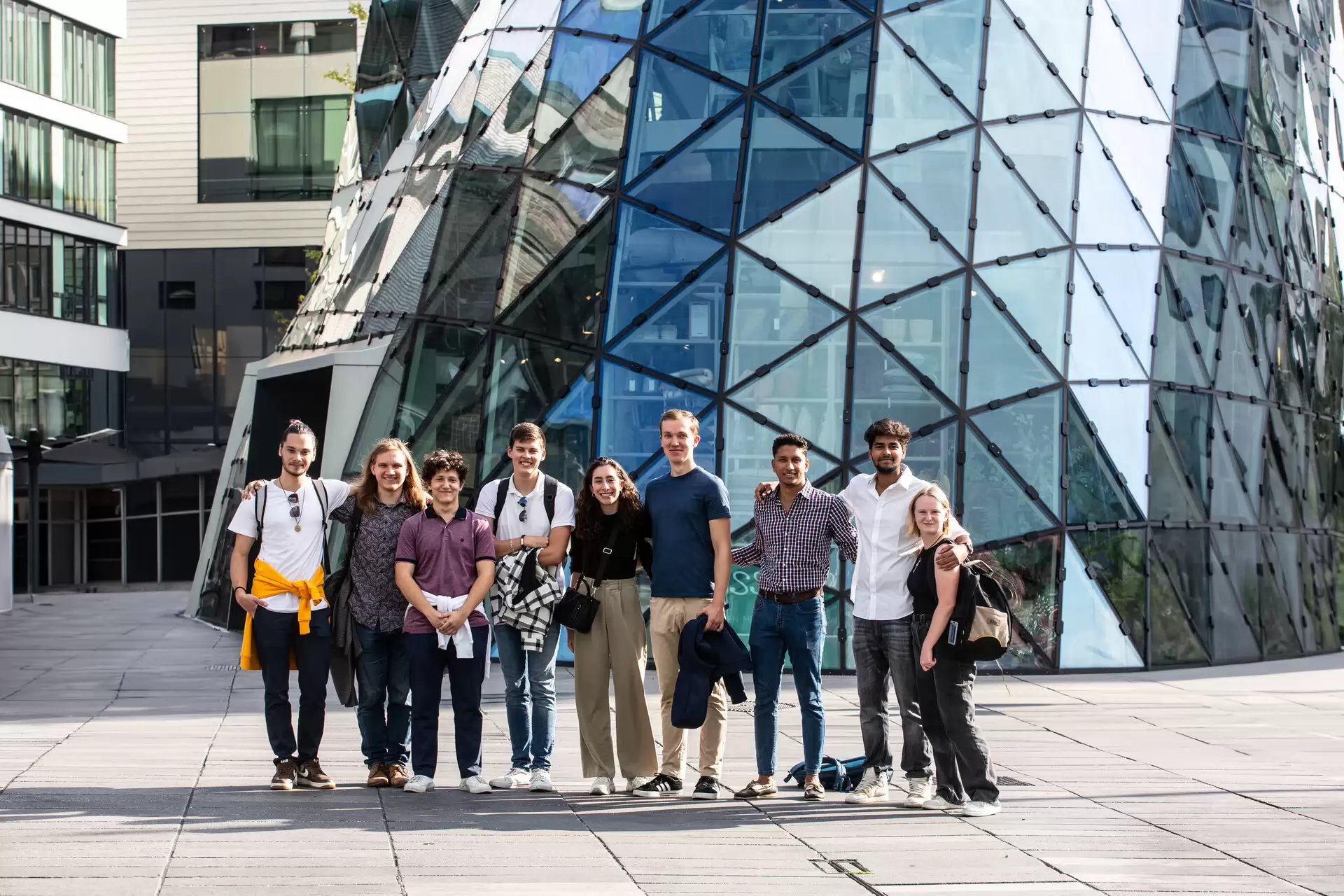
Starting a study in a foreign country is exciting. Make sure to start your search for accommodation on time.
English
September
Master
Full-time
2 year(s)
Eindhoven

Wondering what's to come after applying for this programme? Go over the entire admission process.
Please note! If you wish to apply for housing through Fontys, the application deadline is June 15.
Around 40 hours per week. That's 8 hours of lectures, 16 hours of self-study, and 16 hours of project work.
Both are full master's degrees at the same European level (NLQF 7, equivalent to EQF 7), but with a different focus. A research master (typically at a university) is academically oriented, with strong emphasis on scientific research. This applied master trains you as a designer: someone who uses existing technology to push the limits of what it can do. You learn to apply, integrate, and innovate. Turning knowledge into working systems. Different paths, different perspectives, same level of qualification.
In year two, you spend the equivalent of 40 hours per week on your project. Either at a company of your choice or with the research group connected to your track. You'll have close guidance from both a company supervisor and an academic supervisor.
Yes. The part-time Master System Design is designed for engineers who want to keep working while studying. You can complete the programme in three or four years.
You will learn alongside our research groups.The Master System Design works closely with two Fontys research groups. Their lecturers teach your courses, supervise your project work, and guide your graduation. You don't just learn about applied research, you take part in it.
System Design & Realisation This research group focuses on the design and realisation of complex high-tech systems. Lecturers from this group teach the core System Design courses, supervise first-year projects, and guide graduation work.
Automotive Energy Innovation This research group works on smart, sustainable mobility solutions. From battery technology for heavy-duty transport to logistics systems where vehicles plan their own routes around charging points. Students often join ongoing research projects directly.
We are happy to help.