

Programmes
Events

Where this master can take you, and what you'll bring back into your career.
With a Master System Design, you graduate as a T-shaped professional: technically deep in your specialisation, broadly fluent across disciplines, and able to connect the two. That's a rare combination, and high-tech employers in the Brainport region and beyond are actively looking for it. Whether you do the full-time master and step straight into your first role after graduation, or follow the part-time master, and grow within your current organisation: you graduate ready to lead complex design projects, integrate multiple disciplines, and bring new technology into real products.
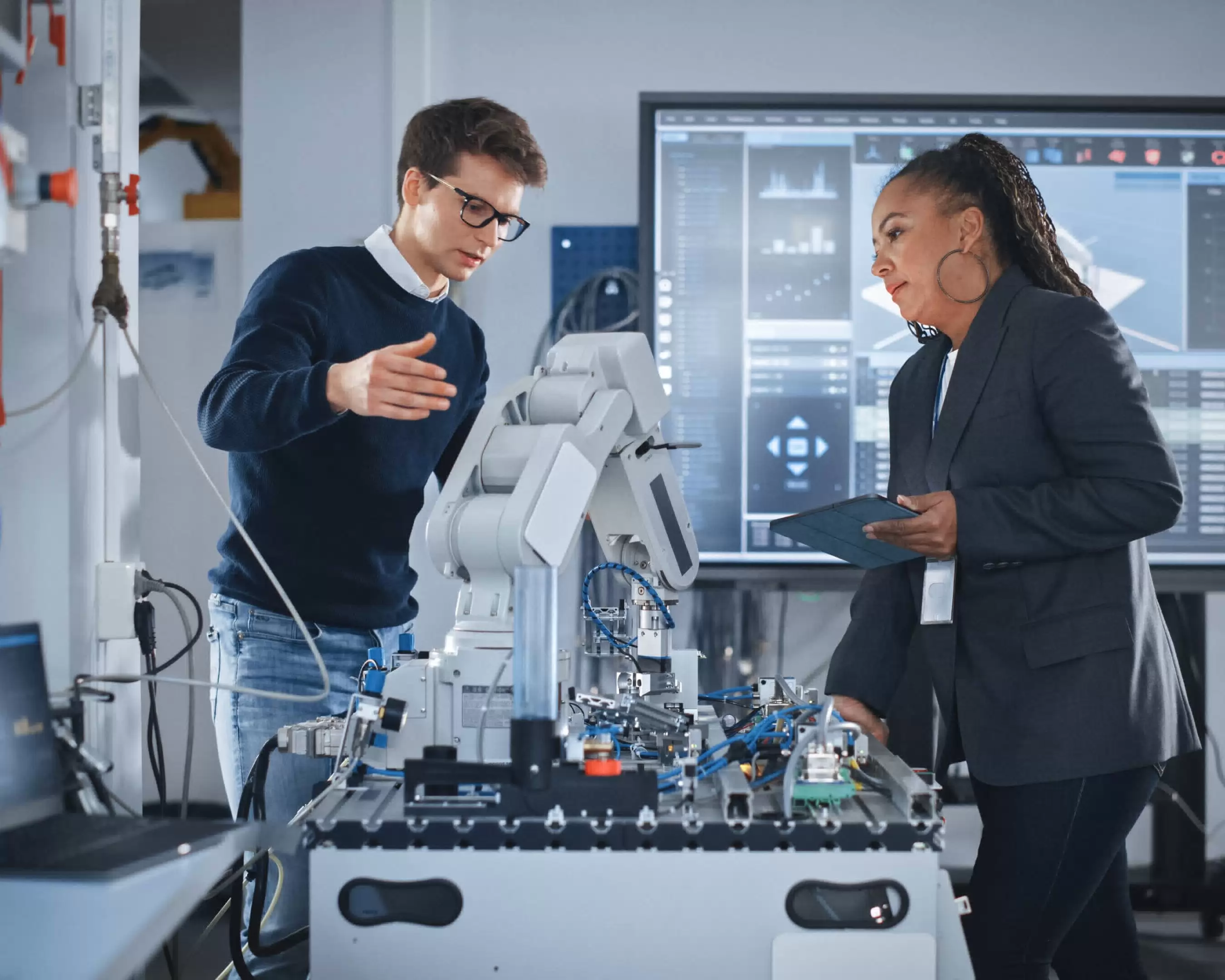
Most graduates stay in the Brainport region, Europe's largest high-tech hub, where leading equipment manufacturers, suppliers, and start-ups work side by side. Some go international. Some return to the employer they joined as a part-time student. Wherever you end up, you graduate with a strong network already in place.
• Processing machines and equipment. ASML, Thermo Fisher, Philips, and a range of smaller equipment manufacturers. Designing the machines that build today's chips, instruments, and devices.
• Precision instruments and medical systems. Satellites, telescopes, electron microscopes, medical imaging. High-precision systems where accuracy and reliability matter most.
• Mobility and factory automation. VDL, KMWE, and other suppliers in the automotive and high-tech supply chain. Plus factory automation, pick-and-place machines, and production lines.
Graduates take on roles like these. In companies large and small, across the Netherlands and beyond:
As a system architect, you’ll design and integrate complex systems at companies like ASML, ensuring all components work together efficiently.
In the role of a product developer, you’ll oversee the entire development process, especially in smaller tech firms, leading projects from concept to completion.
Working as an R&D engineer, you’ll focus on innovating and enhancing system components, driving technological advances at companies like Philips.
As a control systems engineer, you’ll specialise in configuring and optimising control systems, ensuring machinery functions at peak performance.
In the role of innovation manager, you’ll lead the creation and implementation of new technologies, managing projects that push the boundaries of high-tech innovation.
System design is as much about how you work as what you know. By the time you graduate, you've practised the skills that high-tech employers say they value most. Far beyond the technical.
• Independent thinking. You don't wait to be told what to do. You plan your work, find relevant literature, and take well-considered decisions on your own.
• Analytical problem-solving. You break complex problems into parts, ask the right questions, and base your design choices on evidence, not assumptions.
• Leadership in multidisciplinary teams. You know how to work with specialists from different fields, take responsibility, and keep a project moving when the path isn't clear.
• Clear communication. You can explain technical decisions to stakeholders who don't share your background. In writing, in presentations, and in everyday conversation.
• An eye for ethics. You learn to weigh the wider implications of your designs: who benefits, who's affected, and what responsibility comes with the technology you build.

Wondering what's to come after applying for this programme? Go over the entire admission process.
Please note! If you wish to apply for housing through Fontys, the application deadline is June 15.