

Sprint naar content

Master System Design

Master System Design

3 year(s)
Master
Part-time
Starts September
English
Eindhoven

Engineer with a few years under your belt? Become the systems thinker your team needs, one day a week, three years on. Apply for the part-time Master System Design in Eindhoven.

Admission timeline

Check all deadlines

Meet us

Open days and more

From specialist engineer to systems thinker, without pausing your career.

You've built your engineering expertise in a specific discipline. Now the projects in front of you span more: mechanics talking to software, sensors driving control loops, AI changing how things get designed. The part-time Master System Design helps you make that leap. From deep specialist to T-shaped systems engineer who can see, design, and lead across disciplines.

Three or four years, one fixed teaching day per week, and project work you can shape around your job. You stay in Eindhoven's Brainport region. Close to the high-tech industry that needs engineers like you.

Is this study programme right for you?

  • A schedule built around your working week.

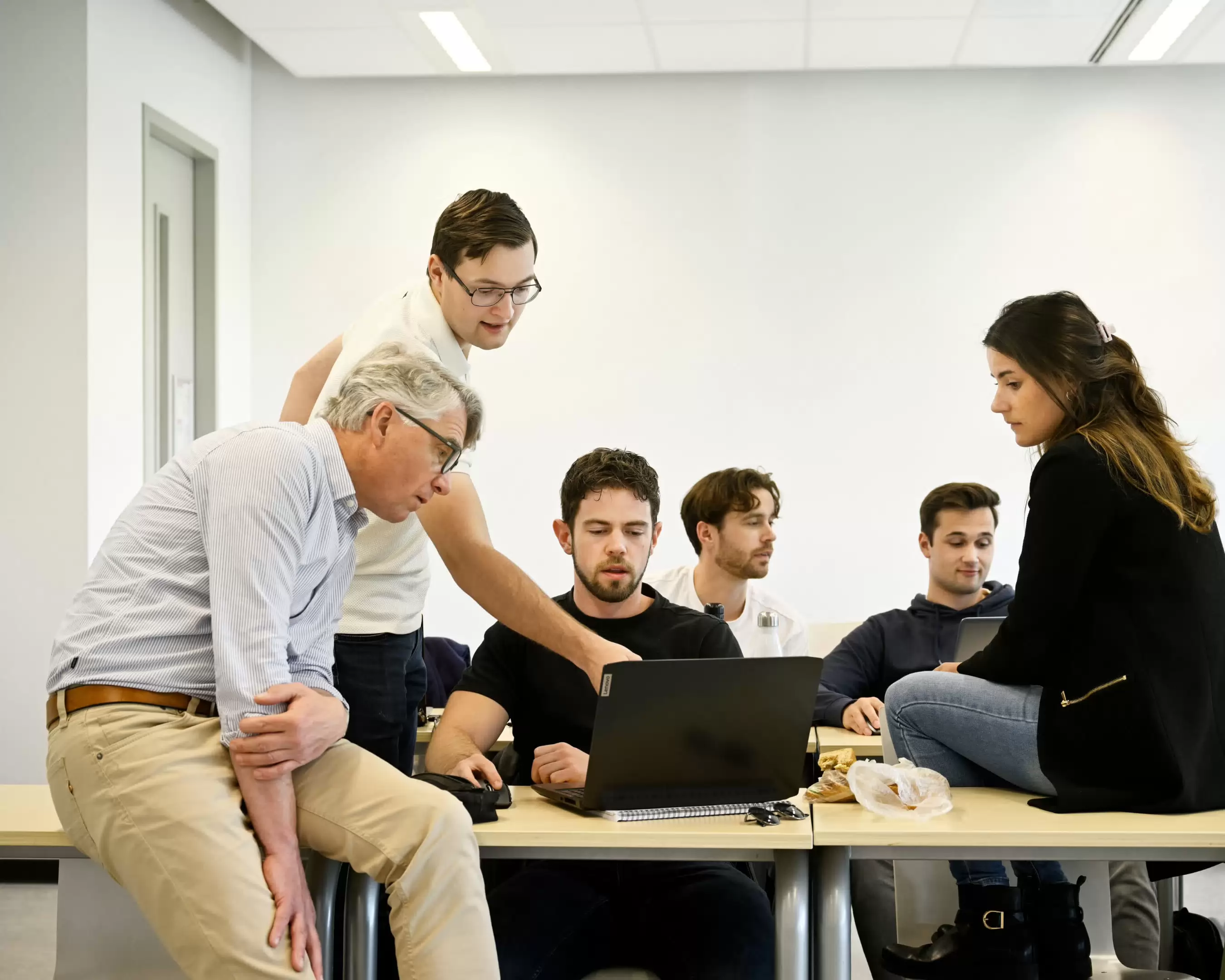
    One fixed day on campus, plus around 12 hours of self-study and project work. Three working days alongside the master is the sweet spot for most students.

  • Your workplace becomes your project ground.

    Many students bring real projects from their own job into the master. And graduate on a problem their employer actually wants solved.

  • No years of experience required. Just the drive to deepen.

    Direct entry for engineering bachelor graduates. Most students bring a few years of work experience, but it's not a requirement to enrol.
Check out these programmes

Marieke

Student

‘After completing my Bachelor programme in Automotive Engineering, I wanted to broaden my perspective without diving into the full academic depth of a technological university. The MSc System Design programme appealed to me because of its T-shaped approach, combining broad interdisciplinary understanding with the opportunity to specialise in a specific field.

Automotive Engineering is already quite broad, but this master taught me how to systematically integrate knowledge from multiple disciplines to improve a system as a whole. It’s not just about deepening your own expertise, it’s also about coordinating and supporting others so everything comes together in one coherent design. I’ve particularly enjoyed exploring Precision Engineering, which was new to me and incredibly insightful. I’m also continuing to develop in Systems Engineering, which I’ve learned grows not only through study but through experience in the field.

My advise for future students? Don’t underestimate the study load. It’s an intensive program that requires you to work independently and think critically. You’ll recognize many concepts from your previous education, but here you’ll explore them in greater depth. It’s challenging, but if you’re committed, it’s also extremely rewarding.’

Ronald

Student

"Before starting the MSc System Design, I completed my Bachelor’s degree in Mechanical Engineering. I’ve now been working for several years at KMWE as a Mechanical Engineer. In my work, I increasingly encounter complex systems where different disciplines come together. I wanted to better understand how these fields influence each other and how to view a system as one coherent whole.

I also wanted to keep challenging myself. Besides the challenges I face at work, I felt the need to set another personal goal to work towards. That’s why I chose the Master’s programme in System Design at Fontys.

What I really like about this programme is its practical approach. You don’t just learn theory — you also learn how to apply it to real and recognisable systems. So far, the structured way of thinking — from requirements to functions, and from functions to solutions — has been especially valuable. It’s something I can directly apply in my daily work at KMWE. It helps me make more deliberate design choices and better explain why a design has evolved the way it has.

I’m following the part-time variant, which combines well with my job. I’m fortunate that my employer immediately saw the value of this programme and fully supports me. Of course, it requires time and discipline, but the link between study and practice makes it worthwhile and motivates me to invest my free time.

My tip for future students? Choose this Master’s if you’re ready for a challenge and want to look beyond your own field! Be aware that the study load can be demanding and that it requires dedication and effort. But it’s worth it — you’ll develop a broader and deeper understanding of complex systems, knowledge you’ll carry with you throughout your entire career."

Your programme

A master shaped by what working engineers actually need

This programme was built with working engineers in mind. The teaching day is a full day so it fits a working week. The first-year project lets you choose a problem close to your daily practice. Coaching is flexible. You and your study coach decide how often you meet based on your situation. And the three-year structure (sometimes four) gives you the space to combine the master with your job, your family, and the rest of your life.

Your programme

What are you going to learn?

  • Lift your thinking to master's level.

    You move from executing engineering decisions to questioning and shaping them. You learn to define problems yourself, defend your design choices, and make calls that your colleagues haven't been able to make.

  • Tackle the systems work your team is wrestling with.

    Every year-long project is a real design challenge. Many part-time students choose a problem from their own workplace. Turning what was a frustration into a master-level design solution.

  • Bring AI, digital twins, and modelling into your daily practice.

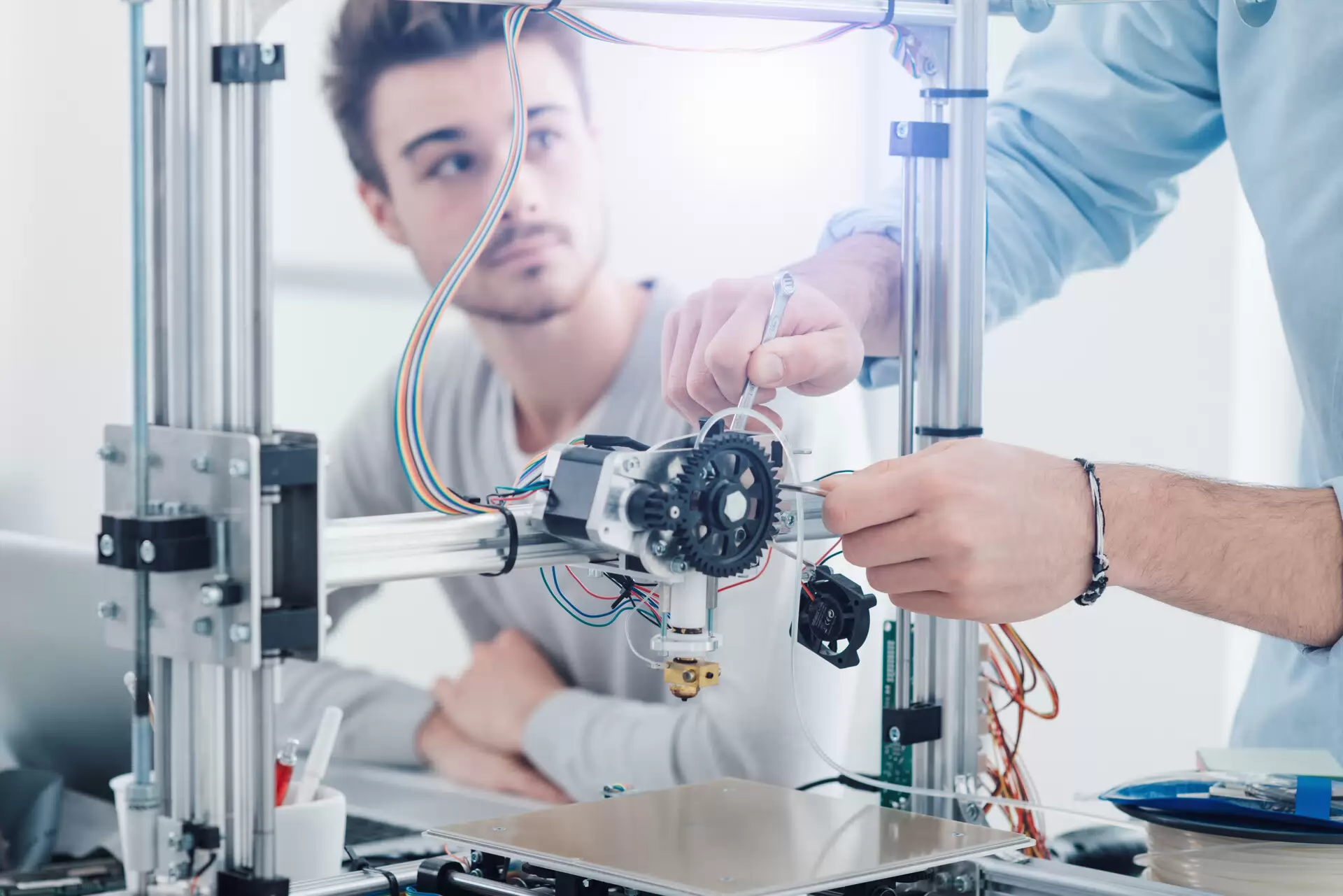
    You learn to use modelling, simulation, and digital twins to test designs virtually before you build them. Skills you can put to work next Monday.

Which specialisation will you choose?

Specialisations

Automotive Systems

Contribute to sustainable mobility and the vehicles of the future.

Automotive Systems

In Automotive Systems, you focus on sustainable mobility and advanced energy solutions for vehicles. You explore topics such as battery technology and electrified drivetrains. Projects combine mechanical, electrical, and software engineering to develop cleaner and brighter automotive systems.

  • Automotive system integration

    Design and integrate mechanical, electrical, and software systems for vehicles. With a focus on sustainable energy.

  • Energy & battery technology

    Explore advanced energy solutions, including battery systems and electrified drivetrains.

  • Control & embedded systems

    Develop control strategies and embedded software for automotive applications.

  • Sustainable mobility projects

    Work on real projects that contribute to cleaner, smarter, and more sustainable transportation.

Specialisations

Precision Engineering

Driven by precision and interested in designing advanced mechanical and mechatronic systems.

Precision Engineering

In Precision Engineering, you work on high-precision mechanical and mechatronic systems. You focus on detailed engineering, accurate manufacturing, and innovative solutions. Projects challenge you to design systems where accuracy, stability, and performance are critical.

  • High-precision system design

    Design mechanical and mechatronic systems where accuracy and stability are critical.

  • Detailed engineering & manufacturing

    Learn how design choices affect manufacturability, tolerances, and system performance.

  • Measurement & validation

    Apply advanced control techniques to optimize and improve precision system performance.

  • Innovative engineering solutions

    Work on industry-driven projects that demand creative and innovative technical solutions.

Specialisations

System Engineering

Managing complex systems and making sure all components optimally interact together.

System Engineering

In System Engineering, you focus on designing, integrating, and optimising complex, multi-component systems. You work across disciplines and learn how to manage interactions between hardware, software, and people. Your projects require you to deliver reliable, high-performing systems.

  • Requirements & optimisation

    Translate stakeholder needs into system requirements and optimise performance, safety, and reliability.

  • System architecture & integration

    Learn how to structure, design, and integrate complex systems with many interacting components.

  • Managing complexity

    Develop skills to oversee the technical, organisational, and human aspects of large-scale system projects.

  • Multidisciplinary collaboration

    Work with specialists from different disciplines on complex, real-world engineering industry projects.

Your programme

What will the next three years look like?

Year one lays the foundation: four core modules and a project that runs the full year. Year two deepens your track, and most students start scoping their graduation project. Year three is your graduation year, ideally on a problem your employer wants to solve.
Your future

What graduating changes. For you, your team, your career.

Most part-time graduates don't switch jobs after the master. They grow into bigger roles inside the same company: system architect, technical lead, innovation manager. Some do move on, often to a senior role they couldn't reach without the master. Either way, you graduate with a stronger network across Brainport's high-tech ecosystem and a credential that opens doors at NLQF level 7.

Admission & application

Admission requirements

  • You must have a diploma of higher secondary education that is equivalent to Dutch standards.

    Make sure to check all admission requirements.

  • A minimum level of proficiency in the English language is required.

Admission & application

An applied master: just as recognised, differently focused

The Master System Design is accredited and recognised at NLQF 7 (equivalent to EQF 7). The same European level as a research master, with the same international standing. The difference is in how you learn. A research master (WO) is built around scientific research. This applied master (HBO) is built around doing: you work on real company challenges from your first week, training as a designer who uses existing technology to push the limits of what it can do. That is not a lesser version of a master's degree. It is a different one, and for many people, the more useful one. Coming from a research university? You are welcome here, especially if you want to put your knowledge to work straight away.

More information
Our campus

Studying at Fontys means you learn, make friends, and enjoy an exciting student life.

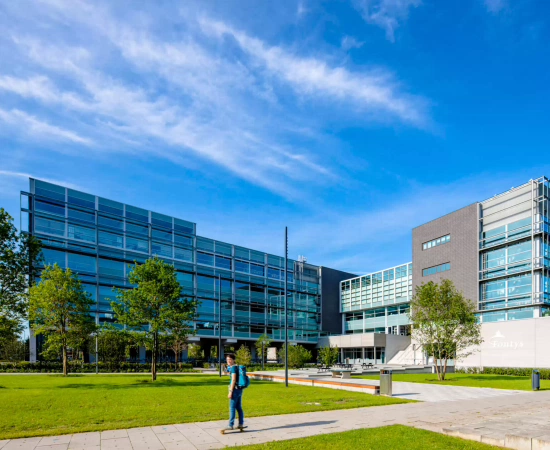
Discover our campus: beautiful and well-equipped study spaces, trendy coffee corners, and pleasant campus squares. Everything for your growth and enjoyment!

Costs

Tuition fees and cost of living in the Netherlands

Use our tuition fees indicator and understand the monthly living expenses for international students in the Netherlands, ranging from EUR 900 to EUR 1,100. 

Calculate tuition fees
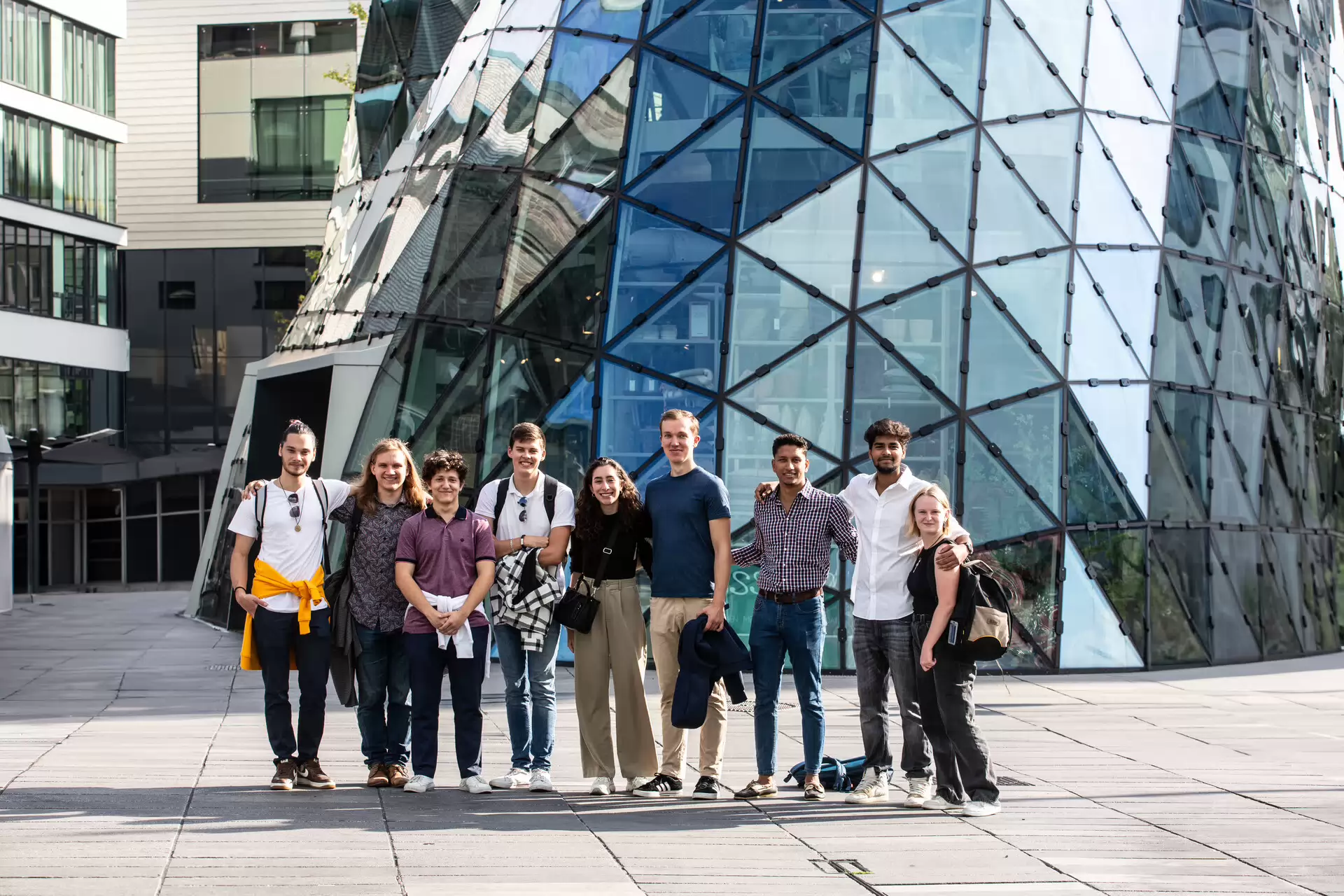
Looking for a place to live near a Fontys campus?

Starting a study in a foreign country is exciting. Make sure to start your search for accommodation on time.

Master System Design

Language

English

Start

September

Degree

Master

Study load

Part-time

Duration

3 year(s)

Location

Eindhoven

Master System Design

Language

English

Start

September

Degree

Master

Study load

Part-time

Duration

3 year(s)

Location

Eindhoven

Check all deadlines

Admission timeline

Wondering what's to come after applying for this programme? Go over the entire admission process.

Please note! If you wish to apply for housing through Fontys, the housing application deadline is June 15.

Master System Design

Admission timeline

Wondering what's to come after applying for this programme? Check out the entire admission process.

Start in September

  • Start your orientation

    Have you attended a study orientation event already?

    Take a look at our orientation events
  • Application deadline

    International students: 1 June. Dutch students: 31 August.

    Check application process
    Make sure to start the application process as soon as possible.
  • Submit required files

    Submission and assessment of grade lists, diploma and proof of language. For non EEA-students: additional steps can be required.

  • Complete your payment

    The tuition fees indicator helps you to determine the tuition rate for your situation.

    Everything about finances
  • Arrange student housing

    Fontys can offer housing for a limited number of international students. Fill in the housing application form before the deadline (15 June).

    More info about housing
  • 1 September 2026

    Start study programme

Frequently asked questions

Around 20 hours per week. That's 4 hours of lectures, 8 hours of self-study, and 8 hours of project work.

Both are full master's degrees at the same European level (NLQF 7, equivalent to EQF 7), but with a different focus. A research master (typically at a university) is academically oriented, with strong emphasis on scientific research. This applied master trains you as a designer: someone who uses existing technology to push the limits of what it can do. You learn to apply, integrate, and innovate. Turning knowledge into working systems. Different paths, different perspectives, same level of qualification.

Yes. You can complete the programme in two years.

Two things mainly: technical depth in system design that you can't easily build on the job, and a recognised master's qualification at NLQF 7 (equivalent to EQF 7 — the same European level as a research master). Many students do the master either because they want to keep growing intellectually, or because a master's is becoming a formal requirement for the role they want next.

Two research groups, both grounded in industry practice are connected to this master.

The lecturers who teach your courses and supervise your projects don't just teach, they research. Both research groups work directly with high-tech industry, so what you learn in class is connected to the same problems companies are paying to solve right now.

System Design & Realisation Researches how complex high-tech systems are designed and built. Their projects often touch on what part-time students recognise from their own work: integrating subsystems, managing trade-offs, getting from concept to working prototype.

Automotive Energy Innovation Tackles the energy and mobility challenges of the next decade. Battery systems for heavy transport, smart routing for logistics fleets, and the broader shift to electric drivetrains. If you work in or near automotive, you can join ongoing research projects directly.

Do you have a question?

We are happy to help.

Ask Fontys Eindhoven your questions