
Programmes
Events
Get a good impression of what your study programme will look like.
At Fontys Pulsed, this 120-ECTS master is built around challenges that come directly from your own organisation. Every semester, you apply what you learn the same week you learn it. Five learning lines shape how you approach every problem you encounter at work.
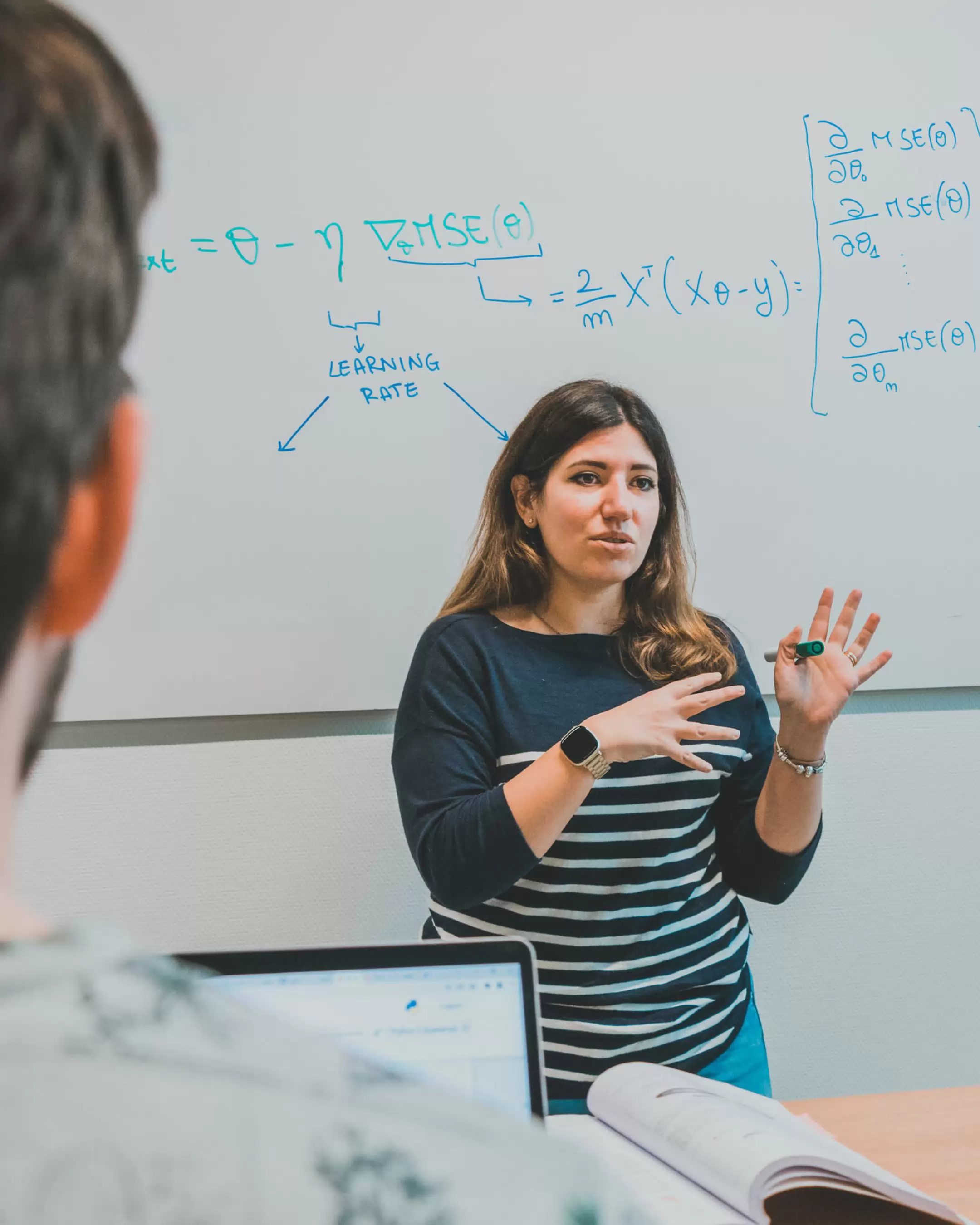
Every challenge in this master is drawn from your own organisation and role.
Learn on your study day. Apply the next day. See results next week.
A dedicated coach supports your development throughout the programme.
The five learning lines are the lens through which you approach your work, not a timetable to follow. For a detailed description of what each learning line covers, see the master guide.
1. Digital Technologies
You explore how AI, machine learning, IoT and smart embedded systems work, and where they add real value in organisations. You learn to assess technical feasibility, ethical implications and organisational readiness before implementing any solution.
2. Systems Engineering
You learn to structure complex challenges: define the core problem, analyse the current situation, set clear requirements and design scalable solutions that account for human and organisational factors.
3. Design-Based Working
You use design thinking to tackle challenges from a human-centred perspective. Working iteratively, you move from research and problem definition through concept development to practical solutions.

4. Practice-Based Research
You learn to formulate strong design questions, choose the right research methods and validate your outcomes. You apply research ethics throughout, ensuring your solutions are reliable and defensible.
5. Personal and Professional Identity
A dedicated coach supports your development throughout the programme. You reflect on your strengths, grow into a self-directed professional and develop the confidence to lead complex change projects.
Studyload
Approximately 20 hours per week, structured around your working life, on average: 6 hrs lectures & coaching + 6 hrs self-study + 8 hrs project work in your own organisation. Three times per year: a three-day boost session to kick off a new challenge phase.
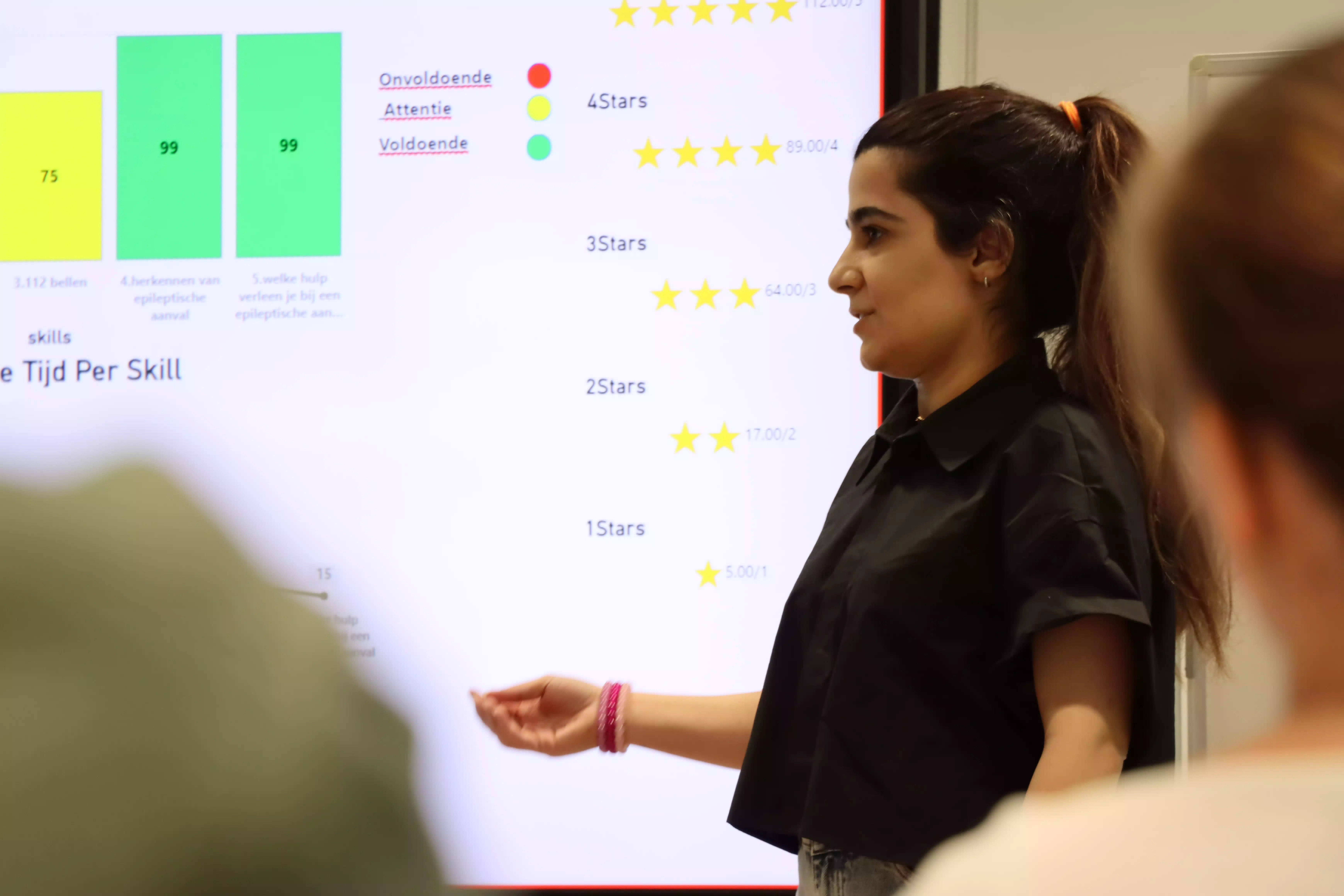
You start by exploring how data from your own organisation can drive better decisions, building and testing a data collection system yourself. Then you design a machine learning algorithm to enhance what your data can do. Your third challenge takes you through a full design cycle for a state-of-the-art digital technology, resulting in a working proof of concept applied in your workplace.
In Year 2 you take on a challenge at ecosystem level. Connecting your expertise to a broader context like healthcare, smart industry or sustainable technology. Then comes your graduation: 20 weeks in which you define a real design question in your organisation, do the research and deliver something that works.
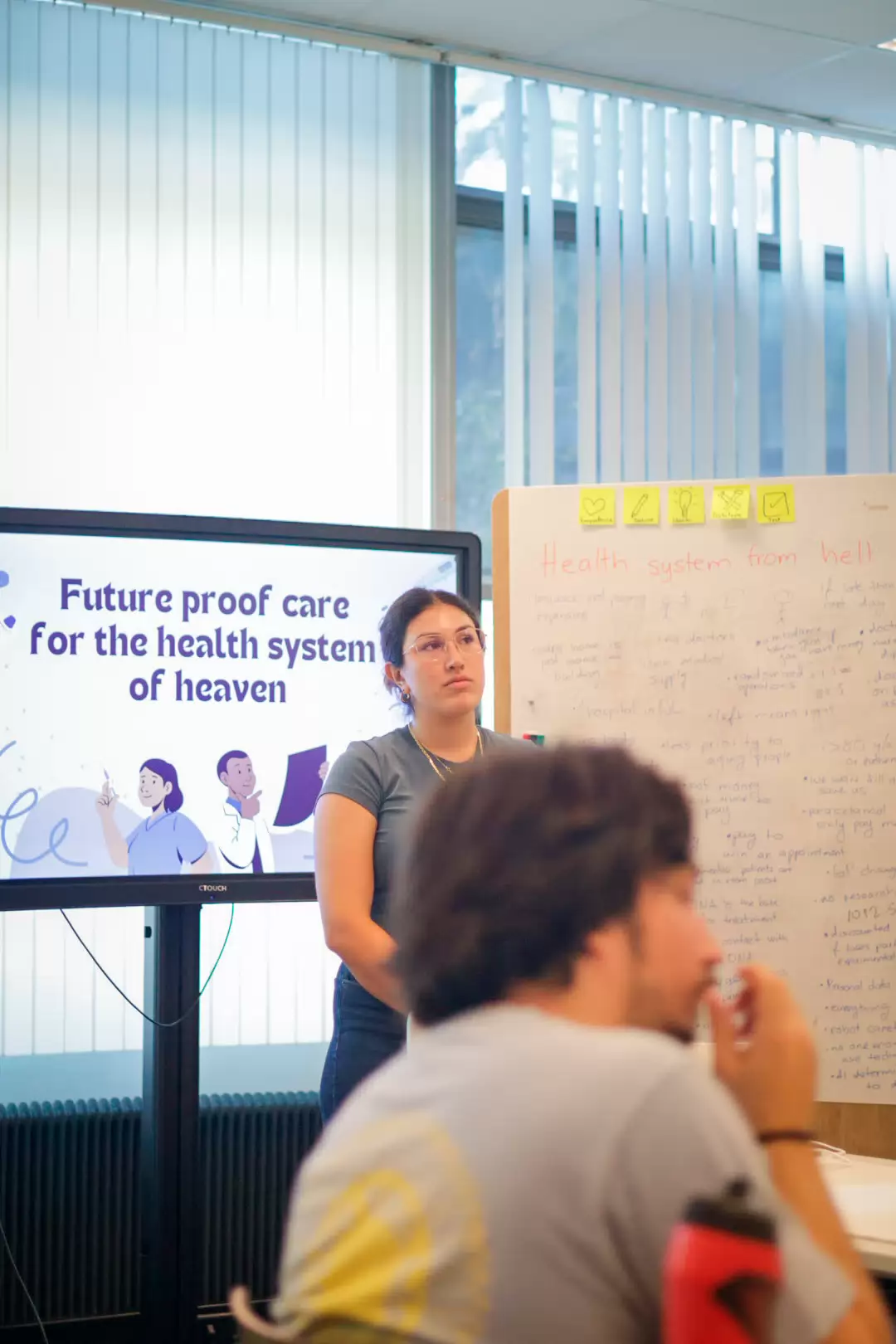
Each challenge is open-ended; there is no single right answer. You work in teams, combine all five learning lines, and present your outcomes to real stakeholders. Complexity increases deliberately each time:
Challenge 1
Individual level. "Me, myself and data": you help a fellow student understand their daily habits through a self-built data collection and visualisation system.
Challenge 2
Group / organisation level (outside). You design a machine learning algorithm to address a real data question in your organisation. You translate digital technology possibilities into practical, sustainable solutions for a professional context.
Challenge 3
Company level (inside). You work inside an organisation, navigating internal culture, stakeholder dynamics and the full complexity of real digital transformation in practice.
Challenge 4
Ecosystem level (outside). Year 2 opens with a big one: a challenge at the level of a whole sector or ecosystem. Think healthcare, smart industry or urban transformation. You combine technology, ethics and design at a scale you haven't worked at before.
Graduation
Ecosystem / company level (your choice). You spend 20 weeks in your own company, working on a real problem from start to finish. You define the question, do the research and deliver something the company can actually use.
The master is connected to the research team Systems for Transformation and the lectorate Industrial Engineering and Entrepreneurship at Fontys. Your lecturers work on live questions with real companies, and what they find feeds into your challenges.
As a part-time student, you bring that research into your own organisation every week. The direction goes both ways.
Wondering what's to come after applying for this programme? Go over the entire admission process.
Please note! If you wish to apply for housing through Fontys, the housing application deadline is June 15.