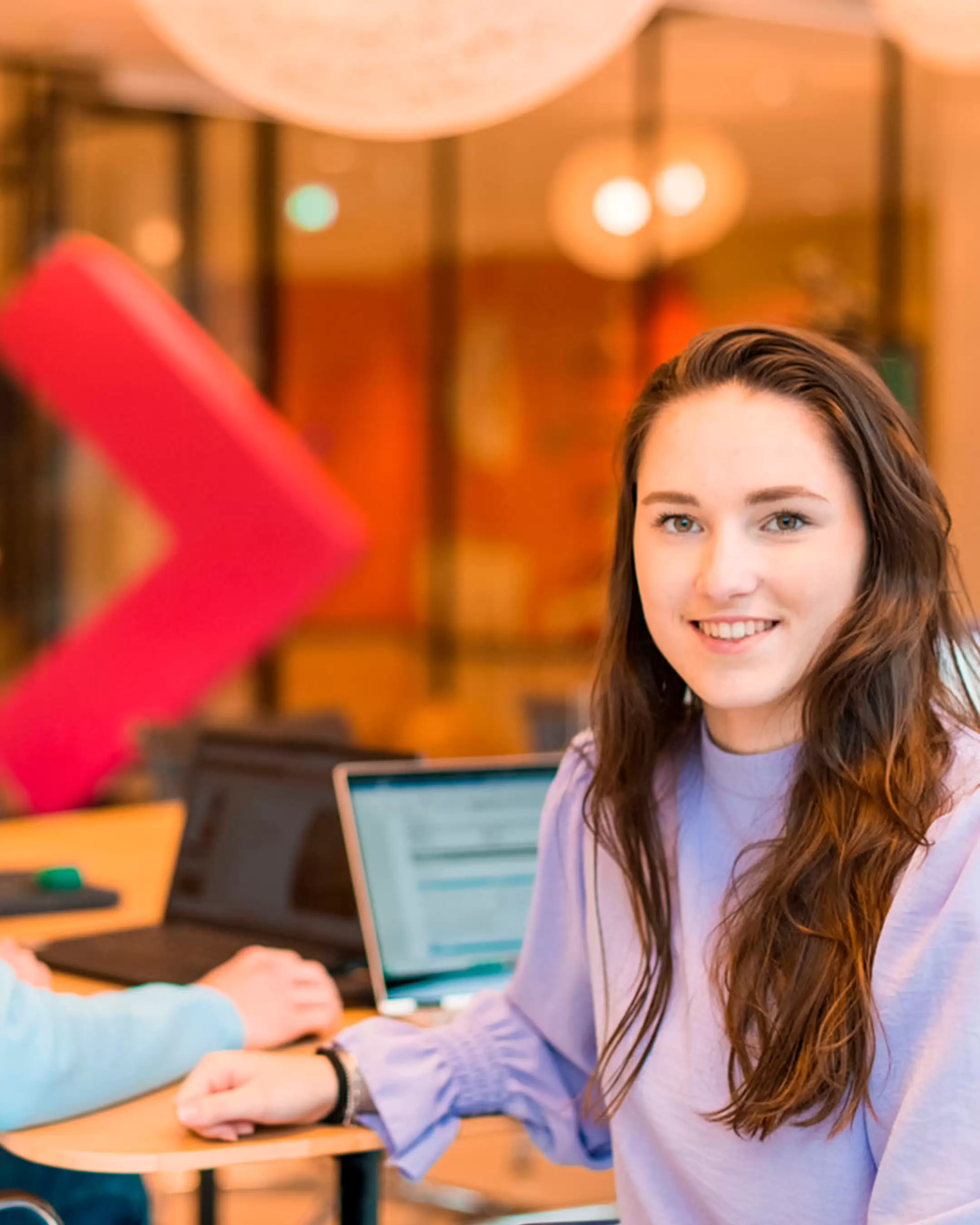

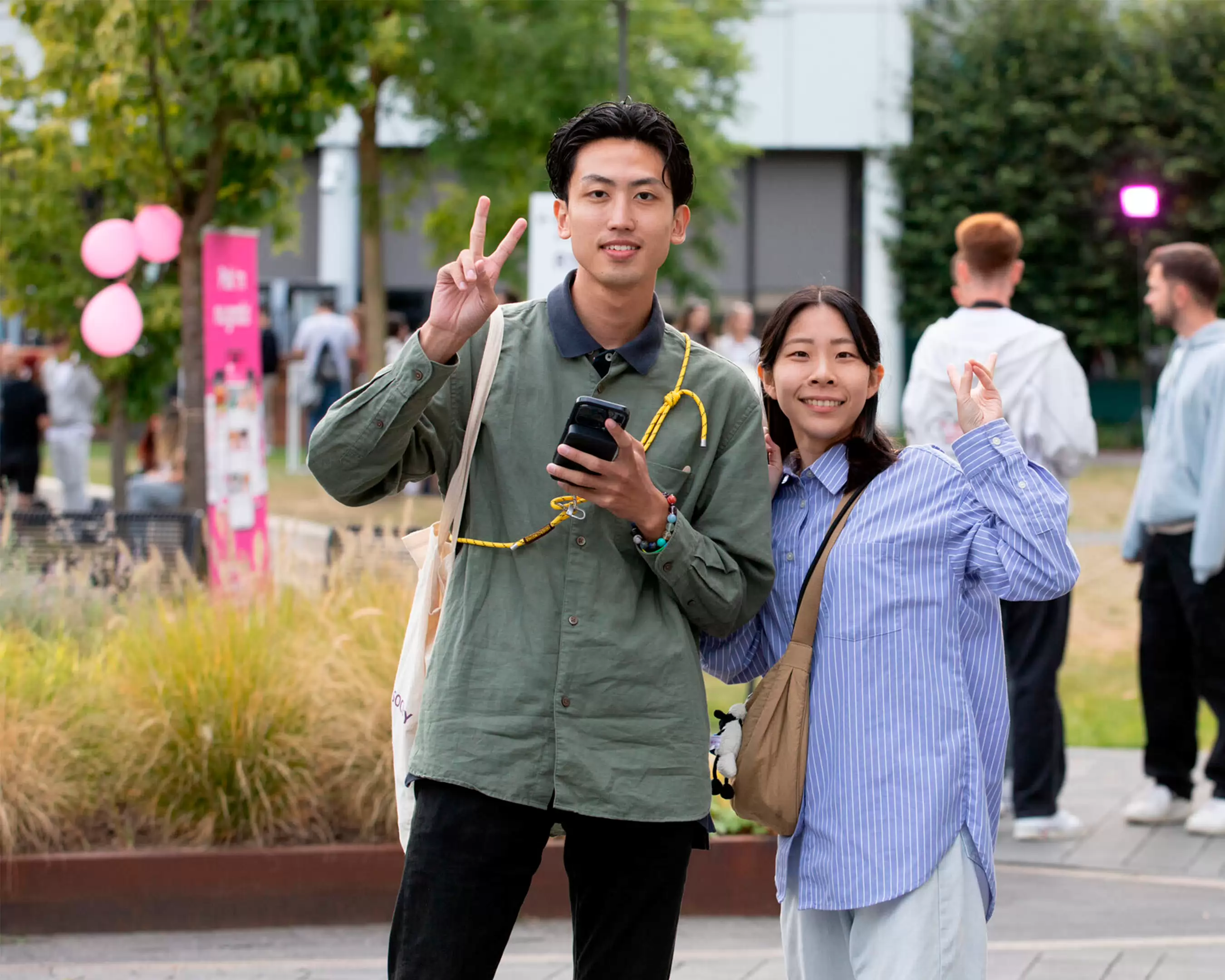
Get a good impression of what your study programme will look like.
At ICT, you will work daily with your project group or solo at one of our locations. You will build racing robots, healthcare applications, webshops, AR apps and so on! You choose, while you get to work in our 3D labs and video and sound labs.
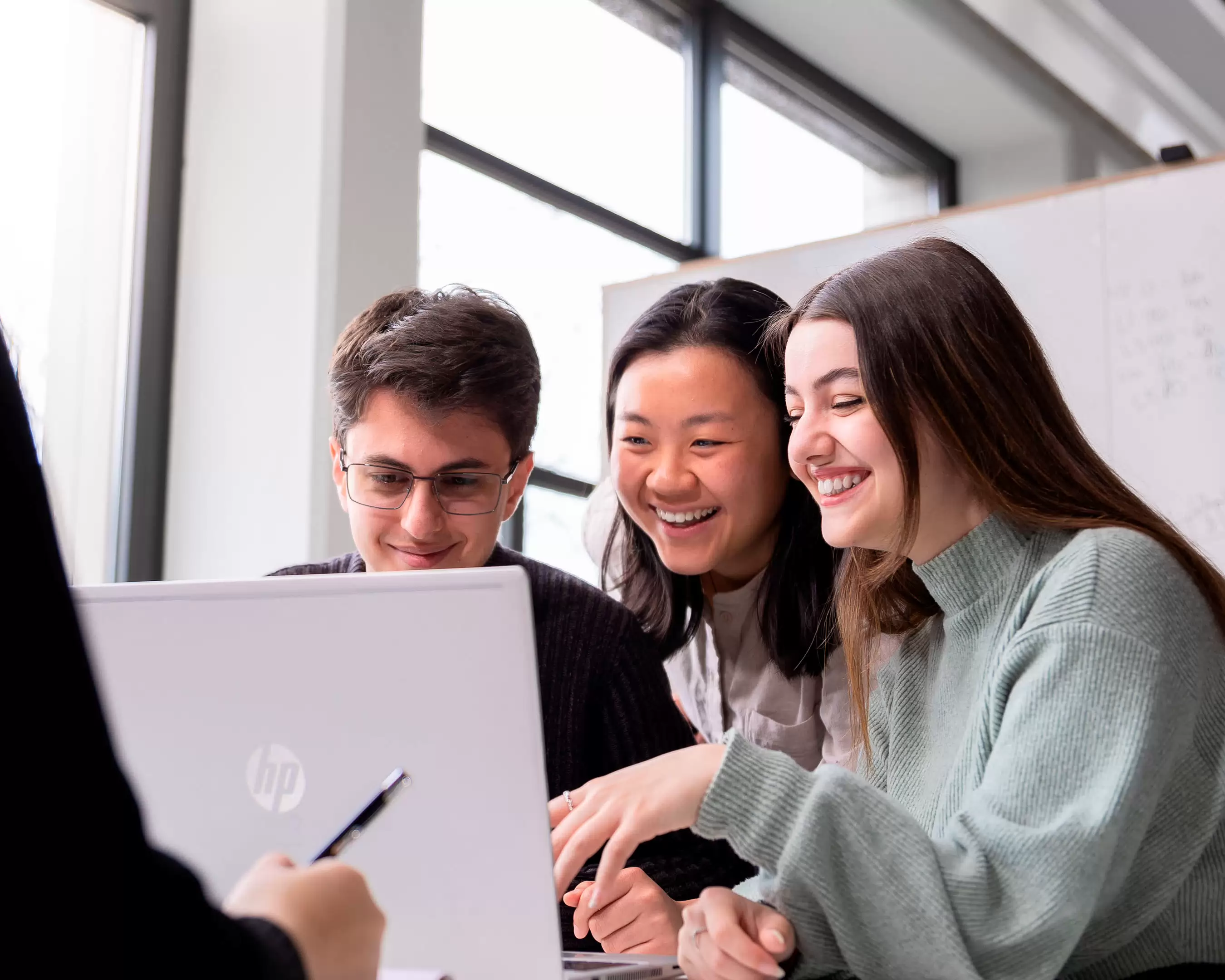
You will learn to ask critical questions, brainstorm, collaborate and present.
Hard coding, low code or no code. You choose and work together with fellow students, researchers and companies.
Immerse yourself in current trends such as ChatGPT, synthetic media, data protection, artificial intelligence and IoT.
We are in the midst of an AI revolution. Will you be tomorrow's pioneer?
Choose Artificial Intelligence within the Bachelor's programme in ICT and discover the technical, organisational or creative side of AI. From year one, you’ll work on professional projects and learn from AI experts. After your graduation, you can start working as an AI consultant or analyst, for example.
Use AI for smart solutions in organisations and society.
Program, create and advise with tools such as ChatGPT, N8N and your own LLM.
Build models that detect patterns and learn from data.
Think critically about ethics, bias, and deepfakes.
Become an expert in data analysis and smart solutions.
Companies are driven by data. Choose Business Intelligence & Data within the Bachelor's in ICT and learn from professionals how to collect, analyse and translate that data into smart solutions. Develop your analytical, technical and organisational skills for jobs such as data analyst or business consultant.
Check, understand and present data clearly and reliably.
Advise organisations on how to work smarter using data.
Speed up processes and predict trends with IT solutions.
Think critically about privacy, transparency and ethics when allocating data and technology.
Make an impact with your IT knowledge and leadership skills.
Choose Business IT & Management within the Bachelor's programme in ICT. Experts will teach you how to improve processes, guide change and allocate technology wisely. After graduation, you could work as a consultant or project leader, for example.
Translate data and IT into targeted solutions for organisations.
Advise on innovations and guide successful changes.
Combine communication, management and IT for sustainable innovation.
Think critically about ethics, clarity and security in the smart allocation of technology.
From a light bulb to a robotic arm. You write the code and see the results immediately.
Smart software controls cars, medical devices and robots. Choose Embedded Software Engineering within the Bachelor's in ICT and learn to build reliable software for physical systems. Start as an embedded engineer, developer or consultant.
Make software work with hardware in devices, machines and vehicles.
Apply sensors, microcontrollers and IoT for smart applications in industry and society.
Create systems that respond fast and keep running, even when things go wrong.
Design software for Industry 4.0 and 5.0, from factory automation to connected products.
From idea to playable game.
Experts teach you how to bring creative ideas to life digitally. You devise, build and test your own games. Choose Game Design & Development within the Bachelor's programme in ICT. After your studies, you can work at studios, agencies or as an independent developer.
Use Unity or Unreal for interactive experiences.
Craft gameplay, storylines and user experiences that surprise.
Team up with programmers and designers on real games.
Use AI, virtual reality and 3D tech to push creative boundaries.
Ensure that IT systems are always running.
You will build the digital backbone of organisations. Choose Infrastructure & Cloud within the Bachelor’s in ICT. Experts will teach you everything about setting up, automating and managing systems. Find work quickly in IT and work as a cloud engineer or specialist, for example.
Build secure and scalable IT infrastructures and maintain them smartly.
Use tools and code to manage and optimise cloud environments and networks.
Secure IT with monitoring, backups, and strategies against cyber threats and system failure.
Work in teams on real projects and link infrastructure to software and customer requirements.
Your design: from idea on paper to interactive experience.
Do you want to create designs that touch people? Choose Multimedia Design & Concepts within the Bachelor's programme in ICT. Experts will teach you how to come up with and create concepts with an eye for design and usability. This will enable you to work as a designer in the creative industry, for example.
Come up with ideas for apps, games or installations and test them with your target audience.
Use images, sound and movement to create powerful user experiences.
Work with HTML, CSS, JavaScript and image editing.
Bring ideas to life with the latest technologies, such as AI, AR or immersive media.
Build and programme smart systems that perform tasks independently.
Choose Robotics within the Bachelor's in ICT. Experts will teach you how to design and programme robots enabling you to work as a robotics engineer or technology specialist, for example. You will combine hardware, sensors and software to enable machines to respond to their environment.
Help robots perceive and respond to their environment.
Make robots react instantly to changing situations.
Develop software that controls logic and behaviour.
Work with companies in healthcare, logistics or industry. Start as a robotics engineer or technology specialist.
Are you curious about how sensors and software work together to control a factory?
How do you ensure that a factory knows when a machine needs maintenance? Or that sensors in a building improve energy consumption? It starts with networks, sensors and data. Choose Smart Industry & Internet of Things within the Bachelor's programme in ICT and experts will teach you everything you need to know.
Enable devices and machines to communicate via networks, sensors and data.
Build solutions that enable companies to work faster, better and more sustainably.
Collect and analyse data to improve processes.
Explore the latest developments in human-centred technology, from robots to adaptive systems.
Use code to devise smart solutions that you can test and improve immediately.
Learn to programme! Choose Software Engineering within the Bachelor's programme in ICT, and experts will teach you to think like a professional. Artificial Intelligence helps you with programming. But you are the one who sees what AI does well and where you need to make adjustments to create strong software. Step by step, with an eye for the user and future-proof.
Learn to programme in multiple ways, including with AI, for web, mobile and embedded systems applications.
Build software that can be adapted to the requirements of users.
Create intuitive solutions and test them with real users.
Take privacy, security and ethics into account.
Think from the user's perspective and create digital products that work intuitively.
In User Interaction Design & Development, you will learn how to create digital products that are logical, attractive and easy to use. You will combine creativity with technology. Experts will train you to become, for example, a UX designer, front-end developer or interaction specialist.
Research how people use digital products and design what really works.
Programme in HTML, CSS and JavaScript for every screen and every user.
Create clear flows and smart menus so that users can easily find what they are looking for.
Build and test interactive apps that work well on smartphones and tablets, from concept to prototype.
Choose your own path and combine the ICT specialisation that interests you.
Within the Bachelor's programme in ICT, you can mix different specialisations: from programming to design and from security to AI. This gives you time during your studies to discover what really suits you. If you know what you want to be later on and if you need a combination of specialisations to achieve this, then that's possible!
Combine software, data, design, AI and business to create your ideal mix.
Work on projects, learn from experts and receive personal coaching.
Build up professional knowledge and learn to collaborate, present and plan.
Get started in practice, follow a master's programme or start your own business.
Obtain your ICT bachelor's degree in 3 or 3.5 years and be prepared for a master's programme.
Would you like to study quickly and academically? Choose the accelerated bachelor's programme in ICT & Software Engineering. From the first year onwards, you will work on practical assignments with companies and receive courses from experienced lecturers. You will complete your studies in 3 or 3.5 years and be prepared for a master's programme.
Build software ranging from apps to complex systems.
Work with mathematics, algorithms and AI.
Connect with fields such as Data Science and Computer Science.
Take extra courses and a pre-assessment. Move quickly on to a master's degree or job in software development.
The bachelor's degree takes four years. During the first six months you explore a wide range of subjects. This is how you discover your preferences and talents. After that you choose what suits you – consider artificial intelligence, cyber security, game design, business intelligence and multimedia design. Or, if you know exactly what you want, you can follow an individual programme (Open Learning). You will complete two internships.
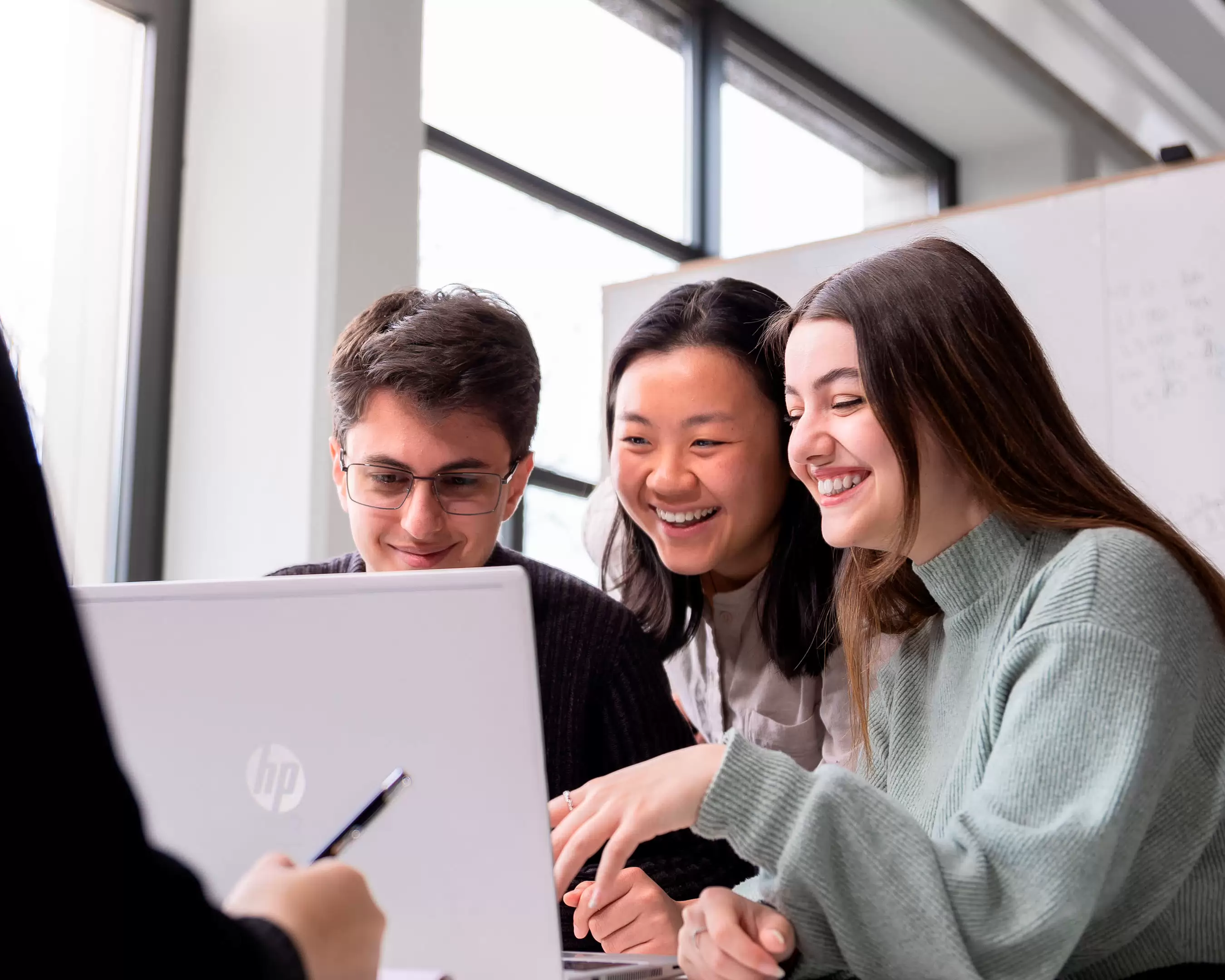
You will work and learn five days a week from nine to four with other students in an Open ICT Lab, your study environment. In the first six months, you will orient yourself on the entire scope of the ICT field. Then you will choose your direction:
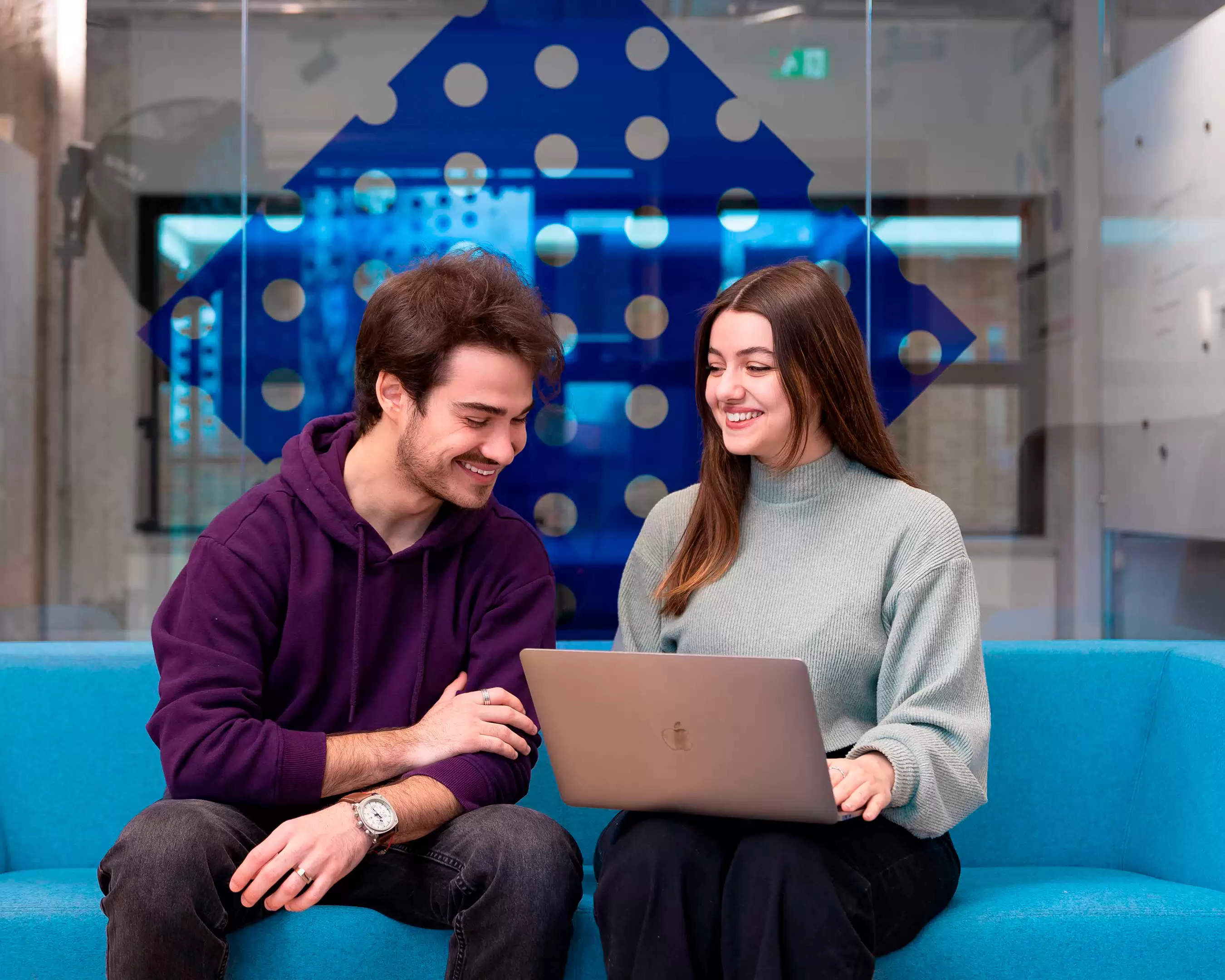
In year 2 you choose two main semesters, during which you can combine everything. You choose your own field of study. You can also choose to follow an (international) minor.From the moment you start your field of study, the education is bilingual. You work on research projects of partner companies. You often divide your time yourself.
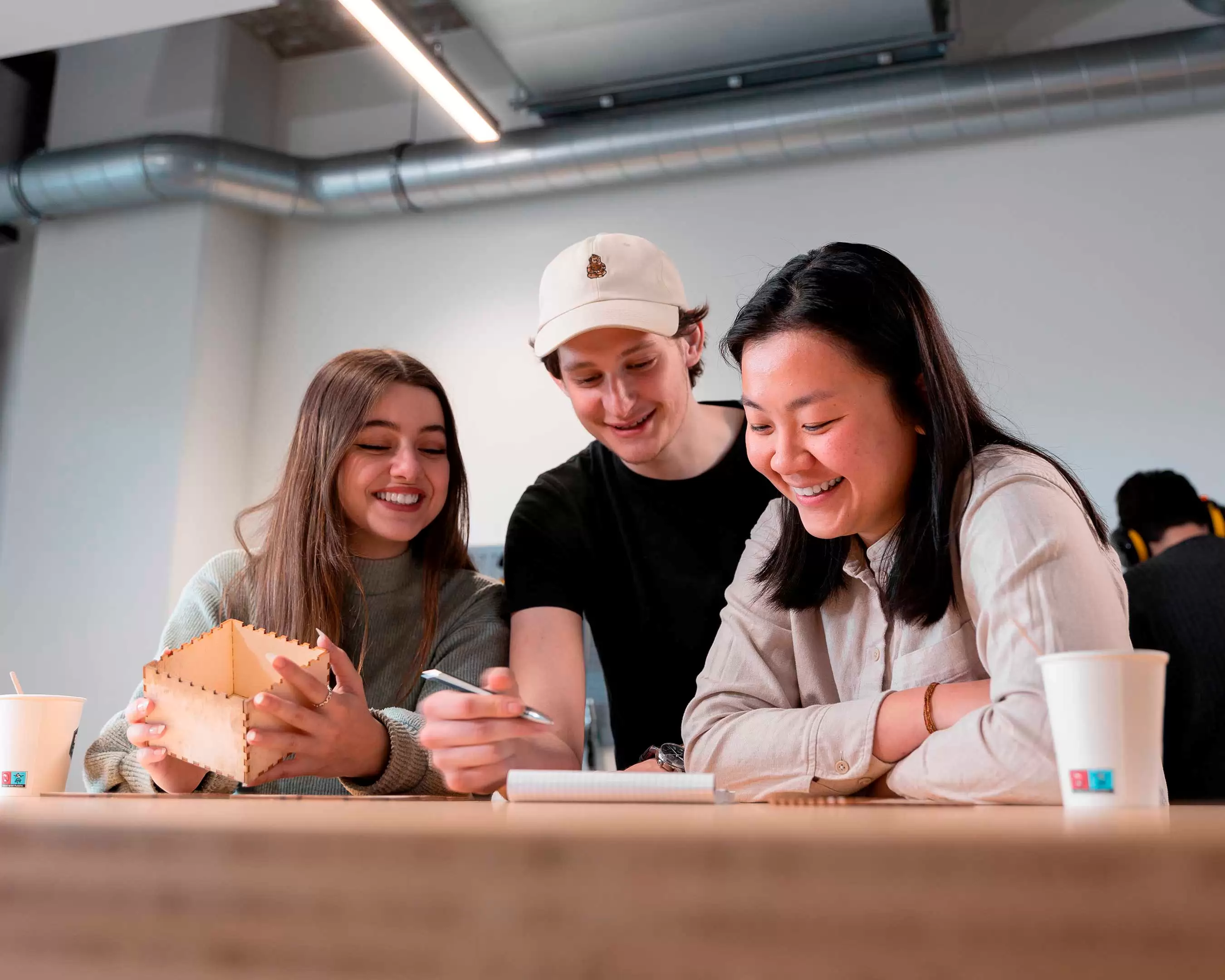
In the third year, you will do a six-month internship in the Netherlands or abroad, applying your knowledge in practice. You will then continue with your chosen specialisation and prepare for your final year.
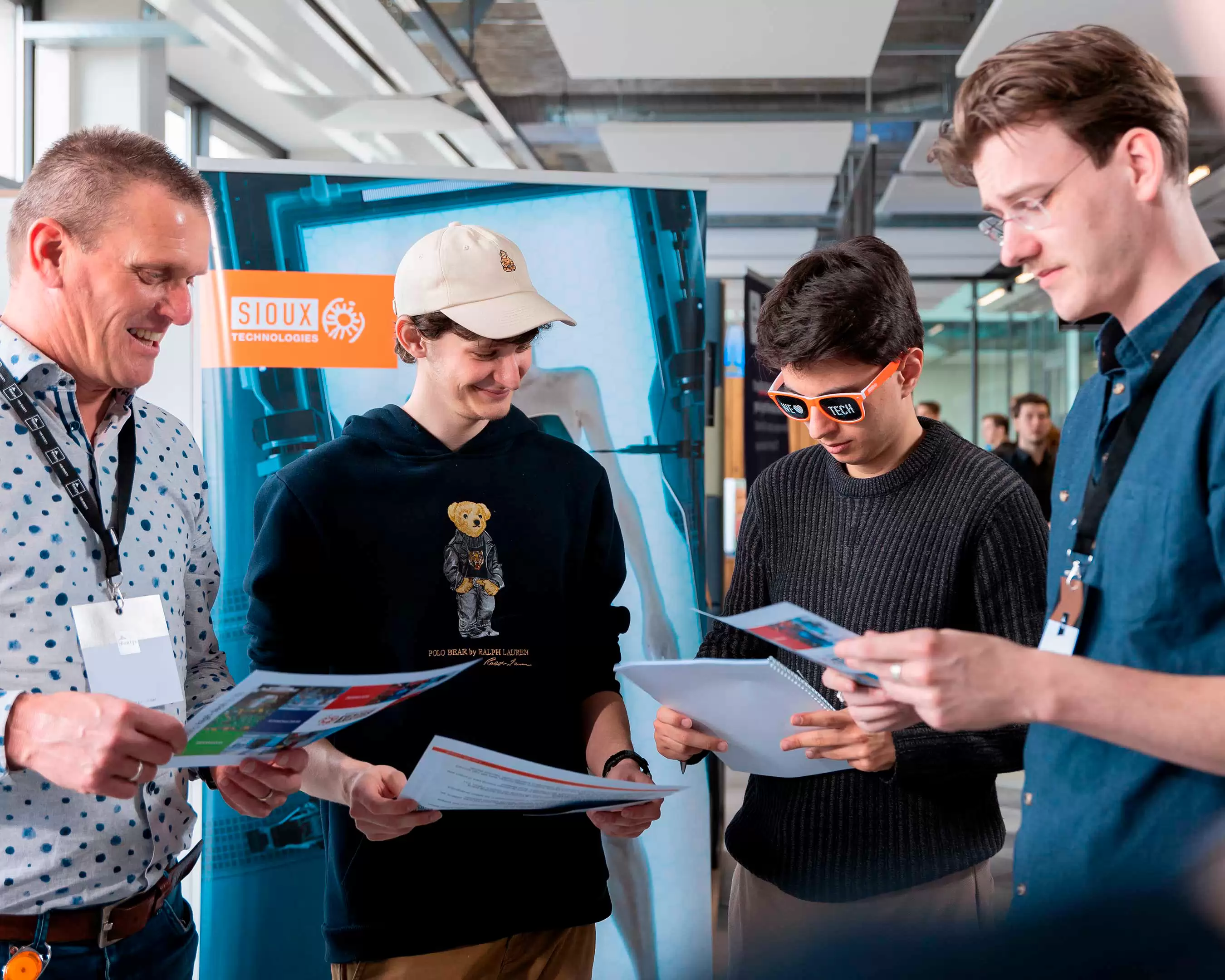
In year 4 you will graduate. You will conduct research at a company of your choice. After that, you will have completed your education!Are you a real entrepreneur? Then you can also graduate with your own start-up. You will have the opportunity to start your own business during your studies, with the guidance of Fontys ICT.
Want to learn even more about ICT? Then choose the Master Applied IT. This will allow you to earn your bachelor's and master's degree in 5 years. A master's degree from Fontys University of Applied Sciences is at the same level as a university master's degree. Therefore, the degree is equivalent. The Master Applied IT will teach you to understand problems and come up with smart solutions.

Bert
Lecturer in Software Design & Engineering
"Technology changes incredibly fast. New software, platforms and AI tools appear almost every day. That is why we focus on helping students develop skills that will remain valuable throughout their careers.
Students work on projects ranging from AI-powered webshops and cyber security solutions to mobile apps that encourage healthier lifestyles. They learn how to analyse challenges, build solutions and adapt to new technologies.
You do not need to know everything before you start. In fact, many students arrive with no level of experience. What matters most is curiosity and the willingness to learn.
In the future, successful ICT professionals will not simply write code. They will understand problems, ask the right questions and make smart decisions about technology. That is exactly what we prepare our students to do".
Hanneke
Lecturer and Minor Coordinator Digital Marketing and Cyberstars
"At Fontys ICT, students start working with real clients from the beginning of their studies.What makes that exciting is that the projects are not just classroom exercises. They solve real challenges. One student team helped a start-up develop its digital marketing strategy. Another worked on cyber security issues. A different team created a prototype of an interactive ball that allows visually impaired children to join group games through sound signals.
These projects teach students that technology is not only about systems and software. It is about creating solutions that people can use.
Many students find this approach challenging at first because there is rarely one correct answer. However, this is exactly what makes it valuable. Step by step, students learn how to work with clients, handle uncertainty and turn ideas into meaningful results.By graduation, they have already made a real impact".
Jeroen
Lecturer
“The first semester is an exciting time. Students experience a new way of learning with more freedom and responsibility. This can feel challenging, especially in an international study environment.
As a Software Engineering lecturer and coach, I support students during this phase. I do not only teach, I work closely with students. We look at their projects, planning and personal growth together. Teamwork can be difficult at first. Students learn how to communicate clearly and how to give and receive feedback. These are essential skills for an international career in IT.
The best moment is seeing students grow. Many start with doubts, but become more confident and independent. They take initiative, make thoughtful choices and build their future in ICT. That is what makes this work so meaningful.”
Jo-An
Lecturer in User Experience and Interactive Media
"When people hear the word ICT, they often think about coding. But great technology starts with understanding people.
In my classes, students learn how to discover what users really need and turn those insights into digital solutions. They work on projects such as apps that address social challenges, accessible websites and interactive digital experiences.
One of the things I enjoy most is seeing students collaborate in international teams. One day, you might work with a software developer from the Netherlands, a designer from Bulgaria many and a student from another part of the world who brings a completely different perspective. These experiences prepare students for working in the Brainport region and the global workplace.
The most successful digital products are not built by technology alone. They are created by people who understand users, communicate well and work effectively together.
If you are interested in technology and want to create solutions that make a real difference for people, this programme could be a great fit for you".
Sebastiaan
Lecturer in Interactive Media
"Many students arrive with doubts. Some already have technical experience. Others are stronger in creativity, communication or design. The good news is that you do not need to fit a specific profile to succeed here.
At Fontys ICT, students build a portfolio instead of relying on traditional exams. This allows them to develop their own strengths and create a learning journey that matches their interests.
As a coach, I work closely with students to help them discover what motivates them and where they want to go. Through regular one-to-one conversations, we focus on development, confidence and professional growth.
One of the most rewarding parts of my job is seeing students transform over time. Students who were unsure in their first semester often graduate as confident professionals who know exactly what they can contribute.
That journey is different for everyone, and that is exactly what makes it special".
Arjan
Lecturer and Interaction Designer Bachelor ICT
"As an Interaction Designer and lecturer at Fontys ICT, I help students understand both technology and the world around it. In our international ICT programme in Eindhoven, students learn how to combine technical knowledge with creativity, innovation, and problem-solving.
What makes this IT degree in the Netherlands unique is its focus on real-world projects. Students work with organisations in healthcare, education, logistics and entertainment. One team, for example, developed an interactive ball that helps visually impaired children participate in group games.
My role is to help students discover their strengths, define their goals, and build the skills needed for a future in technology. They learn how to design, develop, and improve digital solutions while working with experts from different fields.
The students who thrive most are curious about both technology and its impact on society. By working in diverse, international teams, they gain valuable experience that prepares them for careers in areas such as UX design, software development, and digital innovation."
Marco
Lecturer Cybersecurity and Infrastructure Bachelor ICT
"As a lecturer in Cyber Security and Infrastructure, I help students prepare for one of the fastest-growing fields in technology. Our cyber security programme combines technical expertise, professional development, and international collaboration.
Students work on practical projects such as penetration testing for companies, detecting security threats within IT infrastructures and improving digital security processes. These challenges reflect real situations that cyber security professionals face every day.
A unique feature of the programme is the opportunity to work with international students from different backgrounds. This helps students develop communication, teamwork, and leadership skills alongside their technical knowledge.
As both a lecturer and coach, I support students through workshops, feedback sessions, and project guidance. Together, we focus on developing problem-solving skills, ethical decision-making, and a professional mindset.
Students who succeed most are open to learning, willing to take responsibility and motivated to keep developing themselves. These qualities are essential for building a successful international career in cyber security, cloud infrastructure, and digital technology."
Ruben
Lecturer and studentcoach in Software Engineering and Game Design - Bachelor ICT
"As a lecturer in Software Engineering and Game Design, I believe the best way to learn is through practical experience. At Fontys ICT, students do not simply study technology. They build software, create games and work on projects for real clients.
From day one, students in this software engineering degree programme learn how to transform ideas into working digital products. They collaborate with classmates, test their solutions and improve them through feedback from users and stakeholders.
As a coach, I help students make informed decisions throughout their projects. We discuss technical challenges, teamwork, planning and professional development. This prepares students for careers in software development, game design and digital product innovation.
Many international students initially find the freedom of project-based learning challenging. However, by learning how to break complex challenges into manageable steps, they quickly become more confident and independent.By graduation, students have developed both technical expertise and the practical skills needed to succeed in the international technology industry".
Wondering what's to come after applying for this programme? Go over the entire admission process.
Please note! If you wish to apply for housing through Fontys, the application deadline is 15 June (start September) or 8 December (start February).
Wondering what's to come after applying for this programme? Check out the entire admission process.
Have you attended a study orientation event already?
Take a look at our orientation eventsApply through Studielink by 1 May at the latest. This gives you enough time to arrange everything before your studies start.
Check application processSend an email to admission@fontys.nl
The tuition fees indicator helps you to determine the tuition rate for your situation.
Everything about financesFontys can offer housing for a limited number of international students. Fill in the housing application form before the deadline (15 June).
More info about housingGet to know Fontys and your fellow students during Purple Introduction week.
Take a look at your introduction programmeHave you attended a study orientation event already?
Take a look at our orientation eventsInternational students: 15 November. Dutch students: 31 January.
Check application processThe tuition fees indicator helps you to determine the tuition rate for your situation.
Everything about financesFontys can offer housing for a limited number of international students. Fill in the housing application form before the deadline (December 6).
More info about housingVisit an open day, information session or any other study choice activities. Discover whether this programme is the right fit for you.
Take part in an online information session. Ask your questions and get useful information. Click for more info and sign up.
Wondering if this programme is right for you? Visit our Open Day and find out! Meet students and teachers, learn more about the programme through presentations and take a walk around the campus. Check the full programme and register today!
Building: Campus Rachelsmolen (R10)
Take part in an online information session. Ask your questions and get useful information. Click for more info and sign up.
Wondering if this programme is right for you? Visit our Open Day and find out! Meet students and teachers, learn more about the programme through presentations and take a walk around the campus. Check the full programme and register today!
Building: Campus Rachelsmolen (R10)
Take part in an online information session. Ask your questions and get useful information. Click for more info and sign up.