
Engineering & Natural Sciences
Are you interested in technology, science or innovation?
Engineering and Natural Sciences are two different fields, but both are about understanding the world and improving it. One is more technical and hands-on. The other is more scientific and research-based. Read on to find out which one fits you best.
Which direction suits you?
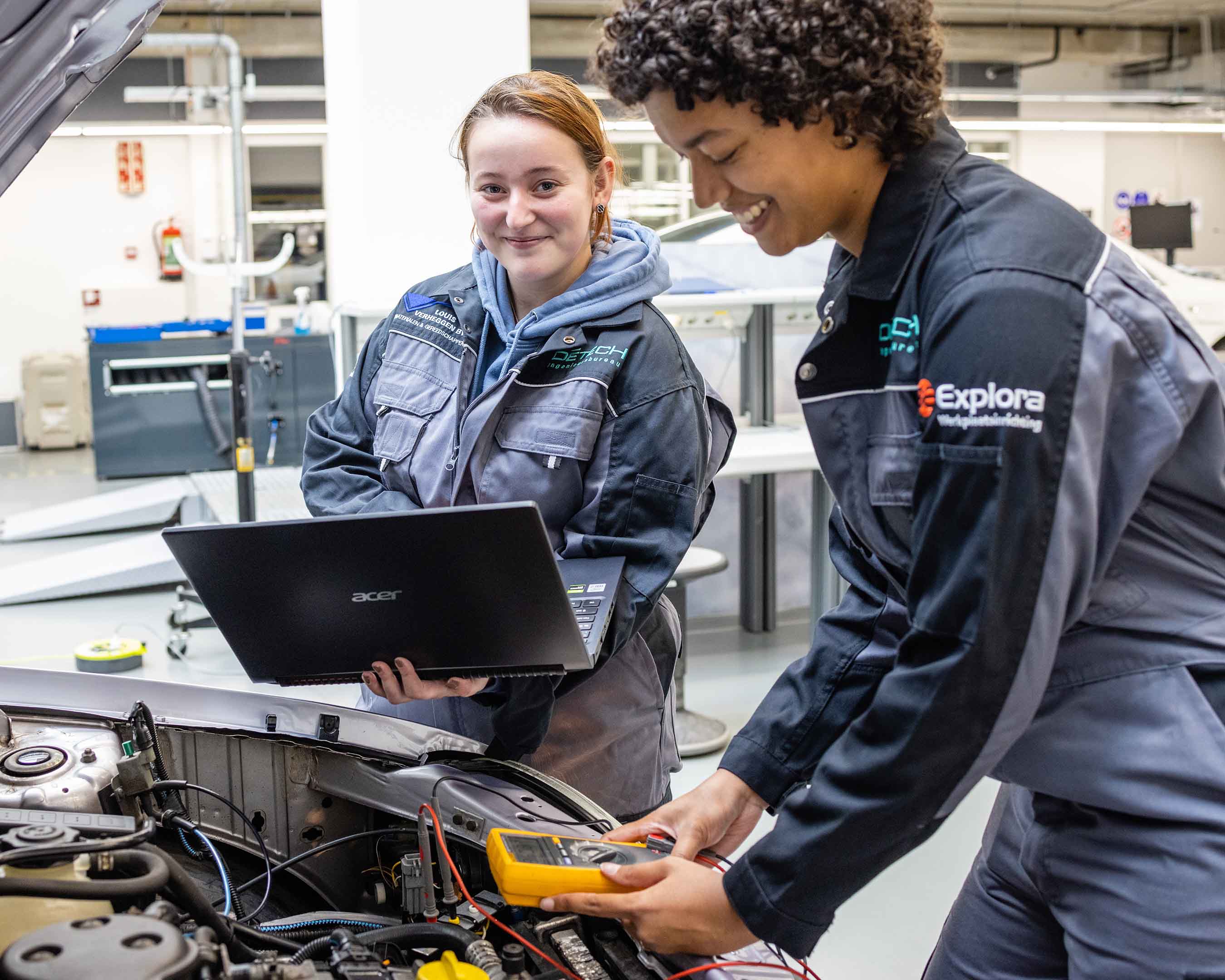
- Engineering: You enjoy building, designing and solving practical problems. You like working with machines, electronics or digital systems.
Natural Sciences: You enjoy doing research, working in a lab and understanding how nature and matter work at a deeper level.
Browse our English-taught Engineering and Natural Sciences programmes
What is Engineering?
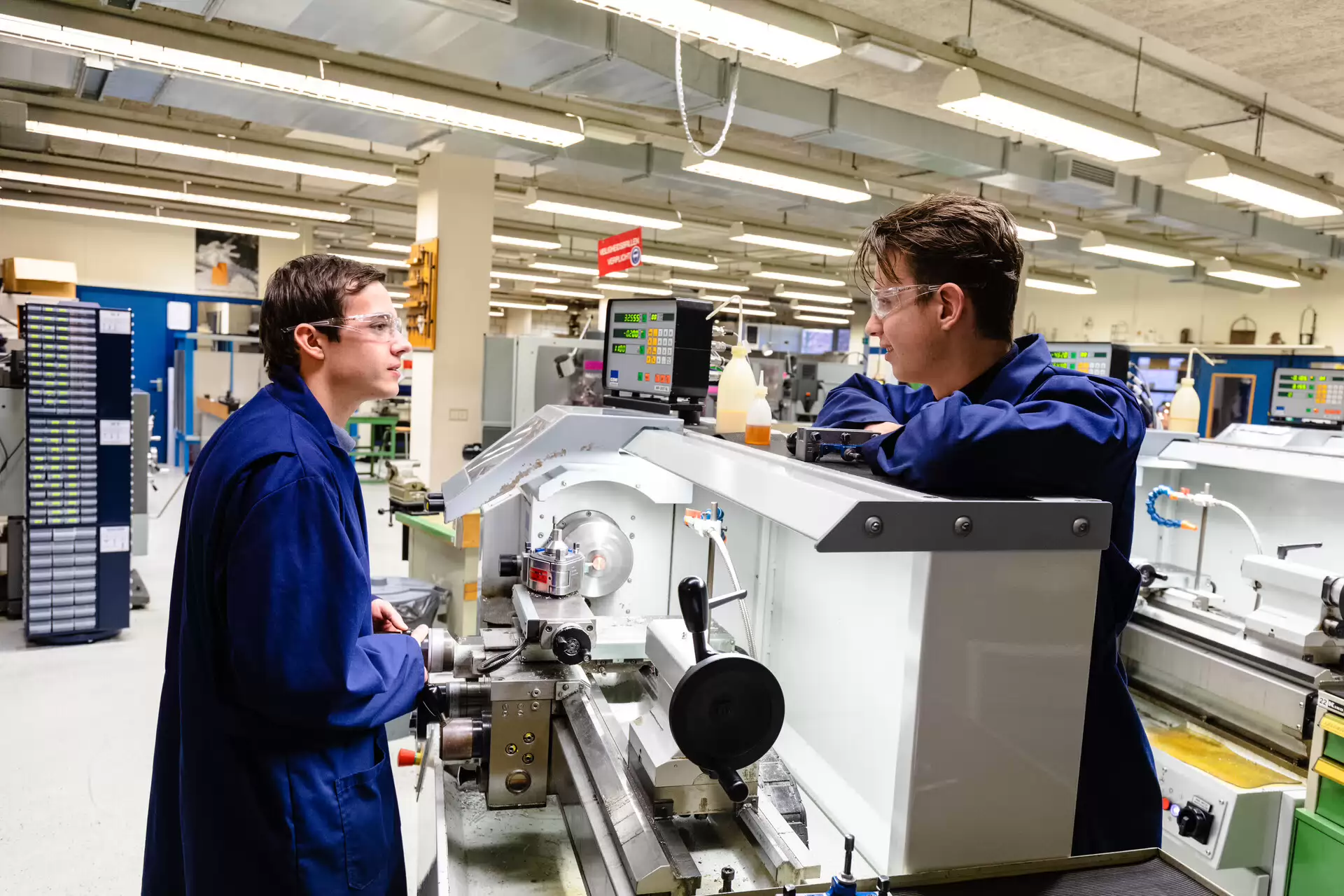
Have you ever wondered how a robot is built? Or how smart energy systems work? Maybe you have always enjoyed taking things apart, just to understand how they work. Engineering is about creating smart and useful solutions to real-life problems. You learn how machines, systems and digital technologies work — and how to design or improve them.
At Fontys, engineering is hands-on. You work on projects with other students and with real companies. This helps you prepare for jobs in the high-tech industry. Examples of what you might work on:
- Designing and building a robot or smart device
- Solving problems using programming or electronics
- Improving energy systems or mechanical designs
What is Natural Sciences?
Have you ever asked yourself: what happens when two substances react? How does radiation affect the body? How can physics improve medical technology? Natural Sciences focus on the scientific laws behind nature and matter. You study how things work on a smaller level — atoms, molecules and physical forces.
At Fontys, you will work in labs and apply theory in real situations. You learn to think critically, solve scientific problems and work safely with high-tech equipment. Examples of what you might work on:
- Doing chemical research in a professional lab
- Understanding how radiation and imaging work in healthcare
- Using physics in smart and innovative technologies
Stories from our students
Why study Engineering or Natural Sciences in the Netherlands?
Many international students choose the Netherlands (and Fontys in particular) for several reasons.
- Many programmes are fully taught in English, with students from all over the world.
- You do not just study theory. You work on real projects and do an internship at a company of your choice.
- The Eindhoven region — known as Brainport — is one of the smartest and most innovative regions in the world. Companies such as ASML, Philips and NXP are based here.
- Graduates are well prepared for technical and scientific careers thanks to their practical experience.
Frequently Asked Questions
Yes. At Fontys, all Engineering and Natural Sciences programmes are fully taught in English and are designed for international students. You will study alongside students from all over the world.
There are 17 English-taught programmes to choose from. For Engineering, think of Electrical and Electronic Engineering, Mechanical Engineering, Mechatronics or Automotive Engineering. If you are more interested in science, Applied Physics, Applied Science – Chemistry and Chemical Engineering or Medical Imaging and Radiation Therapy might be the right fit. Looking for a combination of technology and management? Then Industrial Engineering and Management or Industrial Design Engineering could be what you are looking for.
See all Engineering and Natural Sciences programmes at Fontys
Entry requirements depend on your previous education, your country and the programme you choose. In general, you need a secondary school diploma equivalent to the Dutch standard. Check the individual programme page for exact requirements.
Engineering graduates often work in areas such as electronics, mechanical design, software, energy or product development. Natural Sciences graduates commonly move into healthcare technology, applied research, chemistry or the pharmaceutical industry. Many graduates also continue with a master's degree.
Think about what you enjoy most: building and designing, or researching and experimenting? Visit our study choice agenda to find open days and events for the programme you are interested in. You can also chat with a current student to hear about their experience first-hand.