


Immersive Experience Design
- Starts February and September
- English
- 30 ECTS
- 5 months
Bored of designing just another app?
Good. So are we. Time to step out of the screen and out of your comfort zone.
About this minor
Immersive Experience Design is a hands-on minor for makers, designers, creative technologists and anyone curious enough to ask: what if? You design digital and physical experiences that go beyond a screen, from interactive installations to spatial and visual storytelling. Along the way we explore XR, creative coding and generative AI.
Design that leaves the classroom. You work on projects in real contexts: designing for a local business that needs people to stop in the street, a museum that wants a younger audience, a provocative installation at Dutch Design Week, or working together with an industry partner to explore new technology. Work that doesn't end up in a drawer, but in your portfolio and on your parents' fridge.
Why the minor Immersive Experience Design?
- Real challenges. Work with cultural institutions, studios, local businesses and industry partners, with opportunities to take part in events like Dutch Design Week.
- You set the direction, we help you get there. The semester is built around your ambitions, supported by coaches with backgrounds in studios, agencies and the creative industry.
- Make it yours. Spend six weeks on your own project, with no predefined brief. Your topic, your direction, your signature piece.
- An international classroom. The minor is taught in English, with students from across Europe and beyond working in mixed teams, including an international project with partner universities.
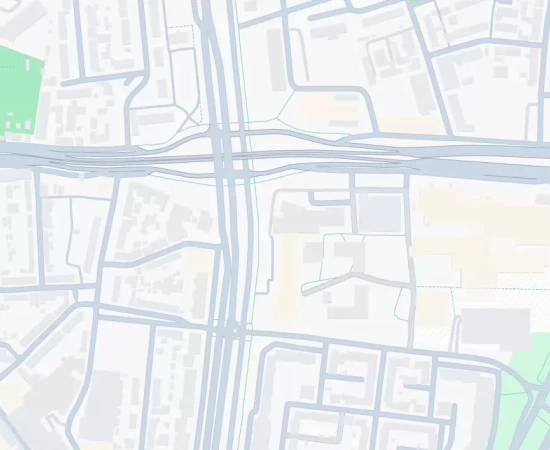
- In the heart of Eindhoven’s design scene. Based at Strijp-TQ, surrounded by design, technology and creative industry. Three days a week on location, two days online.
What you'll learn
The programme is built on four disciplines that give your work creative direction.
- Human-Centered Design. Understand who you're designing for. You learn to use design thinking to explore the people and context behind a brief, ask better questions, and turn research into opportunities worth designing for.
- Emotional Design. Make people feel something. Using principles from psychology, aesthetics and Don Norman's three levels of emotional design, you learn how visuals, interactions and experiences can surprise, delight or provoke.
- Storytelling. Tell stories that stick. You explore story structure, storyboarding and narrative design, so your work guides people through a clear emotional journey, whether it's an installation, an exhibition or a digital product.
- Interaction Design. Turn ideas into experiences. Hands-on workshops in visual and motion design, creative coding, generative AI, 3D printing, projection mapping and XR take your concepts from sketch to prototype.
You learn them by making, together.
For who?
This minor runs twice a year, starting in September and February.
You don't need a design degree to join. Students come from design, ICT, communication, engineering and other backgrounds, and we mix those perspectives on purpose.
What we do want to see is that you've made something before and enjoyed making it. That could be a website, film, prototype, installation, visual identity, game, physical object or something completely different.
What helps:
● Some experience with design processes or user research
● The ability to turn an idea into something tangible, digital or physical
● Curiosity about design, technology and how people experience them
● An interest in working with people from different cultures and disciplines
● A good command of English (equivalent to IELTS 6.0 / TOEFL 80)
Don't tick every box? Get in touch anyway. Motivation counts for a lot here, and we'd rather have a conversation than see you rule yourself out.
Send a short cover letter and CV to Stan van Oers (s.vanoers@fontys.nl), and we’ll take it from there.
Sign up: for the September start, between 1 February and 1 July. For the February start, between 1 July and 15 December.
How to apply for this minor
Sign up for a minor starting in September from February 1 until July 1 at the latest.
Sign up for a minor starting in February from July 1 until December 15 at the latest.
Please note
- Not every minor starts in February and in September. You can find the start dates at the top of the minor's page.
- To take part in the minor, you must have obtained your propaedeutic diploma or have permission from the examination board of your programme.
Agenda
Register here for one of our activities. This way you can be sure whether this is the minor for you! We hope to see you soon!
There are currently no activities planned. Would you still like to visit or do you have a question? Please contact us.
Practical information
This minor will be taught in English.
This minor consists of 20 weeks, with 15 - 20 contact hours per week.
A minor regulation informs you about what you will learn, how the assessment is structured, and when you have completed the minor. As a student, you can derive rights from the minor regulation.
See all minor regulations