



Systems Engineering Essentials
- 2 months
- 03-09-2026
- Eindhoven
- EUR3,000
Do you work on complex technical systems
and notice that keeping an overview and making clear decisions is getting harder? Systems are becoming more intricate and customer needs change faster; this increases the chance of errors and miscommunication. In the Systems Engineering Essentials course, you learn to keep that complexity manageable using proven methods. You apply them straight away to a system from your own work. The question is always: how do I do this in my own practice?
About this course
Systems Engineering Essentials is practical and in-depth. In every workshop, you combine theory directly with your own work. The focus is not on 'what is systems engineering', but on 'how do I apply it'. In your projects, your challenges, your context.
You learn how to analyse, structure and assess complex systems, from stakeholder needs and requirements to system architecture and design choices. You work in small groups and receive feedback on your assignments every week. This way, you build both the knowledge and the skills you can use straight away.
The course is at master's level and earns you credits (ECTS). Do you plan to take a full master's later on? Those credits can then give you exemptions for certain subjects.
This course is aimed at professionals who work on complex technical systems, products or multidisciplinary projects and want a firmer grip on design choices, requirements and complexity.
The course is valuable whether you are just starting out in systems engineering or have been working with it for years. Just getting started? You build a solid foundation. Have you worked as a (systems) engineer for a while? You take a fresh, sometimes different look at your own engineering practice.
For example:
- system engineers and system designers
- lead engineers and technical project managers
- product and machine developers
- system architects
- lecturers in engineering (at universities of applied sciences and research universities) who want to integrate systems engineering into their teaching
Admission Requirements
You have a technical bachelor's degree (or higher) and several years of work experience. Prior experience with systems engineering is not required.
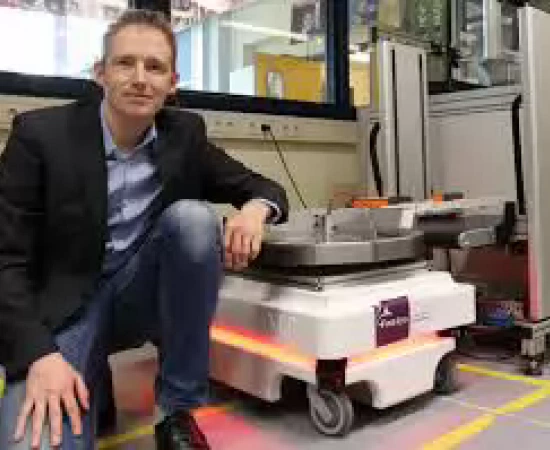
"Right first time is an illusion. That is why you learn here to reflect on your work continuously and keep improving it. That way, you spot mistakes and necessary adjustments as early as possible."
Michiel van Osch – Lecturer
Content and structure
Below you can see how the course is built up: which subjects you take, what the content is, how you work during the course and what you receive on completion.
The course consists of a coherent series of subjects in which you learn, step by step, to apply the core of systems engineering to complex technical systems. Each subject builds on the previous one and contributes to a single, continuous real-world case from your own working environment.
You start by learning to recognise and structure complexity in systems. From there, you go deeper into formulating good requirements and setting up a logical, well-founded system design. Next, you learn how to analyse, compare and improve designs, with attention to modularity, interfaces, risks and uncertainties.
Finally, you focus on the wider context: how technical choices relate to the organisation, stakeholders and the full life cycle of a system, and what this means for your professional role as an engineer.
The content of the course is strongly practice-oriented. You apply the theory directly to an existing system from your own organisation. This way, you learn not only what systems engineering is, but above all how to use it effectively in your day-to-day work.
During the course, you work on things such as:
- analysing and reducing complexity in existing systems
- drawing up and improving consistent, testable requirements
- developing and substantiating system architectures
- analysing design choices using structured methods
- weighing up performance, cost, risk and manufacturability
- reflecting on the broader consequences of technical decisions within a wider organisational and societal context
Together, all the assignments form a portfolio in which you demonstrate that you can apply systems engineering methods independently and at a professional level.
Throughout the course, you work on a single, continuous real-world case: an existing system from your own organisation. On that basis, you build up a portfolio step by step, showing how you apply systems engineering methods to re-analyse, restructure and improve the system.
Reflection is a fixed part of the course. 'Right first time' does not exist with complex systems. That is why you keep looking back on your choices and improving your work, so that you see mistakes and adjustments coming early.
Each session consists of:
- a short theoretical introduction
- practising with concrete examples
- applying it to your own case
- discussing and exploring it together in more depth
Between sessions, you work on assignments that become part of your portfolio. The lecturer guides this process with feedback and coaching (online or in person).
On successful completion, you receive an official Fontys microcredential worth 4 ECTS. With it, you show that you have up-to-date, academically grounded knowledge of systems engineering and that you can apply it independently to complex technical systems in your own working environment.
The microcredential is rated at NLQF level 7 and is assessed on the basis of a practice-oriented portfolio. Its content links to the Master Systems Design programme and, if you progress to it, can be used as an exemption within the master's programme.
Learning outcomes
Afterwards, you look at systems and design choices differently. You no longer see separate problems with separate solutions, but the system as a whole. You take a helicopter view to oversee the whole, and zoom in on details without losing the overview.
You have both practical and methodical tools to keep complexity manageable — even when not all the information is complete and stakeholders have different interests.
You are able to:
- analyse and structure complex technical systems systematically
- draw up clear, consistent and traceable requirements
- assess system designs for coherence, modularity and risk
- substantiate design choices and trade-offs with suitable analysis methods
- place technical decisions within a wider organisational and life-cycle context
On successful completion, you receive a Fontys microcredential (4 ECTS, NLQF level 7), with which you demonstrate that you can apply systems engineering methods independently and at a professional level in complex design and development challenges.
Practical information
- Costs
- EUR3,000
- Length
- 2 months
- Start date(s)
- 03-09-2026
This course is taught in English. Are you taking it with a group of colleagues from your own organisation (in-company)? Then we can also deliver it in Dutch on request.
Register
Below you will find the start date of this course and a link to register.
Costs for this course are €3.000,-.
Start date(s)
-
Eindhoven
3 Sep '26, EUR3,000 Register
Is there no start date and registration button displayed here?
Then registration is not possible at the moment (yet). Please feel free to contact us for more information about the course. We are happy to help! All contact details can be found at the bottom of this page.