

Adaptive Robotics - Fall & Spring semester
You want to work with robots, not just read about them.
In this semester in Eindhoven, you program a robot arm within two weeks, choose your own specialisation and finish with a project for a real client.
About the exchange programme
Adaptive Robotics is a one-semester programme of 30 ECTS about robots that sense their surroundings and adjust what they do. You learn how a robot sees with cameras and LIDAR, how you control a robot arm or a self-driving robot, how you write its software in ROS (Robot Operating System, the software framework most robots run on) and how you make a robot safe to work next to. Machine learning comes back in several modules, mainly in vision and in the principles of robotics.
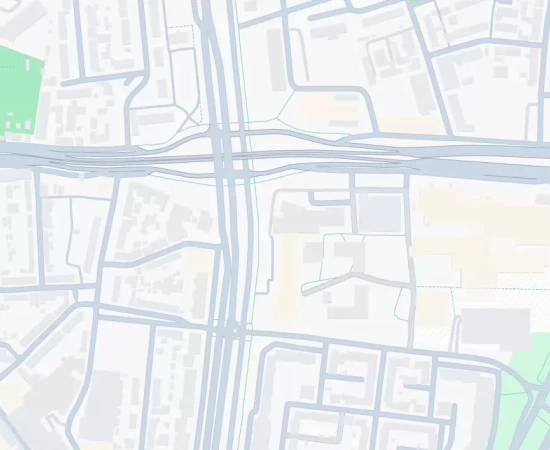
You study at the Brainport Industries Campus in Eindhoven, where high-tech companies, their suppliers and education share one site. Brainport is the region around Eindhoven where many of Europe’s high-tech machines are designed and built. You work alongside Dutch students from different engineering programmes, and everything happens in English.
Why this programme?
- You choose your own specialisation. Everyone reaches the same foundation in five modules. Then you decide where you go further: vision, ROS, safety, hardware or the mathematics of robot motion.
- You work hands-on from the start. Within two weeks you are programming a robot arm. The theory follows what you are building.
- Your final project has a real client: a company in the Brainport region, such as AM-Flow, VDL TIM, Siemens or Weber Beamix, or the Fontys Mechatronics and Robotics research group.
- You work in mixed teams with students from mechanical engineering, electrical engineering, ICT, mechatronics, physics and more. That is how robots are built in industry too.
Admission requirements
You do not need to have worked with robots before. What you bring is a technical background and the curiosity to learn by building.
- You are a bachelor’s student in engineering or a related technical field, such as mechanical engineering, mechatronics, electrical engineering, ICT or embedded systems, automotive engineering, applied physics or applied mathematics.
- You have completed at least two years of your bachelor’s programme.
- Your English is at least at B2 level (see below).
What you don’t need
- Experience with ROS or robot programming. You learn it here from the ground up.
- A background in AI or machine learning. You can build it up during the semester if you want to go in that direction.
- Experience with electronics or mechanical design. Students from software or more theoretical programmes find their place too.
Not sure your background fits? Email us before you apply and we will look at it with you.
How to apply as an exchange student
Applications should always be submitted via the International Exchange (or Erasmus) Officer at the home university. If several versions of the programme are offered, please indicate for which version you would like to apply to (Programme I, Programme II, Programme III, etc.) This officer will send your application request (nomination) to Fontys. Once Fontys has accepted the application, your Fontys study department will send you a link to a web application called Mobility Online.
Deadline for application
Spring semester:
Nomination deadline November 1st
Application deadline November 15th
Fall semester:
Nomination deadline May 1st
Application deadline May 15th
Note: Not all exchange programmes are available every semester. To find out when this programme is offered, please check its specific details.
Practical information
- Start moment(s)
- February
- Location
- Eindhoven
- ECTs
- 30
- Language
- English
- Duration
- 1 semester
Fontys does not provide scholarships for its exchange students.
Every module has three levels. Level 1 is the same for everyone: you apply the key principles in a familiar situation. At level 2 you apply the module theory in your project. At level 3 you go beyond what is taught in class. You set your own goals for levels 2 and 3 together with the lecturer responsible for the module. Two students can finish with the same 30 ECTS and a different specialism.
There are no written exams. You build a portfolio with evidence from the challenges, the modules and the project, and you give a midterm and a final presentation. Each module is scored on the level you reach, and the challenges, presentations and project result are scored too. Together they lead to one final grade on the Dutch scale of 1 to 10.
To pass, you need a final grade of at least 5.5, at least level 1 in every module, a sufficient project result and an active role in the project. If you do not reach a level the first time, you get one more chance per module during the project. The last two weeks of the semester are kept free for resits of the final assignment.
Good to know for your learning agreement: the 30 ECTS are awarded for the programme as a whole. Individual modules do not carry separate credits.
Fontys gives you a Transcript of Records with the results you have achieved. You can earn up to 30 ECTS, depending on your results. ECTS credits are recognised across Europe, and the agreement between your home university and Fontys usually includes that your credits are transferred to your records at home.
30 ECTS stands for 840 hours of study, or 28 hours per credit. This is a full-time semester: lessons, challenges and project work take place at the Brainport Industries Campus, and the rest of your week goes to module work and your project.
For more detailed information about practical matters, such as financial matters, residence permit, health insurance and accommodation, please click on the button below.