
Programmes
Events

Check the possibilities
In this course you get to know Life Cycle Analysis (LCA): a method to measure the environmental impact of products. You learn how an LCA is built up, which data you need and how to read and use the results. You work on your own practice case and carry out a simple LCA. The course is practical and easy to combine with a full-time job.
You carry out a simple LCA on a product (or module) from your own work.
You learn the basics step by step, even without extensive Excel skills.
Lessons on Mondays, 5 times on location, plus personal online guidance and feedback.
You show that you can set up and read a simple LCA.
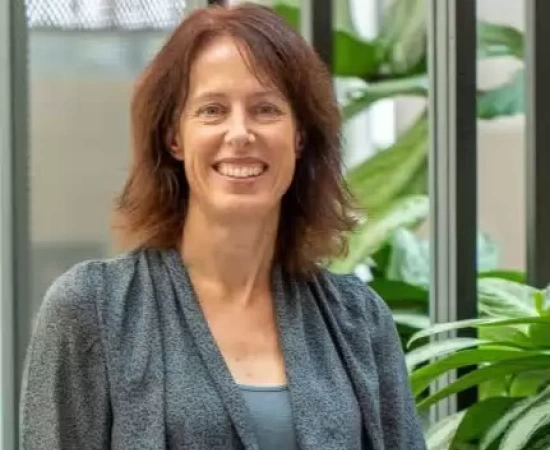
Yvonne lecturer and researcher, Circular Transitions research groupIf you can measure a product’s environmental impact, you can make more targeted choices for circular solutions.
This course is for professionals who want to understand the environmental impact of products and processes, and what Life Cycle Analysis (LCA) can mean for that. The course is of interest to:
You don’t need prior knowledge of LCA. An affinity with sustainability and circularity does help. This course is an introduction to LCA. You learn the basics and apply them in your own practice case.
The course is open to professionals at MBO 4 level or higher, with a job or demonstrable experience in the business world.
You learn, step by step, how a Life Cycle Analysis (LCA) is built up. You start with the context: why LCA is used and what role it plays within sustainability and circularity. Then you learn how to design an LCA, which data you need and how to make assumptions when information is missing. You carry out a simple LCA for a product or process. Finally, you learn how to interpret the results and translate them into insights for your work and organisation.
You work on several themes that together form the basis of LCA:
The course is practical and interactive. Theory and practice alternate:
You build a portfolio with assignments, calculations and reflections. You don’t need extensive Excel skills. You get 2 hours of online guidance every two weeks; on average, count on about 1 hour of guidance per week.
The lessons are on Monday afternoons. On-campus teaching runs from 13.00 to 17.00 in Eindhoven; online teaching from 13.00 to 15.00 via MS Teams.
After successful completion you receive an official Fontys microcredential worth 3 ECTS. With it, you show that you have basic knowledge of LCA, know which data is needed and can set up, carry out and interpret a simple LCA.
The course is in Dutch, but can also be taught in English by arrangement (with enough participants, at least 10).
Meet your lecturers:

lecturer and researcher Fontys Technology (sustainability) | Linkedin
"Grounding a product's environmental impact in evidence and turning it into practical steps you can take in your role: that is where my passion lies."

lecturer and researcher, Circular Transitions research group | Linkedin
“If you can measure a product’s environmental impact, you can make more targeted choices for circular solutions.”
€ 3,000
Fontys microcredential, 3 ECTS
84 hours (3 ECTS); alongside the lessons, on average 4 hours of self-study per week
3 months
Cursus
16-11-2026
Below you will find the start date of this course and you can register. The group has a minimum of 8 and a maximum of 20 participants.
PLEASE NOTE: This registration button is for the Dutch version of the course only! If you are interested in an in-company version in English, please contact us at technology-llo@fontys.nl.
No. You don’t need prior knowledge of LCA, nor extensive Excel skills. An affinity with sustainability and circularity does help. The course is an introduction to LCA.
The course is in Dutch. English is possible with enough interest. By arrangement, the course can also be taught in-company or in English, with enough participants (at least 10).
Yes. The course is developed for professionals. The lessons are on Monday afternoons and, alongside that, you spend on average about 4 hours a week on self-study and assignments.
After this course you have a good picture of what Life Cycle Analysis (LCA) is and what it can mean for your organisation. You can read and interpret existing LCA reports and know which steps, people and data are needed to carry out an LCA for a product.You can assess whether carrying out an LCA is worthwhile for your organisation and contribute to the process when an LCA is carried out. You can also help collect the required data within the company.
This course does not train you to independently carry out a certified LCA. During this introductory course you learn:
No problem. If you don’t work in a manufacturing company, we will think along with you about a suitable case for your LCA.
We are happy to help.