


Minor Embrace TEC
- Starts February and September
- English
- 30 ECTS
- 5 months
Are you ready to spend a semester on something that actually means something to you?
In this minor you press pause on the standard study path and step into 20 weeks where you set the direction. This is not a minor about building the most impressive thing you can, it is about figuring out what is worth building, and then building it. You take on real challenges, build something that matters and figure out what kind of professional you want to become.
What is this minor about?
Embrace TEC stands for Technology, Entrepreneurship and Creativity. You work on two things at once: real-world challenges brought in by external partners, and a personal project that comes entirely from your own curiosity. Most minors ask you to choose between the two. Here you do both, and that combination is what shapes how you grow.
The challenges come from Pulsed for Good, a programme that connects students to societal questions from real partners. You might work with a foundation looking for better tools for people living with dementia. Or with a healthcare organisation exploring how technology can support young people dealing with mental health. Alongside that, your personal project is yours: a podcast, a product, a business idea or something you have always wanted to try but never had time for.
You collaborate with students from business, IT, design, healthcare, education and psychology. You learn by doing, in a place where technology, entrepreneurship and creativity come together.
Why the minor Embrace TEC
- You work on a group challenge and a personal project at the same time.
- You get personal coaching focused on who you are as a person and a professional. Not only on the project deliverables.
- You start with the question, not the project. Here you spend the first weeks figuring out what is worth your time. The project follows from that, not the other way around.
- You work with real partners and real users, so what you build gets tested in the actual setting it is meant for.
- You learn alongside students from different cultures, disciplines and backgrounds.
- You are assessed on your process, not your final product. How you decide, document and grow matters more than how polished the end result looks.
Who is this minor for?
Embrace TEC is open to students from any bachelor programme. What matters more than your background is your mindset. If you already know exactly what you want to build, there are minors better suited to you. This one is for students who want to use these 20 weeks to figure that out, and then make it real.
This minor suits you if:
- You ask 'why' more often than is comfortable, and you want time and space to actually explore the answer.
- You want to build something with your hands, not only think about it.
- You care about the world around you and want to do something useful with that care.
- You are comfortable with not knowing the next step yet. You prefer a compass over a fixed map.
- You enjoy working with people from different disciplines and cultures.
You do not need a technical background, a business plan or prior creative experience. You bring your curiosity. We bring the environment, the technology, the coaching and the people.
Student Experience
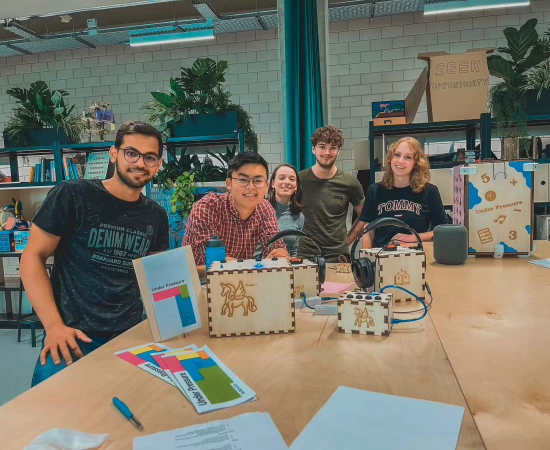
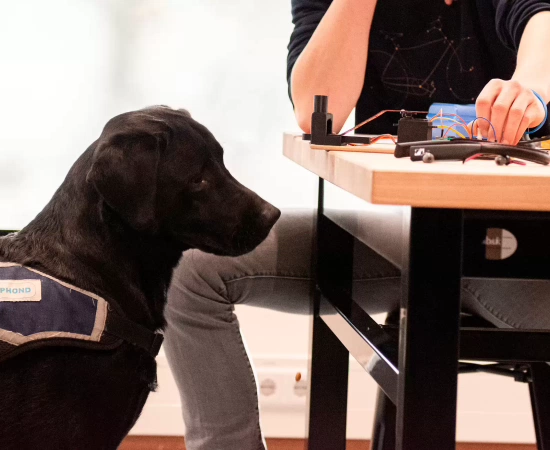
Past Embrace TEC students have built a table that gave a woman with limited mobility her autonomy back. Designed a portable cookie dispenser that helps someone reward their service dog during walks. Created a modular guitar that doubles as a paddleboard. Built a bicycle-powered phone charger. Made a sensory toy for children with anxiety. Launched their own businesses. Started podcasts.
Their stories live on the Pulsed website.
How to apply for this minor
Sign up for a minor starting in September from February 1 until July 1 at the latest.
Sign up for a minor starting in February from July 1 until December 15 at the latest.
Please note
- Not every minor starts in February and in September. You can find the start dates at the top of the minor's page.
- To take part in the minor, you must have obtained your propaedeutic diploma or have permission from the examination board of your programme.
Agenda
Register here for one of our activities. This way you can be sure whether this is the minor for you! We hope to see you soon! You are always welcome to visit us. Find us in R10, first floor (Fontys Rachelsmolen).
There are currently no activities planned. Would you still like to visit or do you have a question? Please contact us.
Practical information
This minor is taught in English.
A minor regulation informs you about what you will learn, how the assessment is structured, and when you have completed the minor. As a student, you can derive rights from the minor regulation.
See all minor regulationsEmbrace TEC is part of Fontys Pulsed: a learning environment within Fontys where students, lecturers and external partners work together on real questions from the world outside the classroom. Pulsed brings in challenges from foundations, companies and societal organisations, and connects them to students who want to learn by actually doing the work.
Embrace TEC is one of several Pulsed programmes. The others include the Master Digital Technology Engineering and the Associate Degree Engineering. What ties them together is a shared way of working: challenge-based, student-driven, and grounded in real partnerships.