

Sprint naar content

Adaptive Robotics

  • Starts February and September
  • English
  • 30 ECTS
  • 5 months
Eindhoven
What if you had a robot arm running, one you built and programmed yourself, within your first two weeks? In the Adaptive Robotics minor, that is not a promise; it is what actually happens. You work on real industry challenges at the Brainport Industries Campus and build your own expertise in the direction that suits you.

About this minor

The Adaptive Robotics minor teaches you the core
skills of modern robotics: how robots perceive their environment, how they are controlled and programmed, and how to make them adapt to changing situations.
You learn to work with the Robot Operating System (ROS), to integrate vision and sensors, to apply machine learning techniques, to design for safety, and to make solid hardware and software architecture decisions.

Why the minor Adaptive Robotics?

  • Your own learning path. Every student reaches the same foundational level, then chooses which modules to delve deeper into: ROS, vision, safety, hardware abstraction, or robotics principles. Your expertise is your own.
  • Hands-on from day one. Within two weeks, you will be programming a robot arm. Theory becomes practice almost immediately
  • Real projects, real clients. Your final project comes from a company or research group. You work on problems that are actually being solved, with deliverables that actually matter.
  • Connected to research and industry. You leave this minor with skills and experience that the industry uses now.
  • A genuinely multidisciplinary environment. You work alongside students from mechanical engineering, ICT, mechatronics, physics, and more; the cross-disciplinary way it works in the field.
 

More about the minor

Every student starts with the same foundation, but from there, you choose your own direction. One student goes deep into computer vision, another focuses on ROS, and a third explores machine safety. Your specialisation depends on your interests and your project, not on a fixed curriculum.

The minor gives you the freedom to experiment. Students regularly take hardware apart, recombine systems in unexpected ways, and develop solutions that go beyond the original brief. If you come from a more theoretical programme, you may be surprised by how quickly you go from idea to working system.

Your final project comes from a company on the Brainport Regio or from the Mechatronics Robotics research group at Fontys. Most lecturers are also active researchers, so the projects connect to current research questions in robotics, perception, and autonomous systems.


Programme

Phase 1 — Challenges and foundations (weeks 1 to 6)

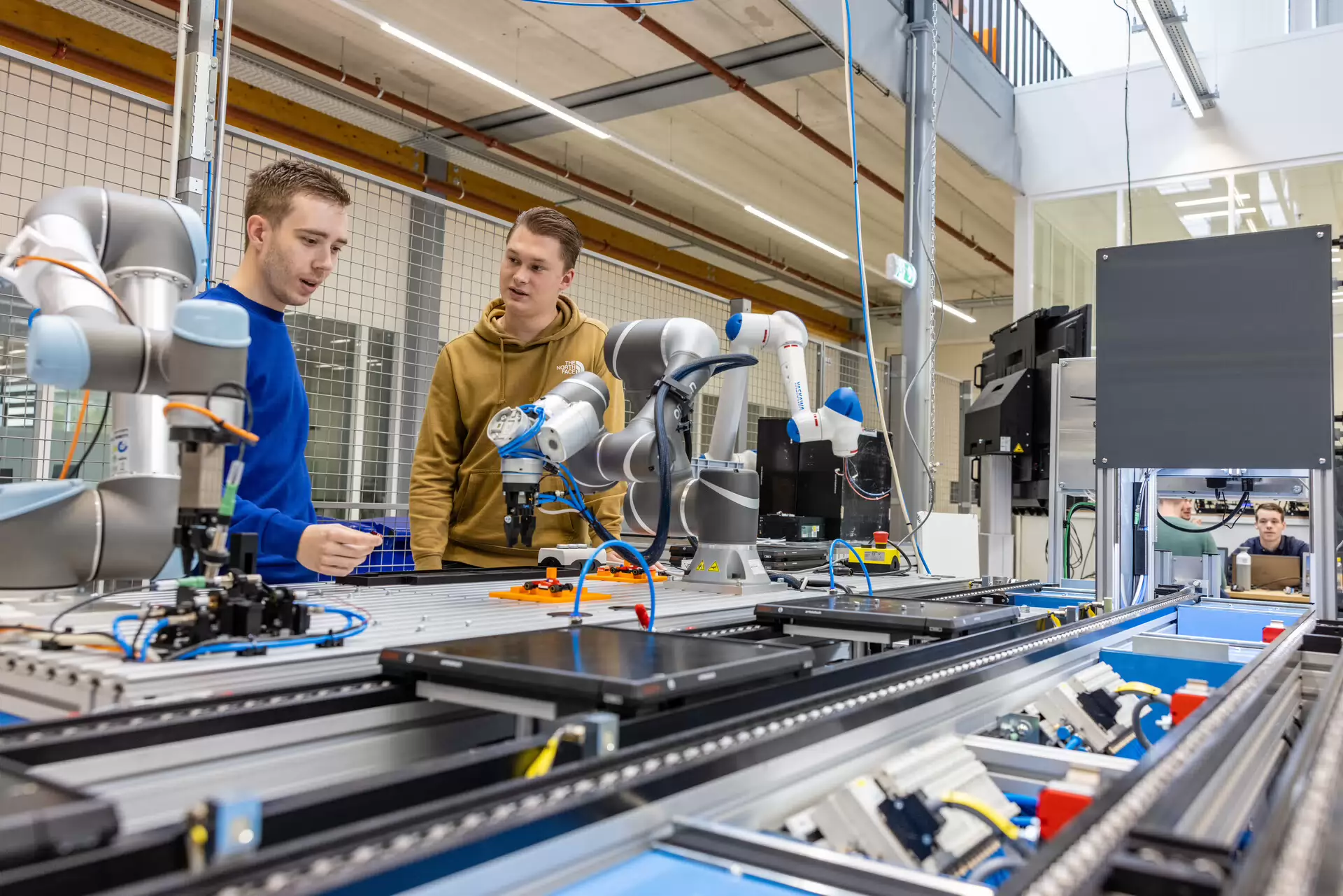
The first five to six weeks are built around hands-on challenges, combined with theory lessons. You work in small teams to complete concrete engineering tasks. Recent examples:

  • Design and build a custom gripper for a UR5 robot arm — including the electronics, the communication protocol, and the programming of the full system.
  • Build a self-driving robot from scratch, equip it with a LIDAR sensor, and make it map and navigate its environment autonomously.
  • Program a robot to navigate a defined route, applying path planning and odometry.

These challenges are the fastest way to learn: you run into real problems, solve them with your team, and apply the theory directly.

Phase 2 — Industry or research project (weeks 7 to 20)

In the second phase, your team takes on a project from a company from the Brainport region like AM-Flow, VDL TIM, Siemens and Weber Beamix or from the Mechatronics Robotics research group. You receive a real brief, work with real constraints, and present your results to the client. Each student takes on specific tasks within the project, builds a personal portfolio, and demonstrates their chosen level of expertise in each module.

Projects are coached by lecturers who are also researchers in the Lectorate Mechatronics and Robotics. When a project connects to a running research line, there is the possibility of continuing your work into a graduation project or internship within the research group.

All students cover five technical modules at foundation level. From there, you choose which modules to go deeper in, based on your interests and the direction of your project:

Principles of Robotics

Kinematics, inverse kinematics, odometry, and route calculation. The mathematical and conceptual foundations for controlling robot arms and autonomous systems.

ROS — Robot Operating System

The industry-standard framework for robot software development. You learn to work with its tools, libraries, and programming constructs, and to use ROS as the backbone of your robot system.

Vision, Sensors, and Perception

Methods to make robots observe and understand their environment using cameras, LIDAR, and ultrasonic systems. Includes computer vision, machine learning techniques, and sensor fusion.

Hardware Abstraction and Embedded Hardware

How to structure the layers of a robotic system and how to make hardware and software design choices that allow for future adaptation and integration.

Safety

Industrial safety standards and regulations for machinery and robots. You learn to analyse and design systems that are safe to operate in real environments. A critical competency for working in industry.

For each module, students achieve at least Level 1, the application of core principles in familiar situations. From there, you build your personal learning plan:

  • Level 1 — Apply key principles in known situations (all students)
  • Level 2 — Apply module theory within your group project
  • Level 3 — Apply knowledge that goes beyond what is offered in class

Students set their own learning objectives for Levels 2 and 3, in agreement with the relevant module owner. The result is a portfolio that reflects your actual expertise, not a uniform grade for the whole group.

After this minor, you will be able to:

  • Apply fundamental robotics principles to analyse and solve engineering challenges in a practical setting
  • Collaborate in a team to develop a robotics problem into system requirements, design solutions, and test them iteratively
  • Implement and test a module that enables adaptive behaviour in a robotic system
  • Demonstrate specialised knowledge in at least one area: perception, ROS, vision, safety, or hardware abstraction
  • Present and document your work to professional stakeholders

Assessment is portfolio-based; there are no written exams. You collect evidence throughout the semester from your challenges, module work, and final project. At the end of the semester, your portfolio shows what you have learned and how you have developed within each module.

You are assessed on five technical modules, the challenges, your project result, and two presentations (midterm and final). To pass, you need to demonstrate at least the foundation level in each module and make an active contribution to the project. Full details are available in the minor regulations.

  • Full-time: 30 ECTS — 840 study hours across the semester
  • Courses, challenges and project at the Brainport Industries Campus, Eindhoven
  • Remaining time for individual and group work on modules and the project

The Adaptive Robotics minor is directly connected to the Research group Mechatronics and Robotics at Fontys. Most of the lecturers who teach in the minor are also active researchers within this group. That means the content you work with is state-of-the-art, drawn from the questions the research group is actually investigating.

For the final project, you can work either with a company or within the research group itself. You might be able to continue the work beyond the minor through a graduation project, an internship within the research group, or a follow-up research phase. If your work connects to an ongoing research line, that pathway might be open to you.

Robotics is reshaping industries that touch everyday life: manufacturing, logistics, agriculture, healthcare, and infrastructure. The shift towards adaptive, intelligent systems is accelerating, and there is a serious shortage of engineers who understand both the hardware and the software side of robotics.

By completing this minor, you contribute to:

  • The development of smarter, safer automated systems in manufacturing and logistics
  • Healthcare robotics and assistive technology for rehabilitation and mobility
  • Sustainable production through precision automation and reduced waste
  • The Netherlands' position as a leader in high-tech systems and mechatronics innovation

You also leave with tools such as ROS, computer vision, and machine learning fundamentals that are directly applicable to industry and research. Engineers who can programme, think in systems, and work across disciplines are exactly what the Brainport region and the wider sector need.


For who?

You do not need to be an expert in robotics, AI, or programming before you start. The most important things you bring are curiosity and a willingness to learn by doing. If you are eager to figure things out and are not afraid to get your hands dirty, this minor is for you.

This minor is a great fit if you come from:

  • Mechanical Engineering or Mechatronics
  • Electrical Engineering or Electronics
  • ICT or Embedded Systems
  • Automotive Engineering
  • Applied Physics or Applied Mathematics
  • Other technical programmes with an engineering or computing background
  • For any other study background please contact us

Helpful interests and mindset:

  • Curious and experimental. You enjoy figuring out how things work
  • Hands-on. You want to build and test, not just read and calculate
  • Open to working across disciplines with students from different backgrounds
  • Proactive and self-directed. You take ownership of your learning path
  • Interested in technology that moves, senses, and adapts

What you don't need:

  • Prior experience with ROS or robot programming. You learn it here from the ground up
  • Background in AI or machine learning. If you want to specialise in that direction, you will build it within the minor
  • Experience with electronics or mechanical design. Students from purely software or theory backgrounds find their place
  • Robotics knowledge at all. Enthusiasm and a propaedeutic diploma are enough to start

Good to know:

  • This is a full-time minor. You cannot combine it with 20 to 30 hours of paid work per week. The workload and the pace are real.
  • Maximum group size is 30 students per run. The minor runs twice a year.
  • If you have questions about your background, contact minorar@fontys.nl before applying.


How to apply for this minor

Sign up for a minor starting in September from February 1 until July 1 at the latest.

Sign up for a minor starting in February from July 1 until December 15 at the latest.

Please note

  • Not every minor starts in February and in September. You can find the start dates at the top of the minor's page.
  • To take part in the minor, you must have obtained your propaedeutic diploma or have permission from the examination board of your programme.


Agenda

Register here for one of our activities. This way you can be sure whether this is the minor for you! We hope to see you soon!

There are currently no activities planned. Would you still like to visit or do you have a question? Please contact us.

Practical information

The language of the minor is English.
No additional costs apply for this minor.
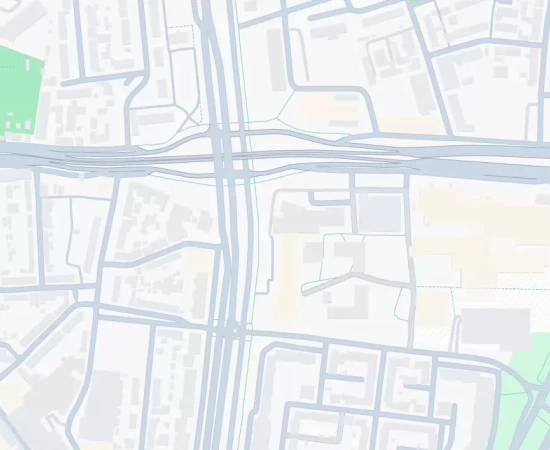
Brainport Industries Campus (BIC 1), Eindhoven. Directly accessible by public transport from Eindhoven Central Station.

The Adaptive Robotics minor is open to students who:

• Have completed their propaedeutic phase (propedeutisch examen), OR

• Have obtained permission from the examination board of their study programme

The minor is well suited to students from mechanical engineering, mechatronics, electrical engineering, ICT, embedded systems, automotive engineering, applied physics, and applied mathematics. Students from other technical backgrounds are welcome. If you are unsure whether your programme qualifies, contact us before applying. minorar@fontys.nl

Places are limited to 30 students per run. The minor runs twice per year and requires a minimum of 15 registered students to proceed.

A minor regulation informs you about what you will learn, how the assessment is structured, and when you have completed the minor. As a student, you can derive rights from the minor regulation.

See all minor regulations
 

Contact